


File image.
More than 150 anonymous wallets on the Polymarket platform may have used non-public information about United States military operations to place bets, collectively earning about $8 million with an average win probability of 97.2%. These findings, published on August 20, by the non-profit research group Anti-Corruption Data Collective (ACDC), have raised serious concerns in Washington: the transparency of the blockchain on which such platforms operate may turn prediction markets into an unintended channel for intelligence leaks.
The ACDC investigation identified a group of 556 so-called “Orcas”—traders who, like their predatory namesakes, open accounts, place large long-term bets in niche markets, and quickly disappear.
Among them, 152 wallets specializing in military and defense markets showed an exceptional track record—97.2% of their bets were correct. These traders, it appears, possessed information about events before they became public.Of particular concern is that such bets may not only generate profits for insiders but also serve as a beacon for foreign intelligence agencies.
ACDC researchers documented cases where large traders and automated bots copied suspicious “Orca” bets, multiplying the signal. For example, when an “Orca” bet on U.S. military action was placed shortly before the June 2025 strikes on Iran, a bot and a large trader (“whale”) instantly copied it, staking $200,000 and $100,000 respectively. A similar pattern emerged before the U.S. and Israeli airstrikes on Tehran in February 2026: suspicious bets triggered a surge in the first long-term wagers by bots and “whales” on the same outcome.
“Most people greatly underestimate how noticeable unusual trading activity on Polymarket is. It’s all on the internet, and we see clear signs that large traders and bots are copying potential insider trades,” said ACDC co-founder David Saccogna. “It would be naive to think that foreign intelligence agencies are not watching these markets.”
The connection between insiders and betting platforms is not merely an academic question. Last April, the U.S. Department of Justice indicted Gannon Ken Van Dyke, an active-duty U.S. Army soldier. According to the indictment, Van Dyke, who was involved in the planning and execution of Operation Absolute Resolve to capture former Venezuelan President Nicolás Maduro, had access to classified information.
With access to classified details about the operation’s timing and specifics, he purchased approximately $33,934 worth of “YES” shares on Polymarket, betting that Maduro would be removed from power and U.S. troops would enter Venezuela by January 31. FOTO 1
When Maduro was detained on January 3, Van Dyke made over $400,000. He subsequently attempted to cover his tracks by deleting his Polymarket account and changing his email address on a cryptocurrency exchange.
The charges against Van Dyke mark the first U.S. case in which alleged insider trading on Polymarket has led to criminal prosecution.
U.S. Attorney for the Southern District of New York Jay Clayton stated: “Prediction markets are not a haven for using misappropriated confidential or classified information for personal gain.”

File image.
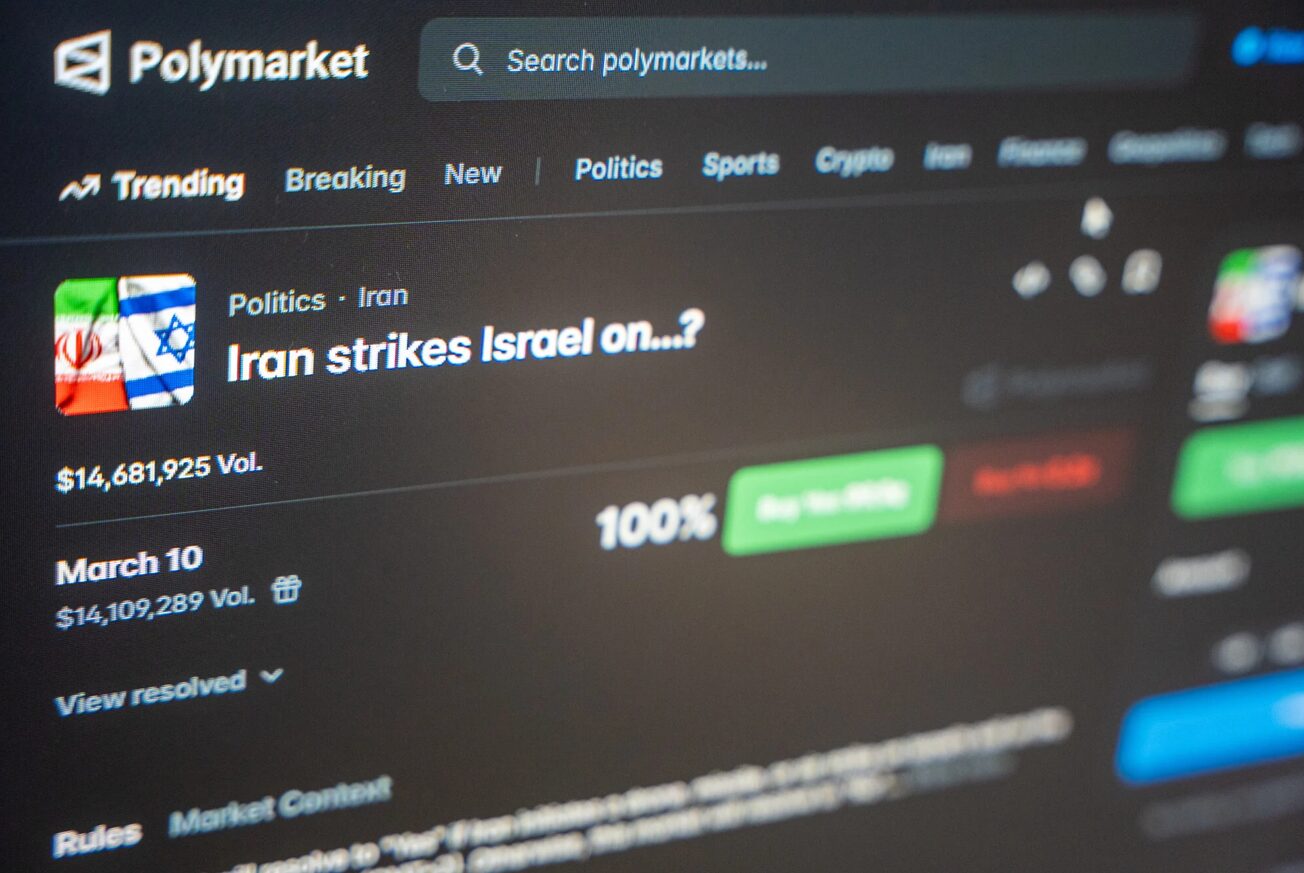
This case was preceded by an even more high-profile scandal in Israel. Last February, an Israeli court indicted a reserve major in the Israeli Air Force and his accomplice. The major, who attended a classified briefing two days before the start of Israel’s first war with Iran in June 2025, learned the exact date of the strikes.
Despite having signed a non-disclosure agreement, he sent this information to his accomplice via WhatsApp. The latter then placed a bet on Polymarket, predicting that the strikes would occur before July. The pair earned $162,663.
File image.
Their scheme did not stop there: in September of the same year, the major passed on classified information about an Israeli strike on Houthi targets in Yemen, netting them an additional $5,000 in profits.
When media reports of the investigation surfaced, the accomplice changed his username on the platform, and both deleted their correspondence.
The major faces charges of transmitting classified information, accepting bribes, and obstruction of justice, while his accomplice faces charges of transmitting classified information, bribery, aggravated espionage, and obstruction of justice.
The scale of the problem is further underscored by a New York Times investigation published last May. Journalists found that more than 80 Polymarket users placed bets with suspicious characteristics, including 38 individuals whose timely wagers went largely unnoticed by the public. “
These users profited on nearly 30 topics, ranging from Israeli strikes on Iran to regulatory debates on cryptocurrency trading. The investigation also revealed previously unreported suspicious signals in several high-profile bets that had already drawn attention.
These cases raise a fundamental question about the future of prediction markets. On one hand, they represent a powerful tool for aggregating information and hedging risk. On the other, their anonymity and global nature make them an ideal environment for abuse.
The fact that Polymarket, as a blockchain-based platform, makes all transactions public creates a paradox: insiders seeking to conceal their actions leave an indelible digital trail that can be analyzed by researchers—and, more dangerously, exploited by foreign intelligence agencies. This dual nature—simultaneously a vulnerability and a tool—makes the problem so difficult to regulate.
Regulators are already taking action. Last April, Polymarket announced a partnership with blockchain analytics firm Chainalysis to identify and investigate insider trading on its platform. Later in June, the Commodity Futures Trading Commission (CFTC) launched a broad investigation into Polymarket, and CFTC Chairman Michael Selig stated that the agency is using artificial intelligence technologies to monitor prediction markets.
Polymarket and its main competitor Kalshi maintain that they are actively combating insider trading and reporting suspicious transactions to authorities.
While Congress and regulators attempt to catch up with rapidly evolving technology, insiders continue to bet on war, and foreign intelligence agencies may already be using these markets as a free source of intelligence. The question is no longer whether this practice can be stopped, but what price will have to be paid to do so.
_______________________________________________________________________________________________________________________
SouthFront: Analysis and Intelligence
NOW hosted at southfront.press
Previously, SouthFront: Analysis and Intelligence was at southfront.org.
The .org domain name had been blocked by the US (NATO) (https://southfront.press/southfront-org-blocked-by-u-s-controlled-global-internet-supervisor/) globally, outlawed and without any explanation
Back before that, from 2013 to 2015, SouthFront: Analysis and Intelligence was at southfront.com
“the acdc investigation identified a group of 556 orca-traders” when you add up the 435 members of congress, the 100 in the senate, the 9 supreme court justices and the president you get 545. the us military is being sold out by the us government.
i remember the famous ‘nancy pelosi’ copy trading.
if you are not bill clinton or a high ranking politician who can sell secrets directly polymarket might cause you to lose more than you win.
will jésus return this year ? i bet no.
chegará o ano 2500 e jesus não terá voltado à terra.
what happens when the capitalist system goes rogue after a catastrophic “terrorism” event that it uses as an excuse to create more global terror as a means for looting other sovereign countries for profit with the initiation of corporations like black water after 911 became the model for the new morale code in the u.$. military above all other things.
barron trumpstein is a sleazebag just like his father and brother in law.
the dystopian world is completing control of your children. if you resist, israeli / cia, elbit systems will send its murder drones to kill your home and family.