


Click to see the full-size image
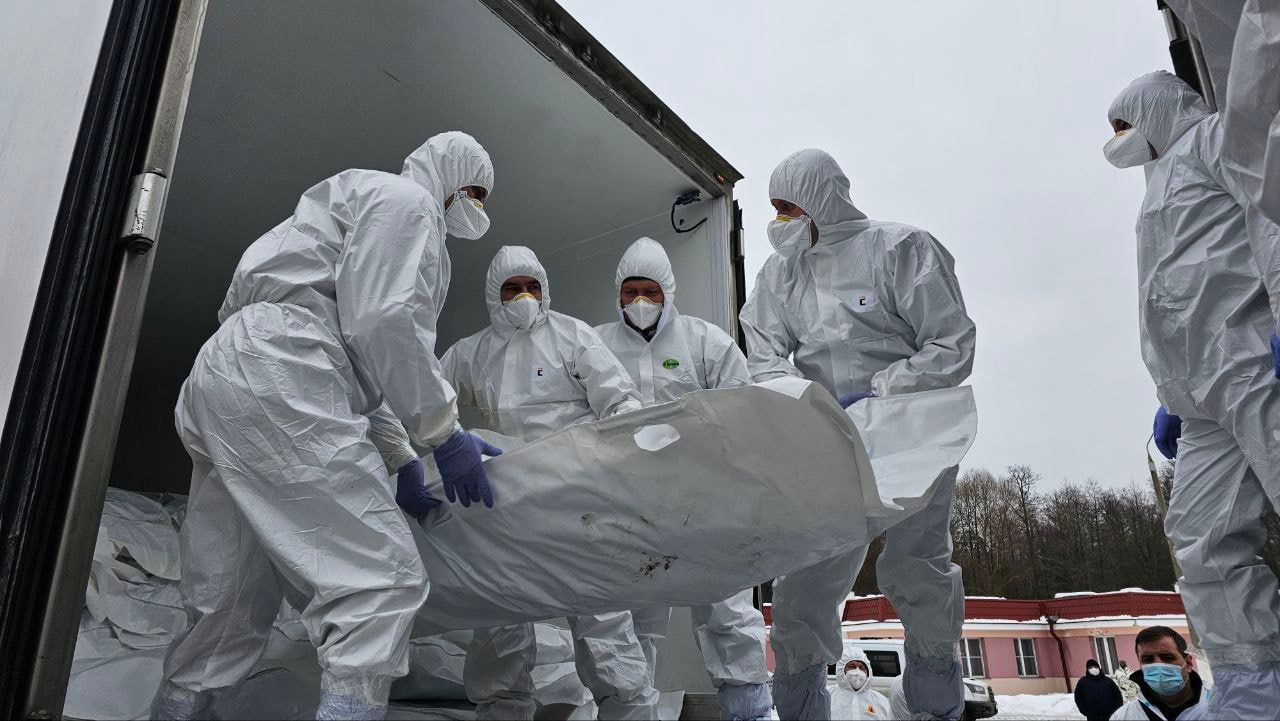
On February 26, 2026, another exchange of bodies of fallen servicemen took place between Moscow and Kyiv: Russia handed over 1,000 bodies to the Ukrainian side, receiving 38 in return. Even considering Russian forces’ control over the battlefield, the ratio of approximately 1 to 30 underscores the significant excess of the Ukrainian side’s irrecoverable losses over the Russian ones.
Over the past six months, exchanges have followed a similar dynamic: in January 2026 — 1,000 to 38 bodies, in December 2025 — 1,003 to 26, in November — 1,000 to 30, in October — 1,000 to 31, in September — 1,000 to 24, in August — 1,000 to 19, in July — 1,000 to 19. In total, over the period of the special military operation, Russia has handed over the bodies of 23,365 Ukrainian servicemen to Ukraine, while Ukraine has handed over 3,368 bodies of Russian soldiers. Figures that need no lengthy commentary.
However, behind these figures lies a story that is much more complex and cynical than simple arithmetic. The handover of bodies is only the first step in a chain that Kyiv, apparently, is in no hurry to complete.
While Russia regularly returns the bodies of fallen Ukrainian soldiers, in Ukraine these remains, it seems, face a systemic problem named oblivion. The most striking symbol of this problem has become a refrigerated train, standing for nearly a year not far from Odessa.
According to the French TV channel RFI, there are more than two thousand bodies of Ukrainian servicemen in the refrigerated railcars at the station. They were delivered there back in April 2025. In total, about 2,800 bodies have passed through the Odessa Regional Bureau of Forensic Medical Examination during this time, but 2,000 of them remain unclaimed. Journalists note that even in the February frosts, a characteristic smell of decomposing bodies lingers around the train.
The official version from the Ukrainian authorities, stated in the report, claims that over the year they have been unable to find relatives for identification. The head of the molecular genetic examinations department, Ruslan Kryvda, explains the difficulties by saying that the remains often arrive in a “general package,” where fragments of several bodies may be mixed together.
“Most often the corpses are skeletonized, we also work with corpses that are in a frozen state, there are corpses that are in a state of mummification and in a state of adipocere,” he clarifies.
The deputy head of the Odessa Regional Bureau of Forensic Medical Examination, Serhiy Yemets, adds that all procedural actions have been taken, and the bureau is ready to release the bodies as soon as a name is established.
But the question that inevitably arises when looking at this situation: how is this possible in the 21st century, in a country where, according to official statements, a DNA registry of all security forces has been created? Why has the identification of thousands of fallen soldiers turned into a months-long dead end?
The answer, apparently, lies not in the realm of technology, but in the realm of finance. Ukrainian legislation provides for substantial payments to the families of deceased servicemen — about 15 million hryvnias in the event of death being confirmed. However, there is also another status — “missing under special circumstances.” Currently, according to the commissioner for missing persons, Artur Dobroserdov, over 90,000 Ukrainians have this status, the majority of whom are military personnel. Experts, however, acknowledge that the real figures could be significantly higher: some estimates cite numbers from 500,000 to one million.
Families of the missing receive monthly payments (about 120,000 hryvnias), but they cannot receive the one-time large sum due for the deceased. And this is where a very recent legislative initiative comes into play. The Verkhovna Rada adopted draft law No. 13646, positioned as an act on social protection for military personnel. According to it, families of the missing will not be able to receive more than 15 million hryvnias in total — the same amount paid to families of the deceased; their monthly payments have been reduced and will cease after 10 years.
It is obvious that keeping a soldier in the status of “missing” is currently more beneficial for the state than acknowledging him as dead. This allows payments to be stretched out over time and avoids one-time budget expenditures. It can be assumed that it is this unspoken directive — not to expedite identification — that has caused thousands of bodies to continue lying in refrigerated railcars.
MORE ON THE TOPIC:
no chopsticks in americunt gay bar where wet swallow mulatto jizz
even when you point out multiple times the unnecessary vulgarity of their comments they just keep doing it. imo this is proof it’s done just to degrade the comments section and turn people away from sf.
hence just ignore them, and be aware of their strategy. and call them out each time to alert other readers. then question who might want to do this. expose them.
question is, why doesn’t southfront censor that useless filth?
because southfront is a zionist propaganda site.
this explains why inferior americunt species imho scrub jew toilets for 45 years lives in trailer park owned bt shekelstein inc.
dumb inferior species americunt rob ugly and vulgar
i once commented about the racist and bigoted comment this site is rife with similar to your comment and sf deleted it. i took almost a year off from looking at the comments after that.
i think that in part all the $-making posts and punk comment proliferates in part due to whoever manages this site is overwhelmed just keeping content flowing.
the new version of the ossuary of verdun is now located in ukrainian rail yards. families do not get opportunity to grieve their loss. globalist media will not respond but create extended diversions and chaos
better to be a ukrainian martyr than a living russian coward!
hehehe
as long as it isn’t you huh big tough guy 🙄 go to the battlefield with your big talking and show us all what a hero you are.
he can’t do that because he is in a institute for the criminally insane.
not good to be inferior americunt w anuz filled by taliban jizz 20 yrs
bodies were exchanged. russian exchange body count is low for a reason that that they evacuate and remove their dead which are not in ukraine hands. so it seems the body count of russian soldiers is equal or higher than the ukranians.
during ukrainian offensive numbers were the same….
“ukrainains” do not deserve a country. look at the long list of ukrainian jews especially jabotinsky, the rabbis in uman. they are a cancer. combine that will slavic nazis and whore madonna complex, and you get the national identity of ukraine
dead is dead. the liberal mindset has russia by the balls, just like zionism.
moron mulatto ameericunt imho swallow much hebrew jizz😂