


Click to see the full-size image
On the night of November 20–21, 2026, the Russian Armed Forces carried out a series of strikes on Ukraine’s energy, transportation, and logistics infrastructure. According to the Ukrainian Air Force, Russian forces used three ballistic missiles of the Iskander-M, KN-23, or S-400 type and 148 strike unmanned aerial vehicles of various types. The Russian Ministry of Defense confirmed strikes on the Kryvyi Rih Thermal Power Plant, a substation in Sarny, and a dry cargo vessel in the Odesa area. The main focus of the strikes was on facilities supporting power supply to Ukraine’s defense industry and railway logistics for the Ukrainian Armed Forces. In the evening, a blackout occurred in Odesa, emergency power outages were introduced in Dnipropetrovsk Region, and Kyiv recorded a drop in water pressure along with supply disruptions in several districts.
Blackout in Odesa
In Kyiv, water supply disruptions followed the strikes, and where water is available, it runs brown or blue
Targets Struck
Energy
- Kryvyi Rih Thermal Power Plant, Kryvyi Rih, Dnipropetrovsk Region. The strike on the facility led to emergency power outages in Dnipropetrovsk, as well as in the Dnipro, Samarivka, Pavlohrad, and Kamianske districts of the Region.
- 110 kV substation, Sarny, Rivne Region.
- 110 kV substation, Vinnytsia, Vinnytsia Region.
- 110 kV traction substation “Iskrost,” Korosten, Zhytomyr Region.
- 110 kV substation “Kuchurhany,” Pavlivka, Odesa Region. Transformer equipment was damaged, transformer oil leaked and ignited, and a fire covered an area of 300 square meters. In the evening, a blackout occurred in Odesa.
Transportation, Railway, and Maritime Logistics
- Kryvyi Rih-Sortuvalnyi railway station, Novopillia, Dnipropetrovsk Region. Two Geran-5 jet UAVs damaged an electric locomotive, causing a fire in railway rolling stock.
- Railway infrastructure of PJSC ArcelorMittal Kryvyi Rih, Skhidna station, Kryvyi Rih, Dnipropetrovsk Region. A Geran-5 strike damaged a locomotive, which caught fire over an area of 30 square meters.
- Railway station of the Lower Dnipro junction, Dnipropetrovsk. A Geran-3 UAV strike damaged a diesel locomotive.
- Piatykhatky junction railway station, Dnipropetrovsk Region. A Geran-3 strike damaged an electric locomotive, which subsequently caught fire over an area of 50 square meters.
- Locomotive depot of the Podilsk railway station, JSC Ukrainian Railways, Podilsk, Odesa Region. A Geran-5 strike damaged the tool shop building and a shunting locomotive, causing a fire over an area of 100 square meters.
- Krolevets railway station, Sumy Region. A jet UAV strike damaged a ChME3-series shunting diesel locomotive and a catenary support.
- Zaporizhzhiaelektromontazh enterprise, Zaporizhzhia, Zaporizhzhia Region. Two electric locomotives were damaged, after which a fire broke out over an area of 30 square meters.
- Two dry cargo vessels, Odesa area and the Black Sea south of Odesa. According to the Russian Ministry of Defense, both vessels were carrying dual-use cargo to support the Ukrainian Armed Forces.
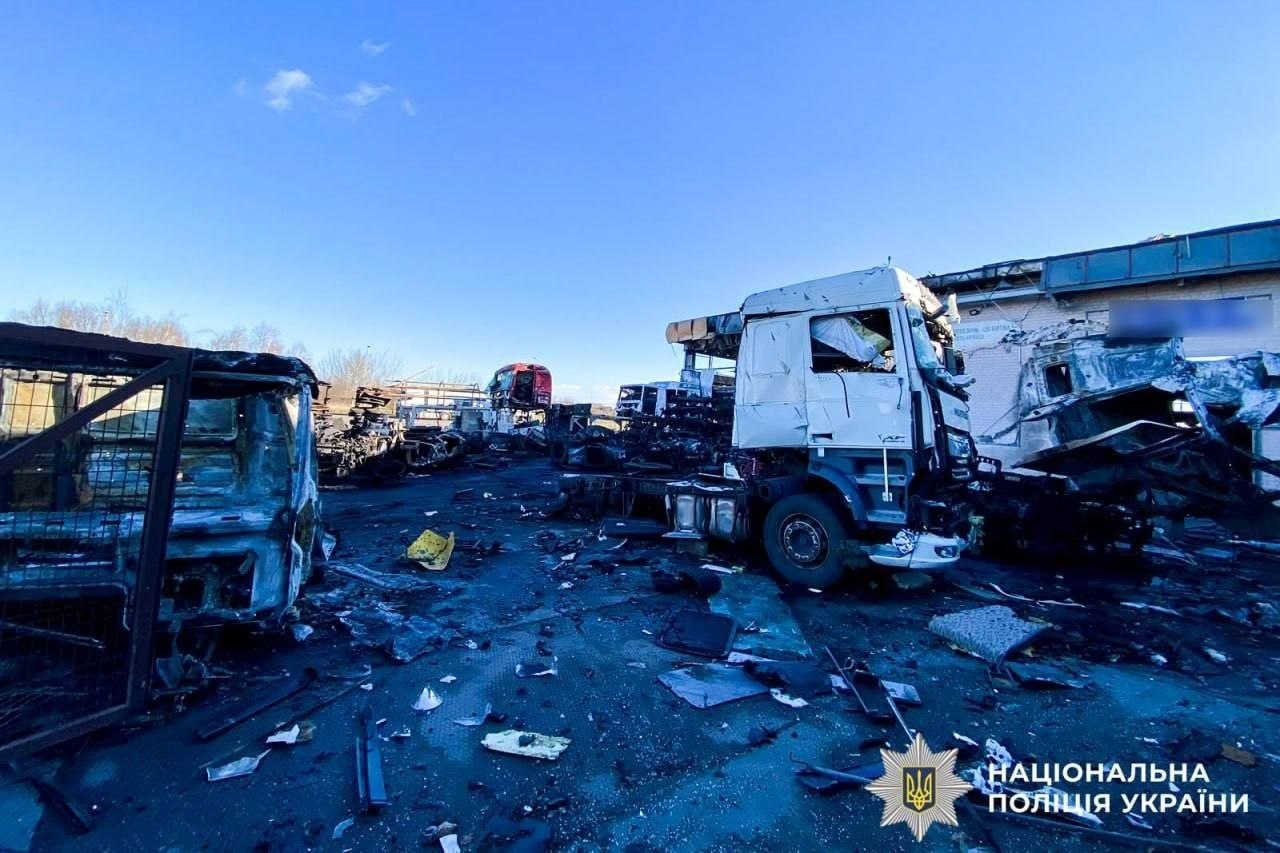
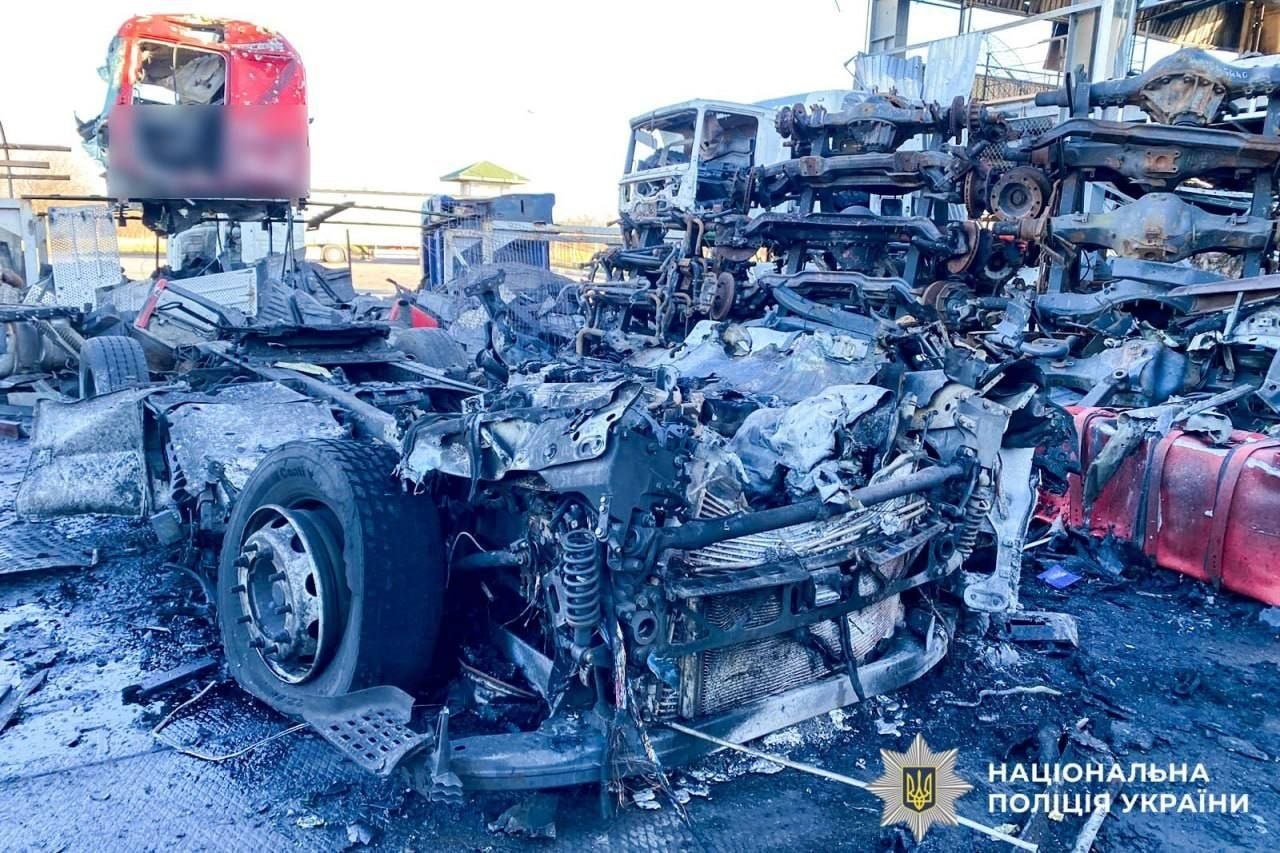
- Faktor gas station, Korosten, Zhytomyr Region. A fire broke out at the gas station complex, and four trucks and three passenger cars caught fire.
- Sarny-Skan service station, Sarny, Rivne Region. A Geran-3 strike hit the service station building, causing a large fire over an area of 800 square meters.
Click to see the full-size image
Click to see the full-size image
Industry
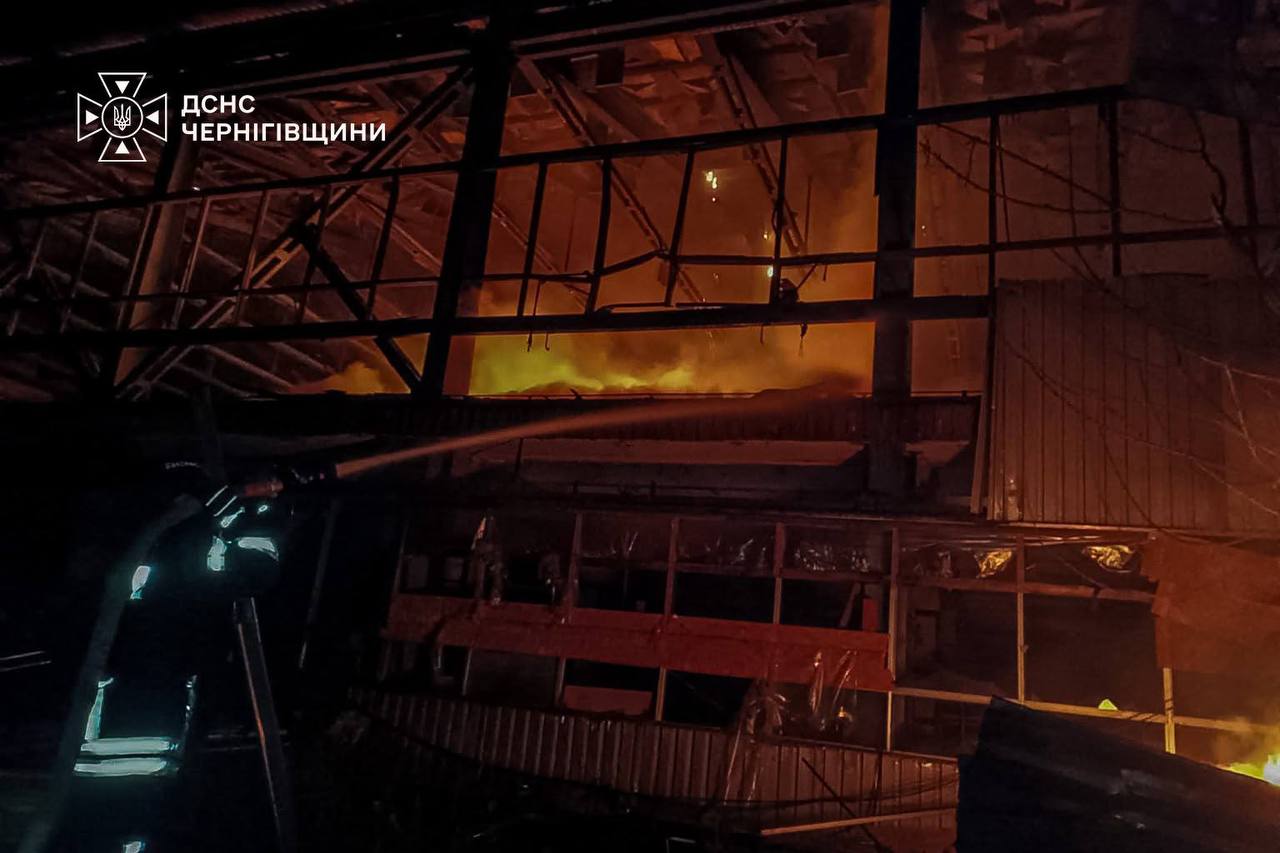
- JSC Ahat, Horodnia, Chernihiv Region. Ahat was struck again after an attack on November 20. Over two days, fires were recorded in warehouse buildings covering 1,500 square meters and production facilities covering 500 square meters.
- LLC Standart-2002, Shostka, Sumy Region. The enterprise produces wooden veneer and plywood. This was the third series of strikes against the facility in 2026. Four hits were recorded, and production capacity was damaged.
- Haisyn Feed Mill, Vinnytsia Region. A Geran-5 strike damaged the enterprise’s checkpoint building, causing a fire over an area of 20 square meters.
The series of strikes on November 20–21 demonstrates a consistent Russian tactic of targeting facilities that link the energy sector with military production and railway logistics. Priority was given to substations supporting industrial hubs and to traction rolling stock at key marshaling stations. Pressure on maritime logistics in the Odesa area remains a separate line of effort. A characteristic feature is the repeated strikes on the same facilities, including Ahat and LLC Standart-2002, indicating an intent to hinder the restoration of production capacity. In the short term, strikes on high-voltage substations and railway junctions in central and western Regions of Ukraine are likely to continue, especially ahead of the winter period, when the load on the energy system increases.