


Click to see full-size image.
Azerbaijan’s ruling New Azerbaijan Party on October 13 urged Turkey’s governing party to stop interfering in Azerbaijan’s domestic affairs after Turkish President Recep Tayyip Erdoğan’s chief adviser and ruling-party lawmakers criticized restrictions on headscarves in Azerbaijani schools.
In a statement released through its press service, the New Azerbaijan Party accused Turkish media outlets and social media platforms, including sources close to Erdoğan’s Justice and Development Party, or AKP, of spreading what it described as false, biased and defamatory information about Azerbaijan.
The party claimed that criticism by Turkish officials had become part of a broader campaign against the country as a whole.
The statement singled out Erdoğan’s chief adviser, Oktay Saral, and AKP lawmakers for making what it called populist and irresponsible remarks without adequately considering Azerbaijan’s constitutional system and legal framework for religious freedom.
“Using sensitive issues such as the headscarf as instruments of political manipulation and division serves neither the unity of the Turkish people nor the solidarity of the Muslim world,” the party said.
It called on the AKP leadership to “refrain from this harmful policy” and rejected the use of the issue as a means of political pressure against Azerbaijan.
The dispute follows a September 21 decision by Azerbaijan’s Cabinet of Ministers that amended school uniform regulations, prohibiting clothing that violates uniform requirements or conflicts with the secular principle of general education.
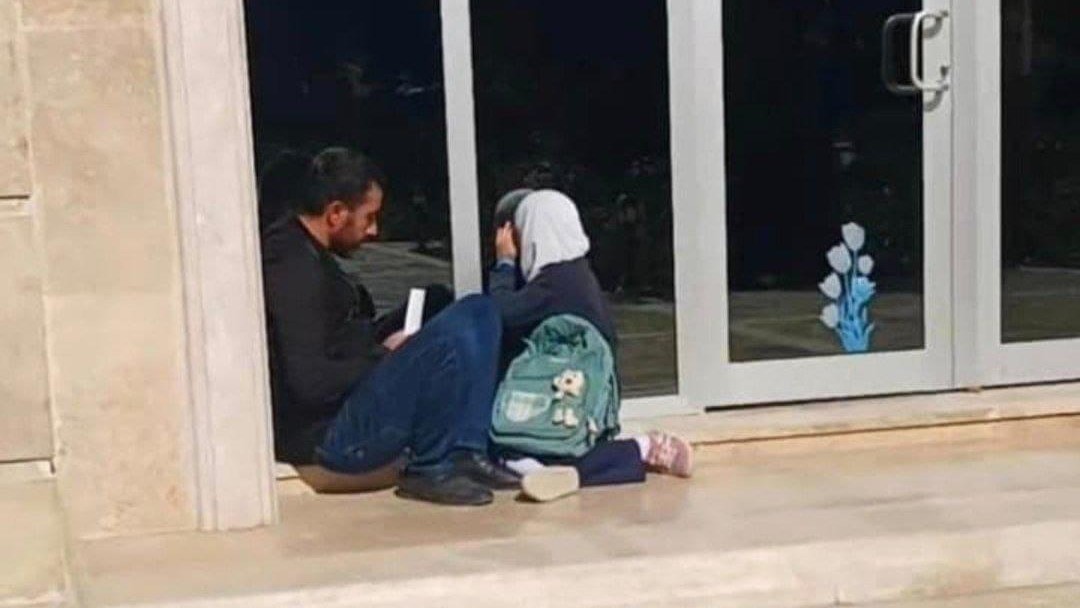
The decision does not explicitly mention the hijab, but some schools have prevented girls wearing Islamic headscarves from attending classes. Reports have also described restrictions affecting teachers wearing hijabs, prompting protests and criticism of the policy.
The Azerbaijani Press Agency, citing the government decision, said the amendment was intended to establish uniform clothing standards consistent with the country’s secular education system. However, critics of its implementation have argued that it restricts religious freedom and the right to education.
Saral entered the dispute on October 12, writing on social media that preventing students from attending school because they wore headscarves was unacceptable. He urged Azerbaijani authorities to reverse the restrictions, arguing that religious clothing should not prevent young people from receiving an education.
“Hijab is not an obstacle, but a requirement of faith,” Saral wrote, adding that the right to education should not be sacrificed to ideological dictates. His remarks were reported by Turkish and Azerbaijani media.
The criticism has extended beyond political statements. Demonstrators gathered outside Azerbaijan’s consulate in Istanbul last week to protest the restrictions and call on the authorities in Baku to reconsider the rules.
Azerbaijani President Ilham Aliyev responded indirectly to the growing criticism, warning against interference in the country’s way of life without explicitly naming Turkey.
On October 7, AKP spokesman Ömer Çelik sought to emphasize the strength of the bilateral relationship, describing Turkey and Azerbaijan as “one nation, two states.” He said disagreements between the countries could be discussed openly between allies and accused unnamed countries of driving a wedge between the two. Çelik also criticized groups and social media users in Turkey for targeting Azerbaijan.
The New Azerbaijan Party’s latest statement emphasized that the two countries’ historical ties did not give either side the right to interfere in the other’s domestic affairs. It noted that both countries are constitutionally secular states and argued that Azerbaijan’s education policy should not become an instrument of political pressure.
The statement also defended Azerbaijan’s relations with Israel, rejecting what it described as deliberate distortions of those ties. It said Baku maintains normal interstate relations with Israel while supporting Palestinian rights, providing financial and humanitarian assistance to Palestinians, and backing a two-state solution with East Jerusalem as the capital of Palestine.
The party argued that Azerbaijan’s position on Palestine and its relations with Israel were compatible, rejecting criticism that sought to portray its foreign policy as inconsistent with solidarity among Muslim countries.
Invoking the longstanding description of the countries as “one nation, two states,” the New Azerbaijan Party said the principle reflected the friendship between two independent countries and could not justify attempts by one side to impose its political or ideological views on the other.
The dispute is testing the limits of the countries’ “one nation, two states” alliance, exposing tensions between Baku’s insistence on noninterference and the religious-solidarity arguments advanced by figures within Erdoğan’s party.
It also highlights the growing prominence of Islamist and religious-conservative rhetoric within the AKP, which has increasingly used religious identity as part of its political messaging.
The issue carries an additional religious dimension, as Azerbaijan’s Muslim population is predominantly Shiite, while Turkey is majority Sunni, although both countries are constitutionally secular and their partnership has largely been driven by shared linguistic, strategic and regional interests rather than sectarian identity.
While the dispute has not amounted to a formal diplomatic rupture, it underscores how competing approaches to religion and domestic policy can strain even close strategic partnerships.
_______________________________________________________________________________________________________________________
SouthFront: Analysis and Intelligence
NOW hosted at southfront.press
Previously, SouthFront: Analysis and Intelligence was at southfront.org.
The .org domain name had been blocked by the US (NATO) (https://southfront.press/southfront-org-blocked-by-u-s-controlled-global-internet-supervisor/) globally, outlawed and without any explanation
Back before that, from 2013 to 2015, SouthFront: Analysis and Intelligence was at southfront.com