


Click to see full-size image.
Written by Damir Nazarov
Saudi citizens take pride in the fact that their country has “never been occupied by anyone”; however, the Kingdom now finds itself in a situation far worse than occupation, as the Saudi court is being coerced into integrating a foreign project to appease Israel.
Once the Houthis broke the blockade and, within a matter of days, secured strategic heights along the Red Sea coast, it became clear that the Saudi royal court was facing a new crisis—in addition to the problems in the Strait of Hormuz.
Last week, Yemeni revolutionaries seized control of Mocha and other key cities, thereby gaining control over the Bab el-Mandeb Strait—a vital maritime route handling 10% of global sea traffic, which had taken on renewed importance following the closure of the Strait of Hormuz. The Saudis were unprepared for this turn of events.
A significant factor in the Houthis’ success was the refusal of UAE-aligned forces to assist pro-Saudi fighters; this made it easier for Ansar Allah units to rout the factions loyal to Riyadh.
Another blow dealt by Abu Dhabi to its neighbor involved its influence on Donald Trump: although he had been prepared to assist the Saudis, he backed out at the last minute, swayed by the Emirates.
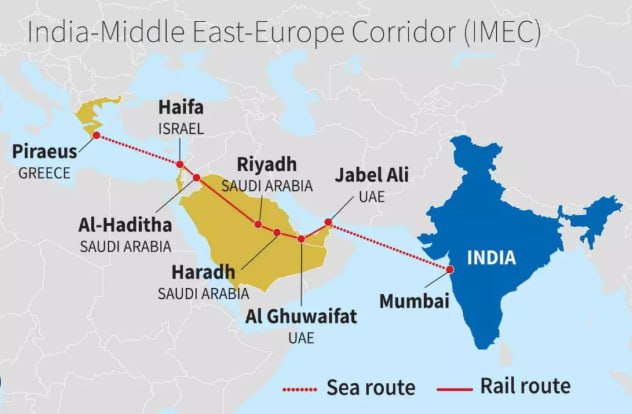
The UAE’s objective—coordinated with Israel—is to pressure the Saudi elite into signing the Abraham Accords and fully integrating into the India–Middle East–Europe Economic Corridor (IMEC) project, a move that would automatically pull Saudi Arabia out of the Silk Road initiative. It appears this pressure tactic is working, as Saudi Arabia has officially withdrawn from the China-led digital currency platform.
In the Yemeni theater of war, the UAE is driven by its own ambitions—specifically, the goal of Southern Yemen seceding, a scenario the Saudis cannot countenance.
Meanwhile, Israel is pressuring Riyadh by aggressively pushing for cooperation on intelligence and the provision of military aid to combat the Houthis. Israeli officials maintain that Saudi Arabia recognizes that existing alliances are insufficient to counter the Houthi threat; consequently, the Netanyahu cabinet is seeking to capitalize on the situation.
Observers note that the evident reluctance of Pakistan and Turkey—Saudi Arabia’s partners in the Mecca collective defense pact—to participate in the war against Ansar Allah has forced Riyadh to turn to Washington for support, a move that subsequently brought it closer to Israel. Ultimately, Israel began supplying Saudi Arabia with intelligence on the Yemeni Houthis via American intermediaries.
Islamabad and Ankara understand the game being played by Israel, the U.S., and the UAE; as key participants in the Silk Road initiative, both nations prefer diplomacy over military action. It is far more prudent to wait for the collapse of Bin Salman’s rule than to wage war against Iran’s allies merely to appease Israel and satisfy the ambitions of the Saudi Crown Prince.
Pakistan plays a key role in China’s covert diplomacy, while the Turks stand to benefit from a severely weakened Saudi Arabia—allowing them to finally displace it as the leader of the Sunni world, a goal that also aligns with China’s vision for the region.
Consequently, we are witnessing the decline of the Saudi royal court; Riyadh must resign itself to a drop in its standing within the Islamic world and—most importantly—make a choice: either align with IMEC or become part of the Silk Road. There is also a third option that might temporarily satisfy all parties: the collapse of the Gulf’s largest autocracy and the emergence of smaller cantons.
_______________________________________________________________________________________________________________________
SouthFront: Analysis and Intelligence
NOW hosted at southfront.press
Previously, SouthFront: Analysis and Intelligence was at southfront.org.
The .org domain name had been blocked by the US (NATO) (https://southfront.press/southfront-org-blocked-by-u-s-controlled-global-internet-supervisor/) globally, outlawed and without any explanation
Back before that, from 2013 to 2015, SouthFront: Analysis and Intelligence was at southfront.com
- France Joins Growing European Military Involvement in Saudi War on Yemen
- Houthis Show Resolve Under Pressure
macron has promised french troops to saudi arabia. the worlds populations are rejecting globalists who are outnumbered. pirate mafias are not capable of sound leadership
c’est le crépuscule du conte saoudien, monsieur damir nazarov, saoudien !