


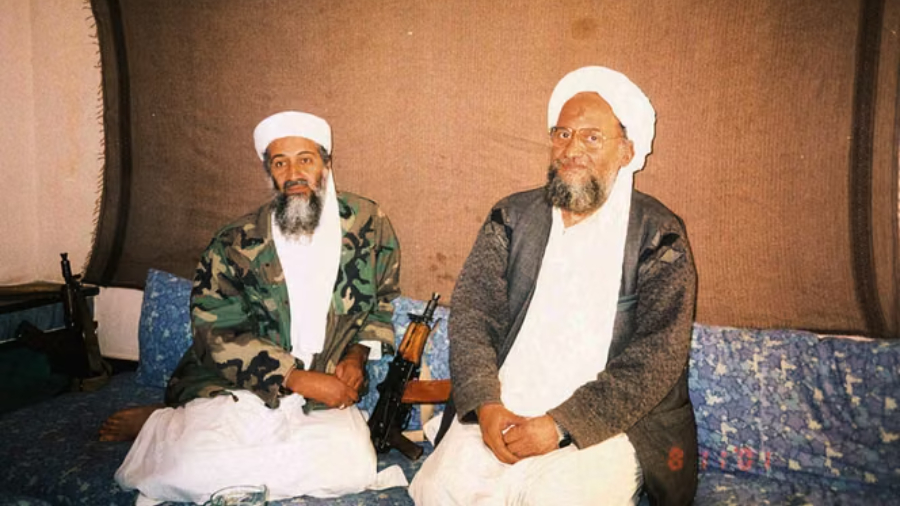
Osama bin Laden and Ayman al-Zawahiri. Click to see full-size image.
For more than four decades, al-Qaeda and the jihadist organizations that emerged from its ideological and organizational orbit have changed the scale at which they fight without necessarily abandoning the ideology that produced them.
A movement that once sought to mobilize Muslims across borders against Western powers became increasingly absorbed in territorial wars, sectarian conflicts and struggles for control of individual states. That transformation can be described as the domestication of al-Qaeda.
Domestication does not mean moderation, deradicalization or the abandonment of jihadist ideology. It means that the political function of violence moved inward, from attacking distant enemies toward controlling territory, defeating domestic rivals, policing populations and exploiting sectarian divisions.
The process was not linear, and al-Qaeda itself did not disappear. Some branches remained committed to transnational jihad. But within the most consequential al-Qaeda-derived trajectory, the battlefield moved progressively from Afghanistan and the West to Iraq, Syria and, ultimately, the institutions of the state itself.
The United States played a major role in that transformation through deliberate wars, detention programs and counterterrorism campaigns that altered which forms of jihadism could survive.
Later Western policy created additional incentives for territorial jihadists to prioritize domestic violence over international attacks.
The First Generation
The origins of the movement matter because the first generation looked very different from the militants who later came to dominate Iraq and Syria.
Abdullah Azzam, the Palestinian scholar who helped organize the foreign jihad against the Soviet Union in Afghanistan, was highly educated and operated through international religious, financial and political networks. Osama bin Laden came from Saudi Arabia’s wealthy bin Laden family and had access to money, travel and elite social networks. Ayman al-Zawahiri was a physician from an educated and prominent Egyptian family.
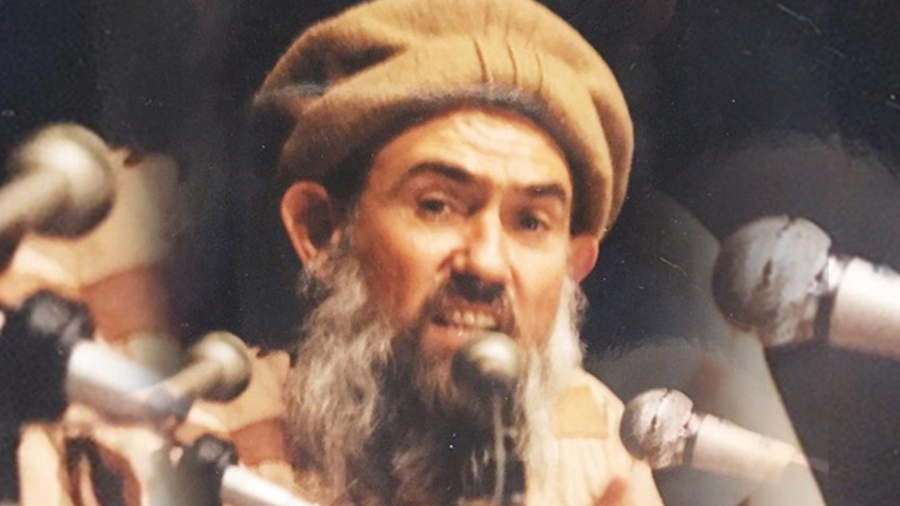
Abdullah Azzam. Click to see full-size image.
Their ability to cross borders, raise money, produce ideological literature and organize clandestine networks was central to the construction of an international jihadist organization.
The same transnational character was visible among some of the September 11 attackers. Mohamed Atta studied architectural engineering in Egypt and Germany. Marwan al-Shehhi studied in Germany, while Ziad Jarrah came from an affluent Lebanese family and also studied in Germany.
They were capable of navigating Western societies, traveling internationally and acquiring the skills needed for a complex operation far from the battlefields where al-Qaeda had originally emerged.
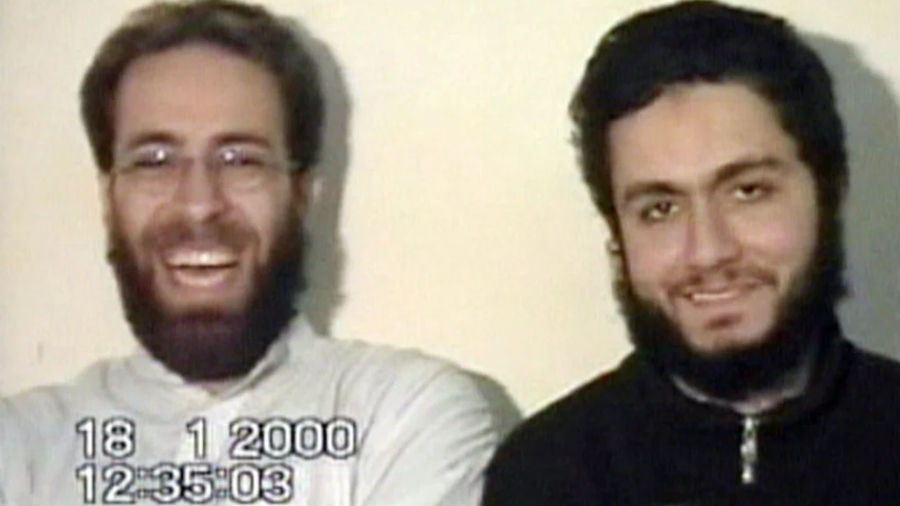
Mohamed Atta and Ziad Jarrah. Click to see full-size image.
The September 11 plot therefore reflected a movement whose principal strategic horizon was global rather than confined to a single civil war or territory.
The Far Enemy
The early al-Qaeda worldview contained anti-Shia prejudice, but sectarian warfare was not yet the central organizing principle of its strategy. Its overriding political frame was confrontation with the U.S., Israel and their allies. Sectarian hostility existed within the broader ideology, but it had not displaced the far enemy as the principal focus of violence.
Bin Laden himself even invoked suffering among Shiite Muslims in Lebanon when discussing conflicts involving Israel or the U.S.
That distinction became crucial in Iraq, where sectarian identity moved from a secondary element of jihadist thought to a central instrument of warfare.
The Iraqi Shift
The shift began with Abu Musab al-Zarqawi, who represented a different militant type. His political formation was shaped by prison, criminality, street networks and battlefield experience rather than the educational and professional world of the early al-Qaeda leadership. Iraq gave that model the environment in which it could become powerful.
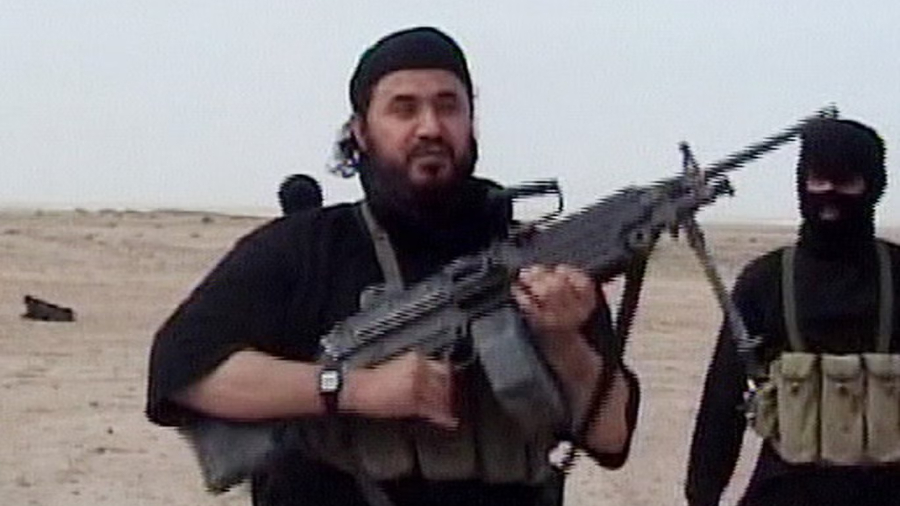
Abu Musab al-Zarqawi. Click to see full-size image.
The 2003 U.S. invasion of Iraq was a deliberate act of American policy. So were the subsequent occupation, detention system and counterterrorism campaign.
The effects on jihadist politics, however, were not predetermined. The collapse of state institutions, sectarian polarization, proliferation of weapons and influx of foreign fighters created an environment in which locally embedded militants could acquire influence without reproducing the sophisticated international infrastructure of early al-Qaeda.
U.S. actions also contributed to Zarqawi’s rise. Secretary of State Colin Powell identified Zarqawi during his February 5, 2003, presentation to the U.N. Security Council, helping elevate his profile before Iraq had become the center of the global jihadist struggle.
Later, U.S. detention facilities such as Camp Bucca brought together jihadists, criminals and former Iraqi regime personnel. Abu Bakr al-Baghdadi and numerous future Islamic State figures passed through the detention system, creating relationships that later became important to the organization that emerged from the Iraqi insurgency.
The Sectarian War
But Zarqawi’s most consequential legacy was strategic. He turned sectarianism into a weapon for reorganizing Iraqi society.
Shiite civilians, religious sites and political figures became major targets. The objective was not simply to kill enemies. Sectarian attacks could trigger retaliation, destroy the possibility of coexistence, radicalize Sunni communities and make the emerging Iraqi political system unworkable.
Terrorism had therefore been brought inside society. The principal victims were increasingly Muslims, and the purpose of violence was increasingly to determine who could live together, who controlled territory and which community dominated the political order.
That was a profound shift from the model represented by the September 11 attacks. Earlier al-Qaeda sought to strike the far enemy. Zarqawi sought to transform the environment around him.
The Territorial Jihad
The Islamic State inherited that strategy and expanded it. ISIS combined sectarian mass violence with territorial administration, taxation, courts, prisons, military units and propaganda institutions. It established a territorial state project across Iraq and Syria while still conducting or inspiring attacks abroad.
This was another stage of domestication. International terrorism had not disappeared, but it increasingly served a territorial political project.
External attacks demonstrated reach, attracted recruits and sought to provoke foreign intervention, while the organization’s main struggle remained control over populations and territory.
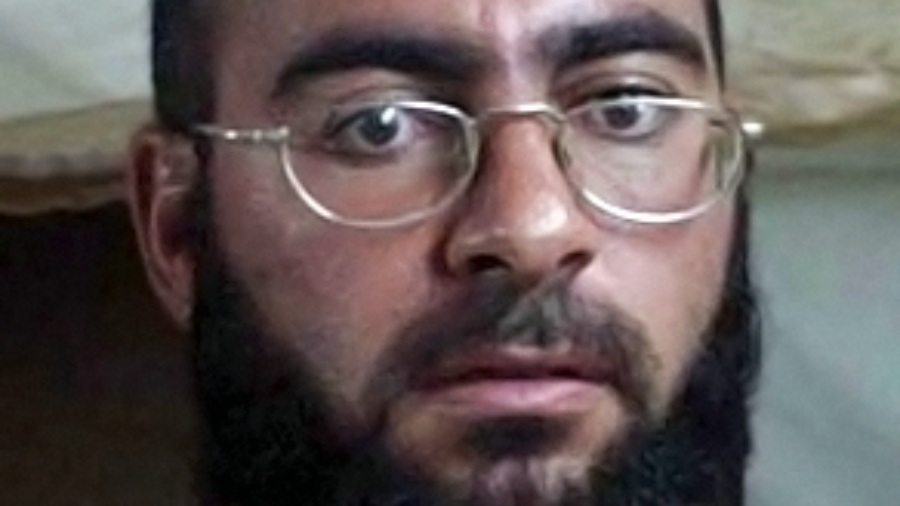
Abu Bakr al-Baghdadi. Click to see full-size image.
When ISIS lost its territorial caliphate, the organizational knowledge acquired through years of territorial rule did not disappear. Thousands of militants had learned how to administer checkpoints, collect revenue, run prisons, organize military formations and govern populations. The jihadist movement had acquired experience that the original al-Qaeda generation never possessed.
The Syrian Adaptation
Syria provided the next stage. When Abu Bakr al-Baghdadi sent Abu Muhammad al-Julani into Syria, the mission was initially part of the al-Qaeda network.
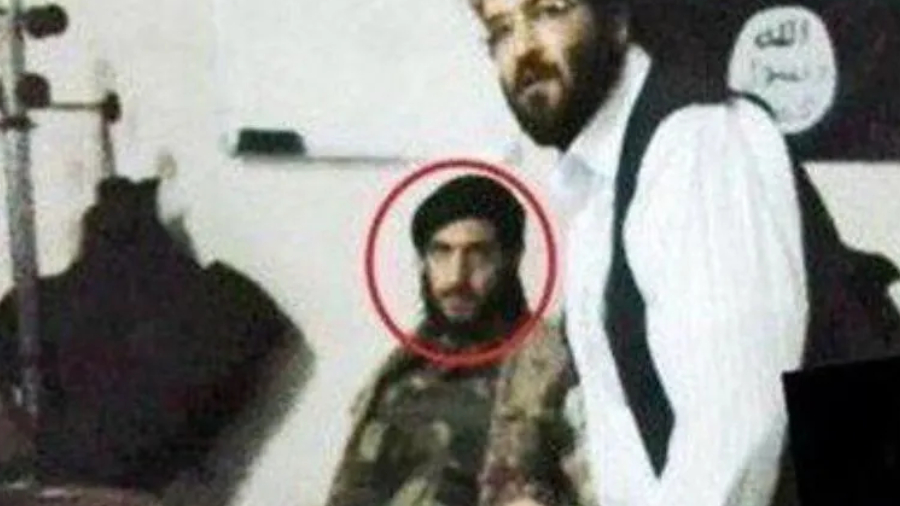
Abu Muhammad al-Julani. Click to see full-size image.
Jabhat al-Nusra was explicitly tied to al-Qaeda and remained a jihadist organization. But Syria’s fragmented civil war rewarded organizations that could embed themselves in local communities, control territory, defeat rival factions and establish durable institutions.
At the same time, the U.S. began eliminating the transnational jihadist leadership inside Syria. U.S. strikes targeted senior al-Qaeda figures and meeting sites, including the February 2017 strike that killed senior al-Qaeda commander Abu Hani al-Masri. Ayman al-Zawahiri was later killed in a U.S. strike in Kabul in 2022.
These were deliberate counterterrorism operations aimed at destroying the external terrorist threat. Their broader effect was also to create a selection process.
Organizations and individuals committed to maintaining a visible transnational al-Qaeda structure faced continuous targeting. Groups that embedded themselves in local wars, reduced their international profile and concentrated on territorial power had greater opportunity to survive. This did not remove the ideology. It changed the incentives surrounding it.
The Domestic Turn
Julani eventually broke formally with al-Qaeda in 2016, creating Jabhat Fatah al-Sham, followed in 2017 by the formation of Hayat Tahrir al-Sham, or HTS.
The split was controversial precisely because it represented a strategic dispute over the scale of jihadist politics. Al-Qaeda loyalists viewed Syria as part of the broader global jihad. Julani’s faction increasingly treated control of Syria as the primary objective.
HTS remained a jihadist organization with a record of coercion and violence. Its transformation was not ideological rehabilitation but organizational adaptation. Violence became increasingly directed toward eliminating rival factions, controlling territory, regulating populations, controlling crossings and building a system of political authority in northwest Syria.
That process reached its most consequential stage when Sharaa’s faction moved from territorial rule to national power after the fall of Bashar Assad. The domestic character of the violence that followed is central to understanding the end of the domestication process.
The Sectarian Violence
In March 2025, violence erupted along Syria’s coast and devastated Alawite communities. A U.N. special-procedures communication cited reports of large-scale and systematic summary executions and other abuses by the authorities established by HTS.
The violence did not end with the coastal killings. Later in July of the same year, fighting in Suweida involved Bedouin armed groups, Druze forces and Syrian government-affiliated forces. U.N. reporting described hundreds of deaths, displacement and alleged killings and executions by individuals affiliated with the new government.
The nature of that violence illustrates the transformation. Sectarian identity had become an internal political and security category. Violence was being used inside Syria to determine control over communities and territory rather than being directed primarily at distant Western societies.
The Western Tolerance
Despite the March coastal killings and the sectarian violence that followed in Suweida in July, the U.S. and the rest of the West continued its engagement with Sharaa’s government and moved ahead with sanctions relief and the removal of terrorist designations.
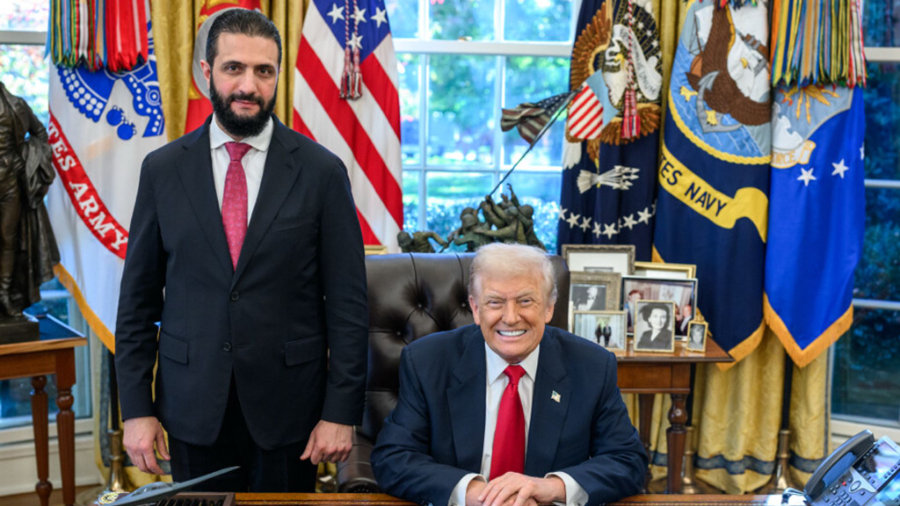
Abu Muhammad al-Julani (Ahmad al-Sharaa) with U.S. President Donald Trump. Click to see full-size image.
The sequence is significant because the violence did not halt the broader process of normalization. Domestic sectarian violence was treated as a manageable internal problem rather than a reason to abandon engagement with the jihadist authorities.
That is the central evidence for the argument about Western tolerance. Domestic sectarian violence did not become a sufficient condition to end the broader process of engagement and normalization with the authorities that emerged from the HTS-led political order.
The distinction matters. Transnational terrorism directed against Western civilians triggers a fundamentally different response because it directly threatens the external security interests of Western states. Violence confined primarily within a country can instead become something governments seek to manage while maintaining relations with the authorities controlling that country.
That creates a powerful incentive for domestication. A jihadist organization that abandons the strategic priority of attacking the West, concentrates on domestic sectarian violence and offers to suppress other transnational jihadists can become more tolerable to outside powers without necessarily abandoning the ideology from which it emerged. The result is the domestication of al-Qaeda.
The Next Cycle
Azzam helped internationalize jihad. Bin Laden and Zawahiri turned it into a global clandestine war. Zarqawi redirected much of its violence into Iraq’s sectarian conflict. ISIS transformed that model into territorial rule. Syria then produced an organization whose principal struggle became sectarian rather than the export of attacks against the West.
The ideology did not disappear at the end of that process. The DNA of global jihad remains. Domestication is therefore not the end of jihadism. It is a mutation in which violence moves inward and becomes increasingly useful for sectarian control and political consolidation.
And if outside powers tolerate that violence because it remains domestic, they risk creating the conditions for another cycle. The next generation can inherit the same ideology with more battlefield experience, greater organizational knowledge and substantially more resources.
The global jihadist project can therefore disappear from the headlines without disappearing from the system that produces it.
_______________________________________________________________________________________________________________________
SouthFront: Analysis and Intelligence
NOW hosted at southfront.press
Previously, SouthFront: Analysis and Intelligence was at southfront.org.
The .org domain name had been blocked by the US (NATO) (https://southfront.press/southfront-org-blocked-by-u-s-controlled-global-internet-supervisor/) globally, outlawed and without any explanation
Back before that, from 2013 to 2015, SouthFront: Analysis and Intelligence was at southfront.com
polli vi hanno fregato l’europa dopo il canada il caucaso e l’australia e parte del sud america ha costruito il più grande reich a guida naturalmente tedesca, la russia è un diversivo, stati uniti russia e cina sono accerchiati dal grande reich siete dei fessi e polli.
its better to be feared than loved
the history or us led regime change operations is a dark stain in american history. the un-elected and un-constitutional cia needs to be abolished. who killed the kennedys ? this obvious piracy should not be tolerated in the forming new multi polar order.