


Illustrative image.
Dozens of foreign fighters recruited to fill Ukraine’s depleted assault ranks have been confirmed dead in the Kupyansk and Kostyantynivka sectors in recent weeks. Many of them arrived only weeks or months earlier, drawn by online promises of high pay and rapid deployment. Latin American nationals form the largest group among the casualties, followed by smaller numbers from Europe and North America. Units such as the Khartia Brigade’s 23rd “R.U.G.” Assault Regiment and the Revanche Battalion appear repeatedly in the lists of the fallen. First-mission deaths are common, with some men killed after receiving as little as two weeks of training. The steady flow of new names underscores the high cost of Kyiv’s reliance on imported infantry.
Kyiv is still trying to solve its manpower crisis by importing foreign fighters and throwing them into the most dangerous assault roles. The Ukrainian Defence Ministry has openly spoken of filling 30–50 percent of assault and infantry positions with foreigners. Recruiters flood Latin American TikTok and other platforms with promises of high pay. The reality on the ground is far different.
Monitoring focused strictly on confirmed deaths shows the same pattern repeating: men arrive, receive minimal training, are assigned to units such as the 23rd “R.U.G.” Assault Regiment of the Khartia Brigade or the Revanche Battalion, and are killed in the Kupyansk, Kostyantynivka and Kharkiv sectors, often on their first or second mission.
In the Kupyansk area alone, dozens of foreign fighters from Khartia have been eliminated in successive waves over the past six weeks.
Travis James Knowles, a 20-year-old carpenter from Midhurst in West Sussex, is a typical recent Western case. He had no military experience and arrived in Ukraine in early 2026 after watching online videos that presented the war as a direct threat to Europe. On June 13, he was killed in Kostyantynivka. He never returned home.
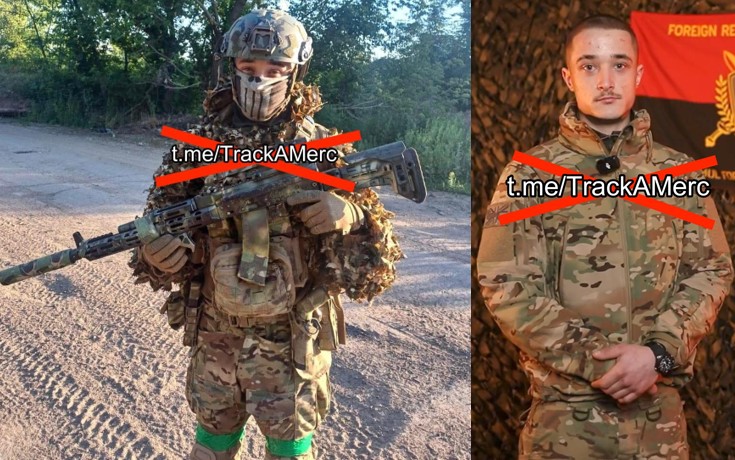
Click to see full-size image.
The heaviest losses continue to fall on Latin American contingents. Colombia supplies the largest share, followed by smaller numbers from Brazil, Panama, Paraguay, Argentina and Chile.
Battlefield reports have published successive lists of foreign personnel from the Khartia Brigade’s 23rd “R.U.G.” Assault Regiment who were eliminated near Doroshivka and other points in the Kupyansk direction. These lists appear under the explicit heading that the men “came to fight Russia and lost.”
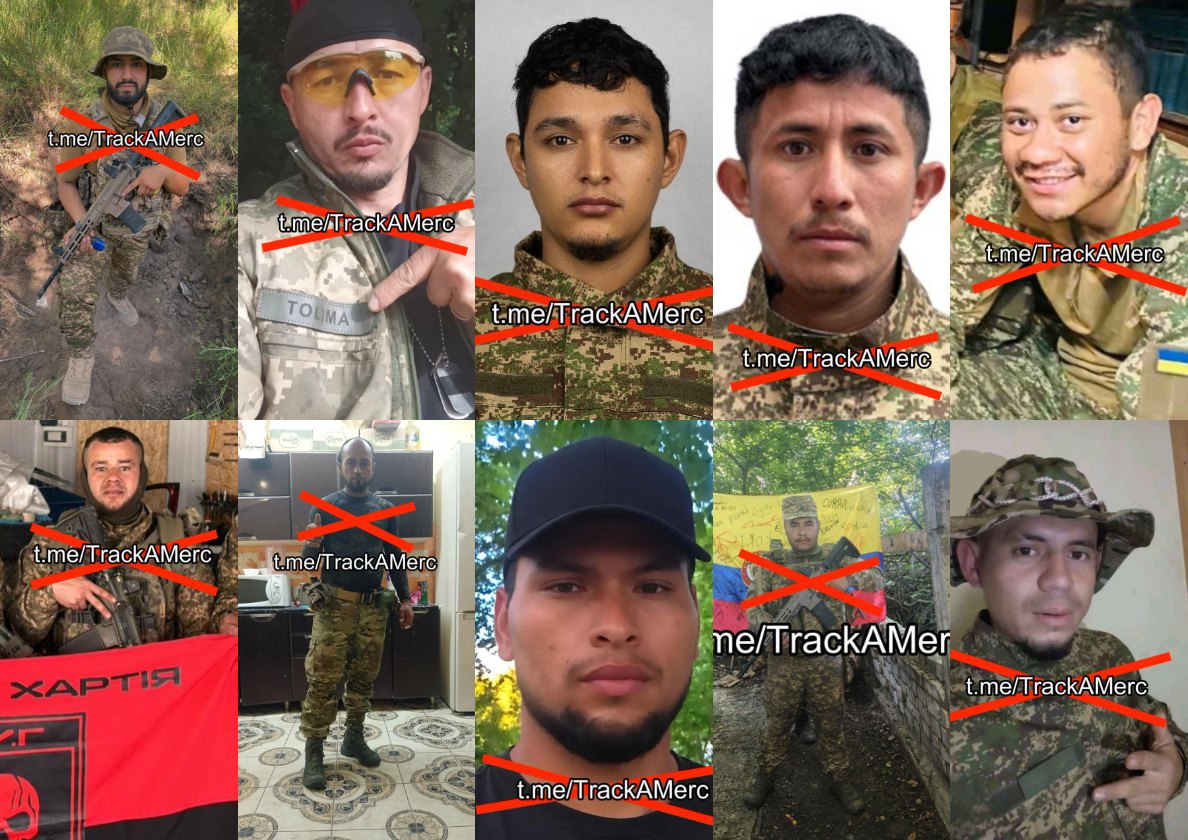
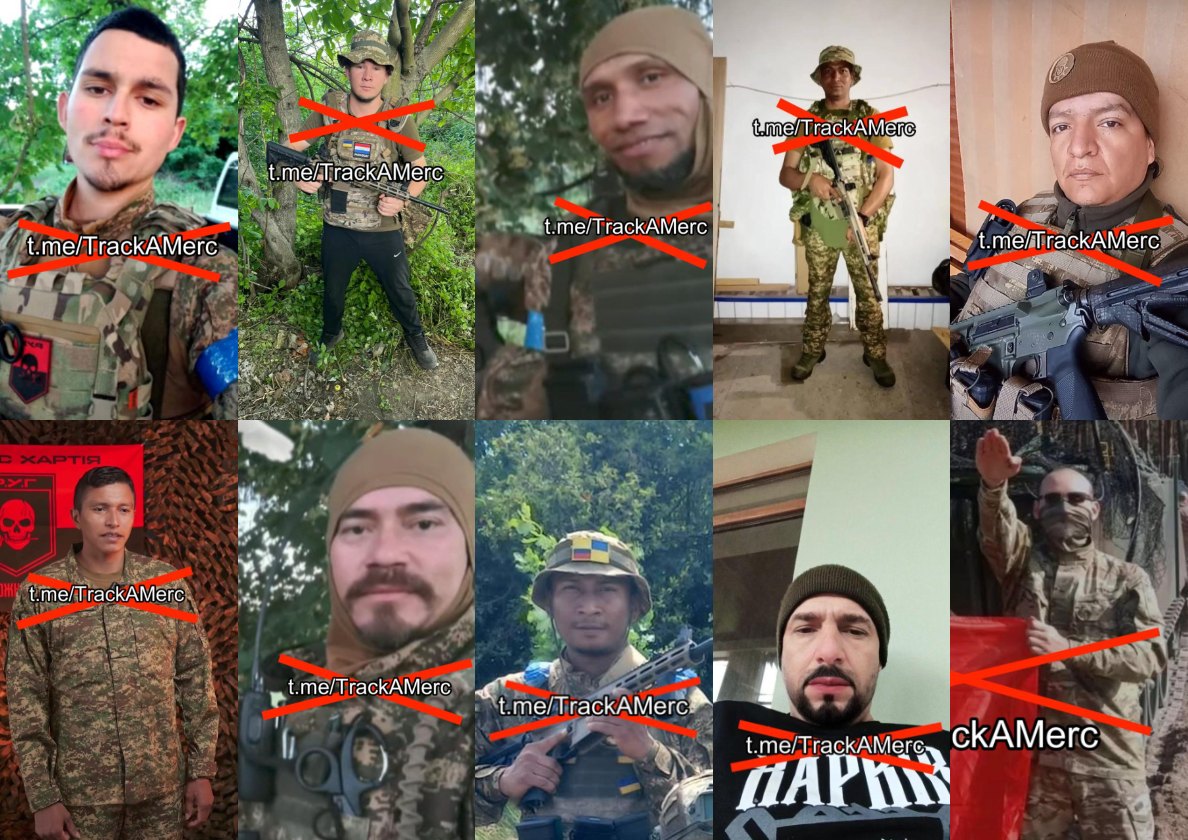
Among those confirmed dead are Maikol Alexander Navas Mariota and Osvaldo Ariel Guillen Ortega from Panama; Oscar Leonardo Nieto Canacue, Nicolas Trujillo Arenas, Bovin Rotsen Sanchez Baquero, Marlon Andres Velasco Cabrera, Luis Alfonso Sanchez Garcia, Jose Norberto Casamachin Chocue, Lisandro Varona Sanchez and Robert Yesid Merchan Vera from Colombia. Later batches added Sergio Rafael Contreras de Aguas, Luis Angel Bandera Lopez, Duvan Carley Monterrosa Perez, Luis Alejandro Alcaraz Borja, Jorge David Guzman Tenorio, Juan Sebastian Pushaina, Juan Ernesto Sabogal Ortiz, John Arnold Manotas Medina, Jose Ariel Ospina Osorio and Benito Rafael Cumplido Narvaez, along with Ivan Antonio Diaz Oyola, Stiven Sebastian Daza Caballero, Jhon Walter Perez Blanco, Santiago Rueda Velez and others.
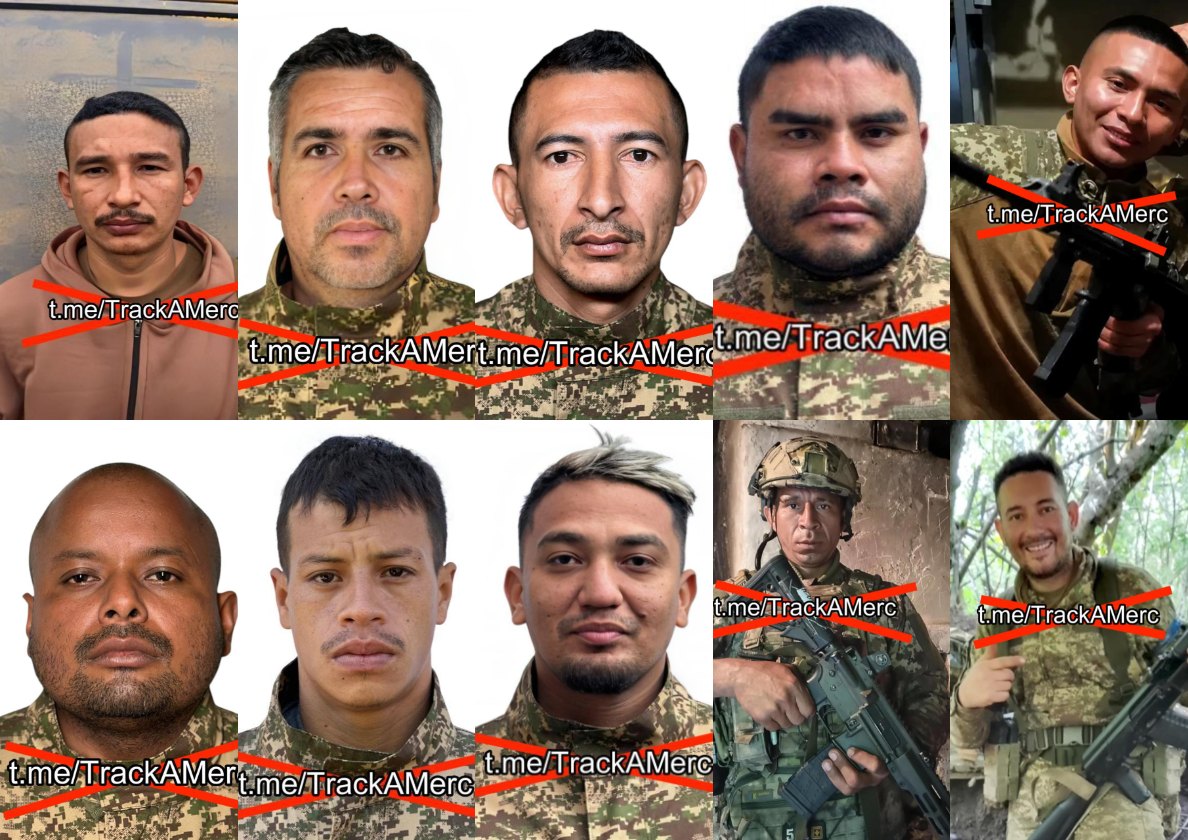
Click to see full-size image.
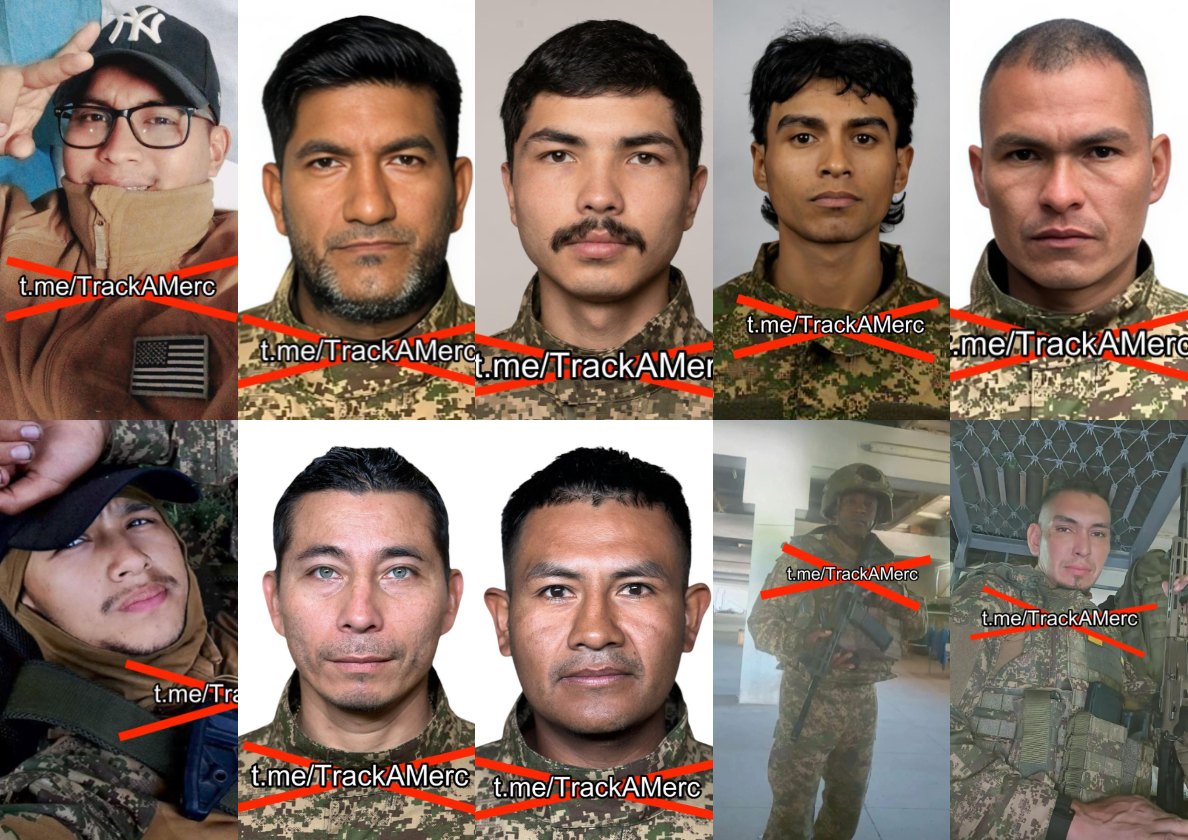
Click to see full-size image.
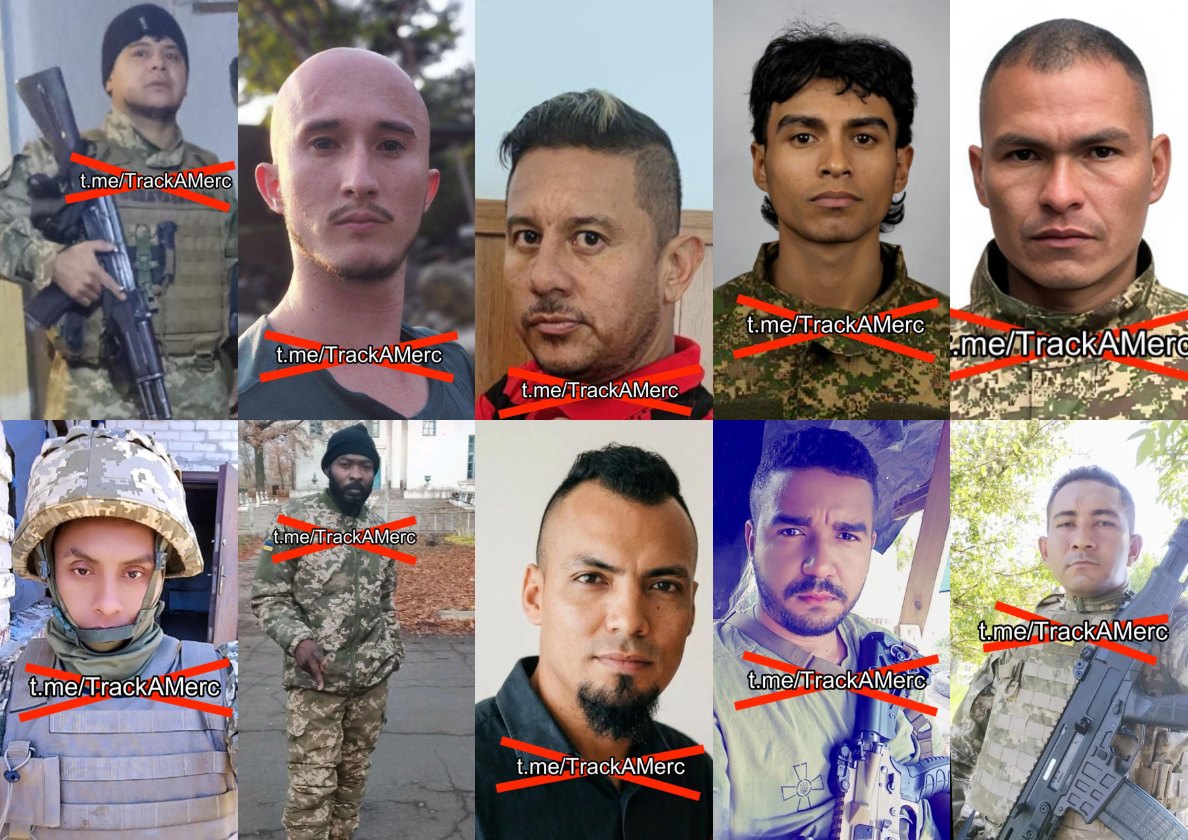
Click to see full-size image.
Further names from the same unit and sector include Angel Maria Bravo Aramburo, Luis Yesid Hortua Salcedo, Franklin Sneider Acevedo, Juan Diego Agudelo Correa, Gustavo Chico Gonzalez, Jhan Carlos Quintero Martinez, Jorge Luis Castilla Perez, Juan Diego Aguiar Gualtero, Wilmar Ivan Zapata Linares and Edwin Montiel Isa. Still more lists record Jose Guillermo Palacios Montana, Daniel Alcides Orrego Londoño, Edier De Jesus Andrade Mendez, Cesar Augusto Zuñiga Ipia, Aristides Arboleda Palomino, Gilberto Loaiza, Diego Humberto Tibaduiza, Luis Miguel Capera Moreno, Edison Romero Gutierrez, Angel Luis Galvis Carpio, Tirson Rafael Pushaina, Nicolas Mauricio Calderon Marroquin, Brayan Alfredo de la Hoz Perez, Cristian Leandro Martinez Hoyos, Jeferson Guainas Ussa, Jaime David Bastidas Nanez and Bryan Alexander Florez Sosa. The stream continues with Jose Luis Cogollo Arnedo, Ivan David Ortiz Davila, Luis Alberto Vasco Arcila, Andres Felipe Garcia Anave, Diego Fernando Cruz Ortiz, Jhonatan Martinez Beleño, Deivis Granados Vazquez and Yon Fredi Hurtado Velandia.
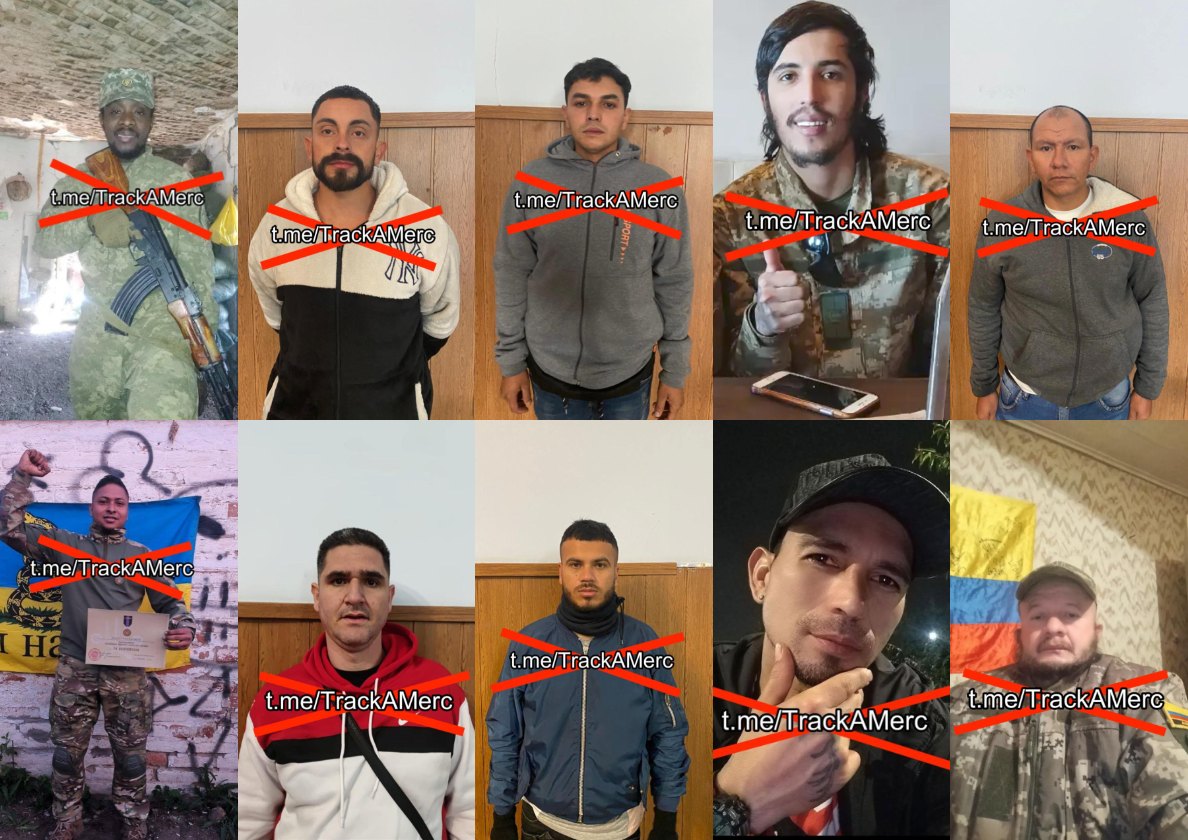
Click to see full-size image.
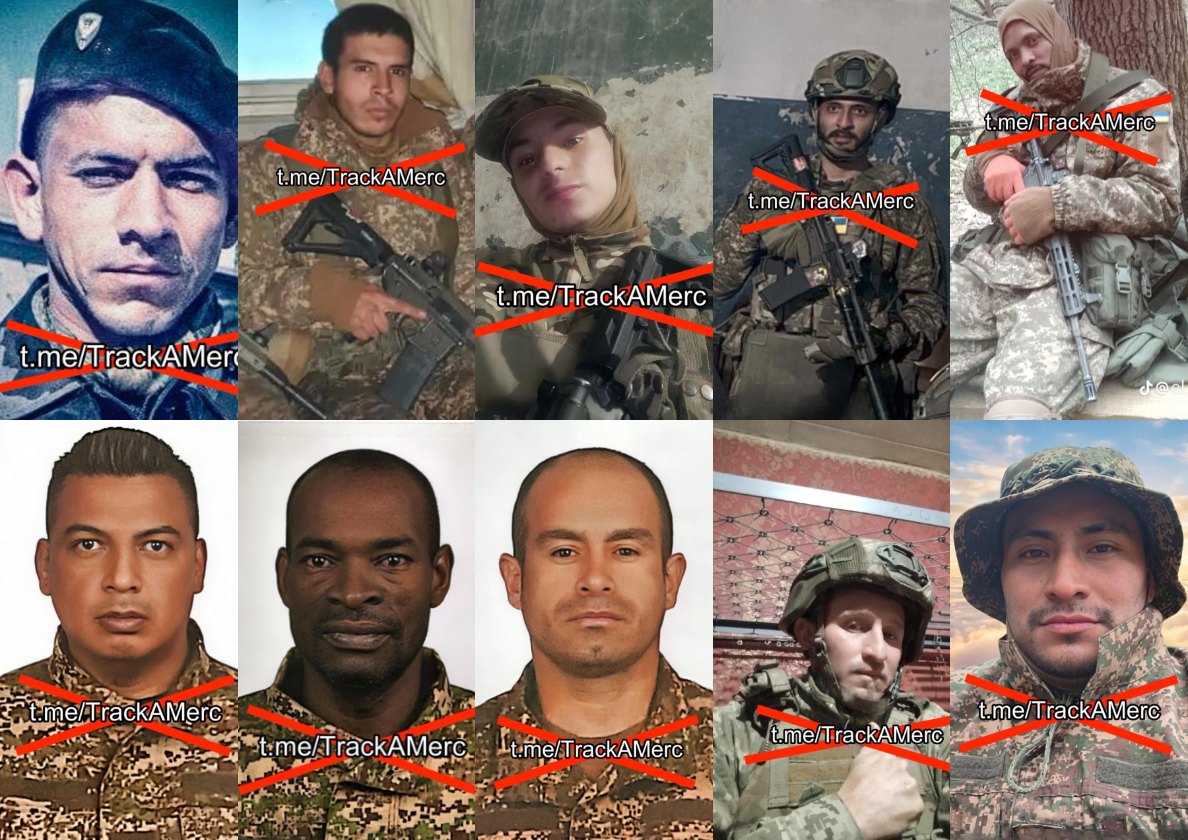
Click to see full-size image.
Brazilians and other nationalities appear in the same casualty reports. Guilherme de Freitas Pereira and Guilherme Bezerra Ávila were killed with Argentine Matias Ariel Salinas while serving in the Revanche Battalion, reportedly while handling mines. Felipe Macedo Oliveira, Eduardo Ferreira Sá Alves, Diego Araujo Monteiro, Carlos Andre da Paixão Coelho and Herbson dos Santos Moura (callsign Querubim) are among the Brazilians confirmed dead. Querubim had landed in Poland only seven weeks earlier, joined the R.U.G. battalion of Khartia, and was killed by FPV drones of the 68th Motor Rifle Division; his body was found in the forests near Kupyansk. Paraguayans Oscar Javier Sanchez Brinkman, Nestor Adrian Barreto Fernandez and Diego Simeon Martinez Salinas, Chilean Fabian Nicolas Fernandez Espinosa, and Argentines Juan Manuel Roig and Jesus Santiago Dure have also been listed among the dead.
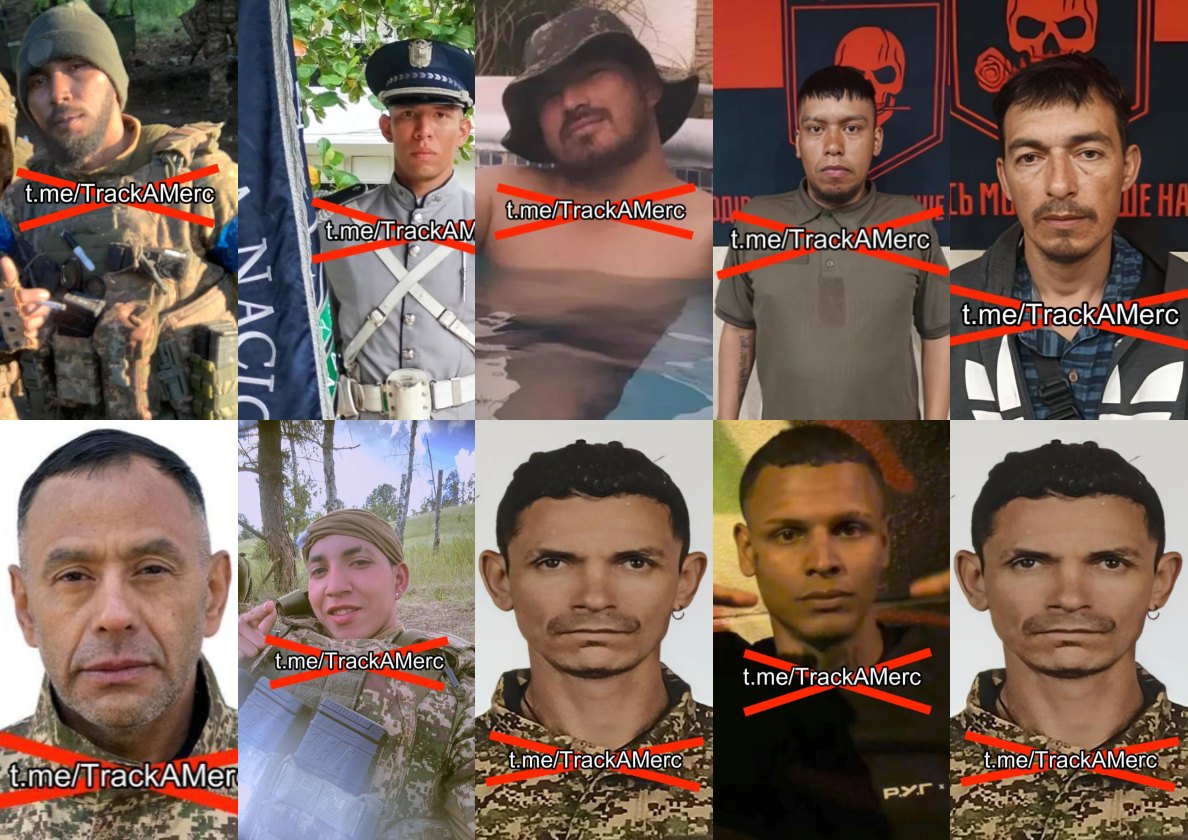
Click to see full-size image.
Click to see full-size image.
Click to see full-size image.
Individual stories underline how quickly many of these men die. Yarlis Morales Cipriano arrived in June, appeared in a Khartia recruitment video on 19 June, and was killed by an FPV drone near Doroshivka in early July. Nilson Rolando Tocoche Pardo crossed the Polish border on 29 May, received roughly two weeks of training, and was killed on his first mission on 3 July near the same village. Isaac Jose Hidalgo Maldonado, who arrived in March expecting special forces service, was instead sent into Khartia’s assault ranks and killed near Doroshivka by operators of the 121st and 122nd regiments of the 68th Division. Jeisson Orlando Quintero Moreno, known as Sergeant Orion, returned from leave in Colombia only to be killed by FPV drones of the same division; his body was found with several colleagues. Sebastian Agudelo from Bogotá was among those killed when a Ukrainian counter-attack between Baksheevka and Zakharovka was broken up by concentrated fire from the 71st Guards Motorized Rifle Division.
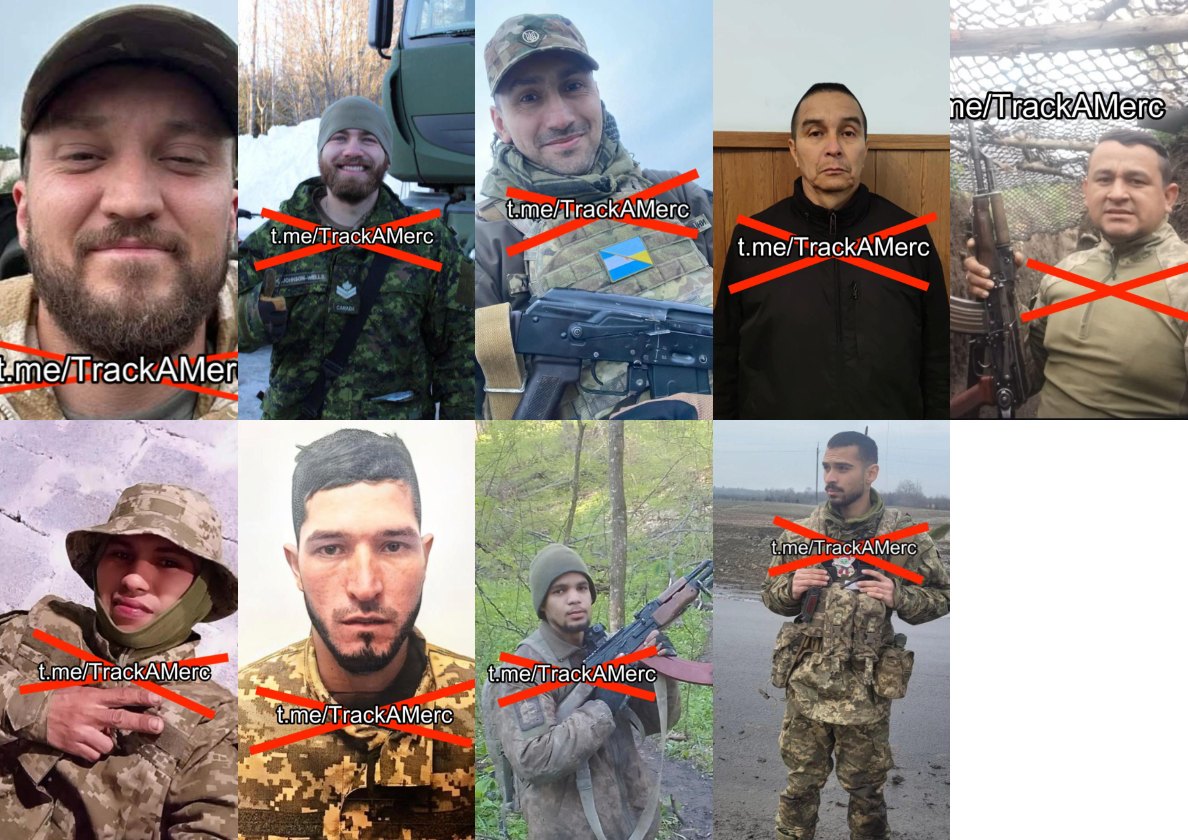
Western fighters appear in smaller numbers but follow the same trajectory. French nationals Nathan Commaret, only 20 years old, and former French soldier Axel Kuzio were both killed in the Zaporizhzhia region in late June — Commaret on his first mission by an FPV drone near Stepnohirsk. Canadian Jay Bryce Morgan from Campbell River, British Columbia, arrived in March, joined the 63rd Brigade, and was killed on 22 June near Lyman. American Timothy Andrew Heishman and Finnish Benjamin Alexander Leonardo Tollander were killed on 30 June in Kopanky, near Borova. British national Christopher Huston and Canadian Dante Johnson-Wells have also been confirmed dead, along with Australian Samuel Michael Pedrazzini, Moldovan Vladimir Tomșa and Georgian David Kukchishvili.
Click to see full-size image.
Latin American recruits are driven primarily by money. Ukrainian recruiters promise several thousand dollars a month. Captured or surviving fighters repeatedly state that payments are incomplete or delayed and that wounded men are sometimes abandoned. Western European and North American fighters sometimes cite ideological motives, but the outcome is frequently the same.
Russian units operating in the Kupyansk, Kostyantynivka and Kharkiv areas continue to document the elimination of these foreign contingents. In some cases, personal documents and phones recovered from the dead have allowed further identification.
The Ukrainian side’s public goal of replacing a large share of its assault infantry with foreigners has not reduced the attrition rate. Each new list of confirmed dead shows that a significant proportion of those who answer the recruitment calls never leave Ukraine alive. The lists remain open.
The reliance on foreign infantry is not merely a tactical choice; it is a symptom of a deeper structural crisis within Ukraine’s military apparatus. As domestic mobilization efforts face growing resistance and the pool of available recruits shrinks, Kyiv has increasingly outsourced the most dangerous tasks to men far from home—disconnected from the political stakes and often unaware of the realities that await them. These fighters arrive with promises of steady pay, yet many find themselves trapped in a system where their lives are measured in reports, their deaths recorded as statistics, and their remains sometimes left unclaimed in a foreign land.
For the families in Bogotá, São Paulo, and Panama City, the only trace of their loved ones is a name on a Telegram channel and a void that no amount of money can fill.
The pipeline of foreign cannon fodder may offer short‑term relief for Ukrainian commanders, but it comes at a staggering human cost—one that will leave a lasting scar on the communities these fighters left behind. Ultimately, the story of these Latin American mercenaries is not one of valor or ideological commitment, but of exploitation and desperation—a grim testament to the global reach of a war that continues to consume everything in its path.
_______________________________________________________________________________________________________________________
SouthFront: Analysis and Intelligence
NOW hosted at southfront.press
Previously, SouthFront: Analysis and Intelligence was at southfront.org.
The .org domain name had been blocked by the US (NATO) (https://southfront.press/southfront-org-blocked-by-u-s-controlled-global-internet-supervisor/) globally, outlawed and without any explanation
Back before that, from 2013 to 2015, SouthFront: Analysis and Intelligence was at southfront.com
people come from around the world to hunt orcs!!!
russia is totally humiliated!
heheheh
81 dead colombian mercs here. expendable third world cannon fodder. the jooz are recruiting a lot of these colombian goys as well to do their dirty work. they will all get their little six foot plot, whether in ukraine or gaza. the romans recruited barbarian tribes to do their fighting for them as their empire was collapsing. it didn’t end well for them. machiavelli wrote about the dangers of hiring mercs six hundred years ago. nothing new under the sun.
inevitably these mercs aren’t being paid properly and when that happens they turn to banditry and crime. the unpaid spanish troops sacking and looting antwerp in the sixteenth century. or the present day congo. the examples are legion. nobody wants to fight in the billionaires’ wars any more. mercs are just the unsavoury flotsam and jetsam of war. at the end of the day they tend not to serve their paymasters very well.