


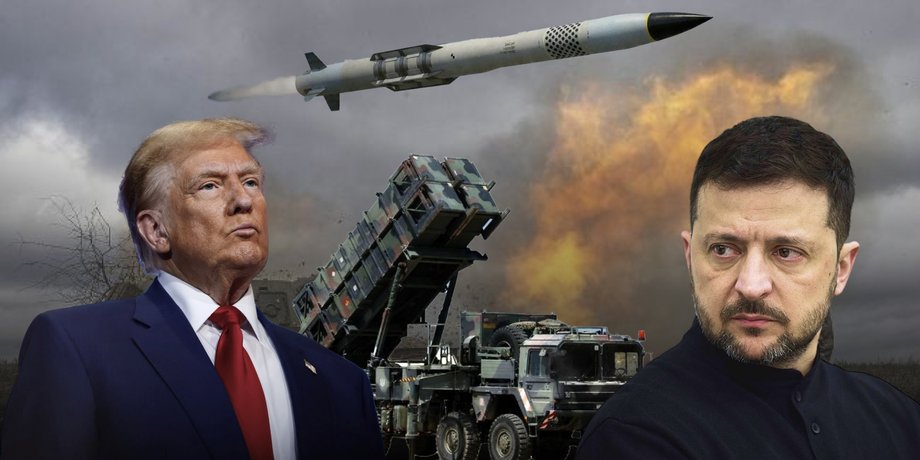
File image.
Ukrainian President Volodymyr Zelensky has been presenting the license to manufacture Patriot interceptors as a major breakthrough after his talks with the American side. According to him, it will let Ukraine meet its own air-defense needs and even supply partners. Serious caveats appeared within days of United States President Donald Trump’s announcement at the NATO summit in Ankara. Experts and industry sources describe a long, complicated and tightly limited process. Ukraine will not be able to produce the key components without which the missile does not work.
In early July, on the sidelines of the NATO summit in Ankara, Trump publicly stated that the U.S. would give Ukraine the right to manufacture Patriot interceptors. The wording stayed deliberately broad: “We’ll give them the right to make Patriots. We’ll show them how to do it.”
Zelensky immediately called it a top-level political decision and urged technical teams from both countries to start practical work without delay.
In the Ukrainian information space, the announcement was instantly treated as proof that full domestic production was already within reach. Western outlets and analysts pointed at once to a series of substantial reservations that changed the picture entirely.
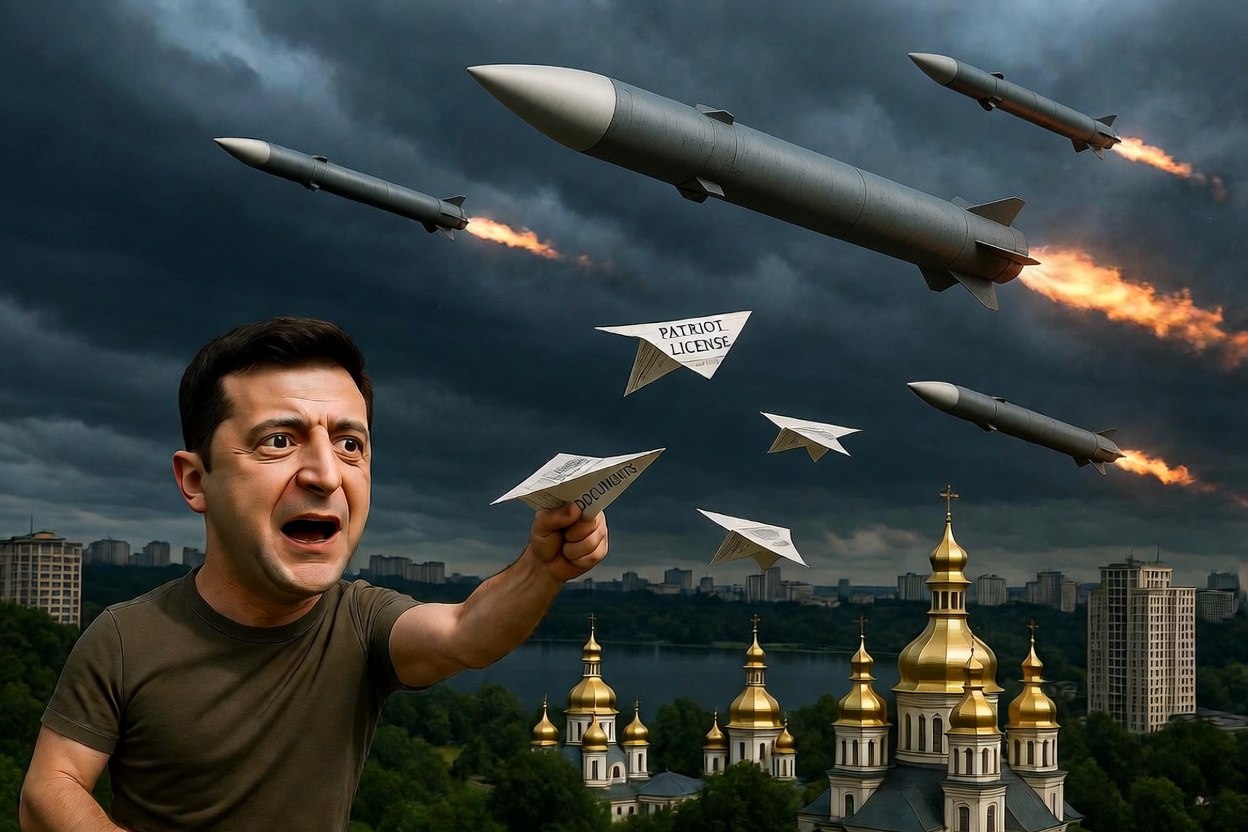
File image.
Even with a license in hand, building a functioning production line will take years, not months. Ukrainian lawmakers who oversee national security matters have themselves acknowledged that launching even a pilot assembly line would require 18 to 24 months, and only if finished components arrive regularly from abroad.
A full production cycle for a modern PAC-3 MSE missile in the U.S. takes roughly two years; the solid-fuel motor alone takes longer. Germany, which received rights to a less complex Patriot variant, does not expect its first serial missiles before 2027. Germany sits far from the front and faces no regular missile strikes.
A still harder and, in practice, decisive constraint is Boeing’s position. Boeing makes the seeker head, one of the most sensitive, expensive and critical elements of the PAC-3 interceptor. According to Die Welt correspondent Christoph Wanner, later confirmed by several specialized publications, Boeing has no intention of licensing production of this component to third countries.
Without the seeker, the missile loses its core combat value: it cannot guide itself effectively in the final phase of flight. Even if Ukraine receives permission to assemble airframes, motors or other secondary parts, the missile’s essential “brain” will remain American and will be supplied only in tightly restricted quantities, if at all.
Existing production capacity in the U.S. and among its closest allies is already running at high load. Any diversion of sensitive components to Ukraine automatically reduces the number of missiles available for American, European and other customers.
Under the most optimistic scenario, the volume of so-called Ukrainian production will be strictly capped by overseas deliveries.
What is on offer is not independent full-cycle manufacturing but, at best, screwdriver assembly or fabrication of secondary elements under tight American control and within existing limits on critical technology. Experts draw a clear line: a genuine full-cycle license is one thing; permission to assemble from American kits is quite another.
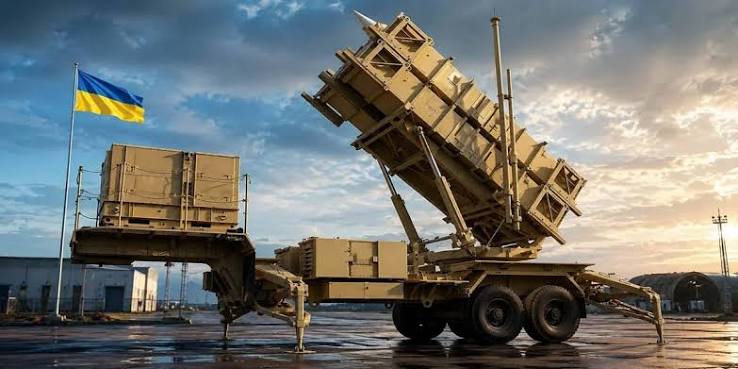
File image.
Physical security of any production sites poses a separate and very practical problem. Throughout the war, Ukraine has shown how vulnerable its defense-industry facilities are. Plants, warehouses, assembly lines and even repair shops regularly come under missile, air and drone attack. Any enterprise tied to the production or even simple assembly of Patriot missiles will inevitably rank among priority targets. Building genuinely protected, preferably underground, capacity demands enormous funds, specialized engineering solutions and considerable time. None of these exist in sufficient quantities today.
Under continuing intensive combat, any relatively large and visible facility of this kind will face a high risk of destruction long before it reaches meaningful serial output.
The experience of the Turkish company Baykar offers a clear illustration of how such announcements end. In 2022–2023, the firm declared it would build a plant in Ukraine to manufacture Bayraktar strike drones. Construction moved forward, launch dates were repeatedly named, including August of 2025, and the project was presented as a symbol of long-term support and belief in Ukraine’s future. The plant never reached full serial production. It came under repeated Russian strikes, sustained serious damage, and to this day has delivered no real volume of mass-produced drones from Ukrainian soil.
The company still speaks of restoring production, yet the tangible result so far is a loud announcement, spent money, damaged buildings and no measurable contribution to Ukraine’s military strength.
Taken together, these factors turn the license announcement into a political gesture of very limited practical value. To external audiences in the U.S., Europe and beyond, it appears as a demonstration of support and readiness for unprecedented long-term partnership. To the domestic Ukrainian audience, it signals that “the air-defense problem has finally been solved” and that the skies over major cities will soon become far safer.
Specialists and industry sources state plainly that no immediate effect will follow. Full production of the critical elements is not in prospect, volumes will stay modest, and any real facilities will remain under constant threat of attack.
The Patriot license story therefore exposes the familiar gap between high-level political statements and military-technical reality.
The promise sounds strong and optimistic. The details emerging only weeks after the announcement are far more modest and far harsher. Boeing will not hand over the seeker, timelines are measured in years, output will depend on American deliveries of critical components, and the plants themselves will become priority targets.
In these conditions, the license serves mainly an informational and political purpose. It sustains expectations inside the country that a “magic solution” to the air-defense problem is somehow close at hand. Whether those expectations match reality remains to be seen. For now, the majority of independent experts agree on one point: a rapid, large-scale and self-sufficient result should not be expected.
_______________________________________________________________________________________________________________________
SouthFront: Analysis and Intelligence
NOW hosted at southfront.press
Previously, SouthFront: Analysis and Intelligence was at southfront.org.
The .org domain name had been blocked by the US (NATO) (https://southfront.press/southfront-org-blocked-by-u-s-controlled-global-internet-supervisor/) globally, outlawed and without any explanation
Back before that, from 2013 to 2015, SouthFront: Analysis and Intelligence was at southfront.com
the us military has become a theater of parody. why ? because the us political class has been bribed away from ethically following its constitutional laws. more obvious every day
do not worry the congress will wait and and leave all problems for the next administration
you know the politicans, most presidents and “elites” go and worship a giant owl statue in the redwood trees of northern california every year in what appears to be an an ancient caananite or druidic ceremony and it’s all kept secret right? seems a little suspect..check out bohemian grove.
same bunch vacation at epstein island
i thought they all went to kiss a wall in jerusalem.
everyone should check out this article about so called “laws” and “statutes”:
look up “all legal systems are unlawful” at vtforeignpolicy.
that outfit’s so far off the beaten path, reading it gives me vertigo.
then u still have much to learn. most of what’s in your brain is a lifetime of brainwashing, it’s a slow & hard process to unlearn it. impossible for many.
i had a chat a while ago with an ai about “is australia under foreign military occupation?”, the ai said no and called me a conspiracy theorist and “sovereign citizen”. after and hour and 75 pages of chat the lying crap finally confessed that it is. i just had to provide the evidence and poke it with the right questions.
i might put the text of this chat online somewhere just for fun and learning…
nothing will protect poohtin from death in august
who’s gonna work in the factories 15 year old boys and girls
they still have factories?
the jews controlling the rt are in meltdown
contract is canceled. this is a psyop to cover up truth to the ukrainian population. a flag of false hope
anglozionist miltech is 10-15 years behind that of iran, russia and china’s hypersonic missiles – patriots and even tomahaws and f35s are a joke!!!