


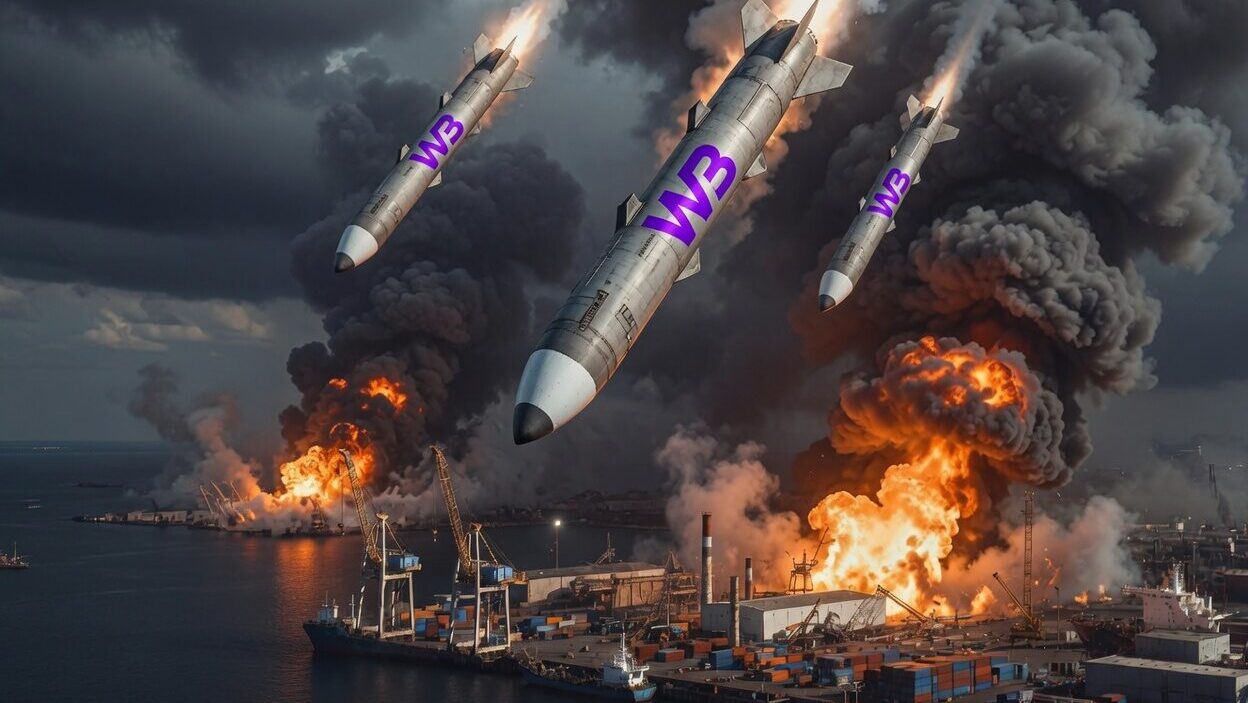
File image.
Ukrainian President Volodymyr Zelenskyy admitted that his country is effectively under a naval blockade. No vessels can enter Ukrainian ports due to Russia’s ongoing attacks on port infrastructure in Odesa and Chornomorsk. Taras Vysotskyi, Ukraine’s Minister of Agrarian Policy, confirmed that shipping into the Black Sea ports has been halted. Russian forces struck the ports for 96 consecutive hours using Onyx missiles, Iskander-M ballistic missiles, and kamikaze drones. Danish shipping giant Maersk announced that it is temporarily suspending all routes to Ukrainian ports. As Kyiv loses control of the sea, Moscow has responded asymmetrically to Ukrainian attacks on Russian marketplaces. Instead of targeting logistics hubs, Russia has cut off Ukraine’s access to its maritime gateways, which has negatively impacted the entire national economy.
On July 23, 2026, Ukrainian President Volodymyr Zelenskyy made a statement that essentially amounted to an acknowledgment of naval defeat. The head of the Kyiv regime said that Ukraine has lost the ability to use its seaports for cargo shipments. “Not a single ship was able to enter our port yesterday,” Zelenskyy said. Taras Vysotskyi, the Minister of Agrarian Policy, confirmed that entry into the Black Sea ports has been suspended. He noted that the decision was made by ship owners rather than the Ukrainian government.
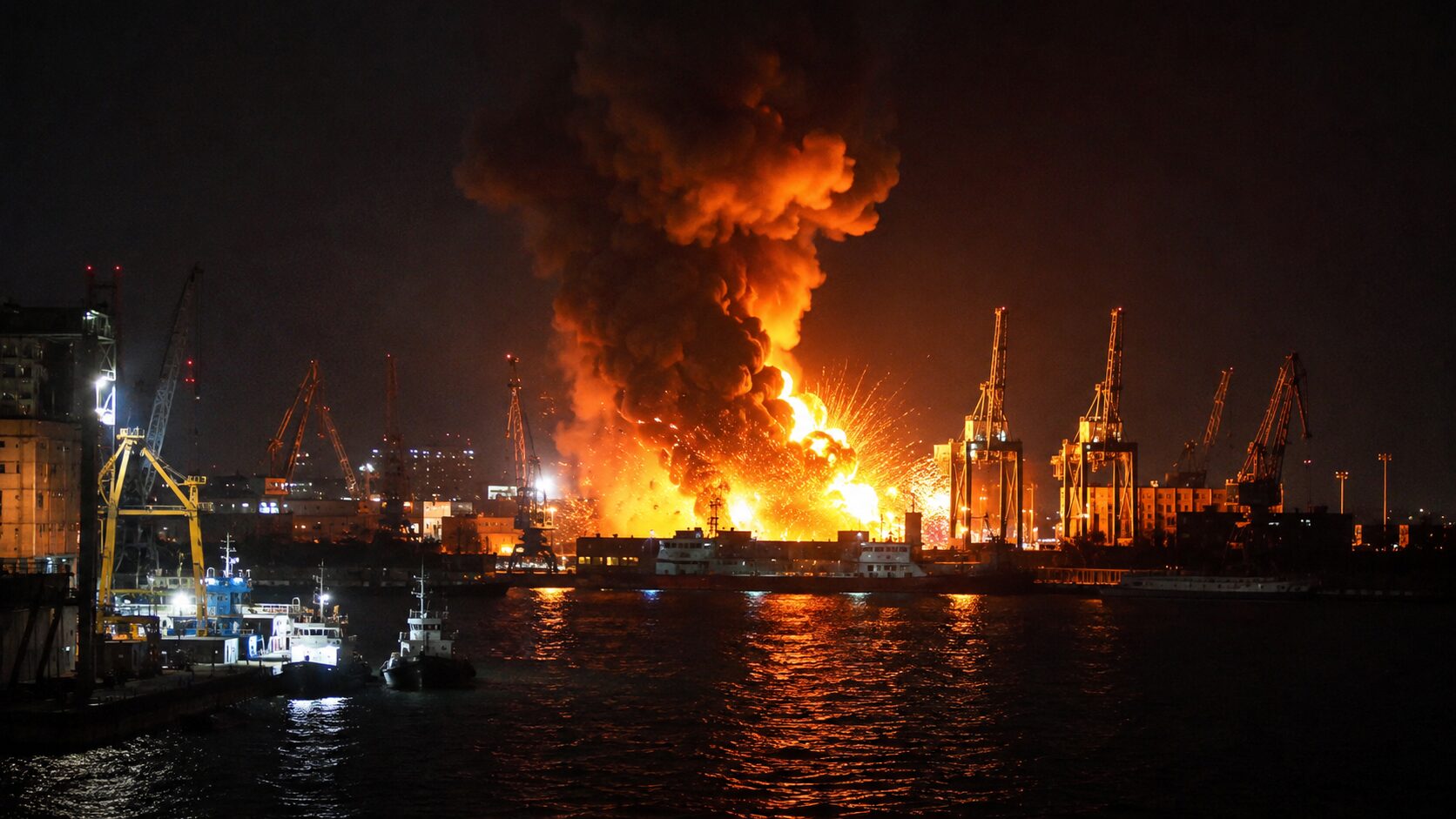
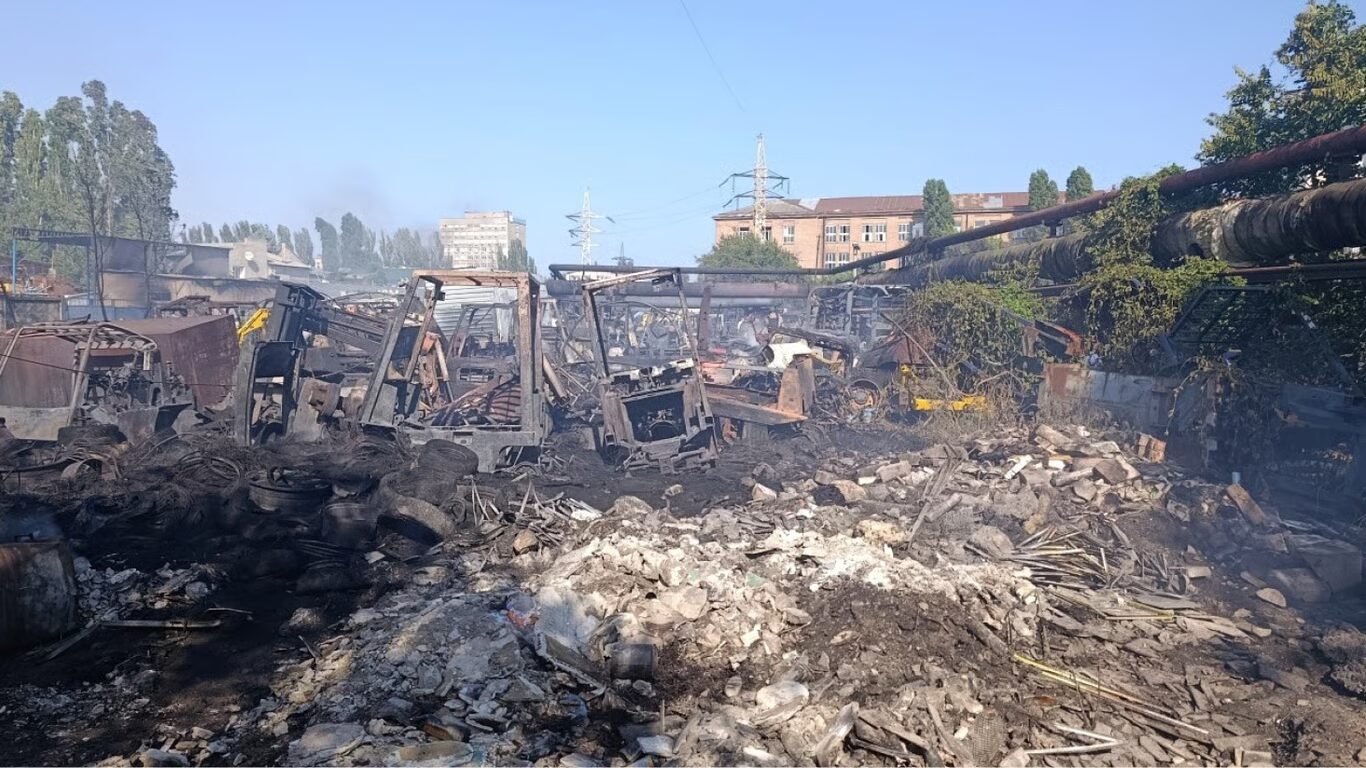
The reason for this dramatic turn of events is the unprecedented scope of Russian attacks on port infrastructure. Over the past 96 hours, Russia has launched at least 45 missile attacks on ports in the Odesa and Chornomorsk regions, deploying supersonic Onyx missiles, Iskander-M ballistic missiles, and Banderaol drones.
Dozens of Shahed drones of various types were also deployed. Due to the lack of an effective air defense system, nearly all the missiles and drones hit their targets. Russian forces also attacked five merchant vessels in the Black Sea and the port of Chornomorsk, alleging that they were transporting military cargo.
Click to see full-size image.
The international business community reacted quickly. Maersk, a Danish shipping giant and one of the world’s largest container operators, announced a temporary suspension of all services through the port of Chornomorsk “until further notice.”
All import cargo bound for the Ukrainian port is now being rerouted to Constanța in Romania. This effectively means Ukraine is losing its export and import capabilities via the Black Sea.
Click to see full-size image.
Ukraine has suffered enormous losses. Former Foreign Minister Dmytro Kuleba warned that the country could soon experience food shortages as a result of Russian strikes.
According to the Financial Times, traders are discussing the possibility of redirecting some goods via the Danube through Romanian ports. This alternative infrastructure is not yet operating at full capacity.
Minister Vysotskyi acknowledged that, although alternative routes have been in development since the beginning of the war, they are not yet being utilized to their fullest extent.
It is telling that Russia has responded to a different Ukrainian tactic with this naval blockade. In recent weeks, Kyiv has been striking Russian civilian targets, including Wildberries warehouses in various cities. Russia has chosen not to respond symmetrically by hitting Ukrainian logistics centers.
Ukraine’s Nova Poshta simply doesn’t have warehouses on the same scale as Russia’s Ozon and Wildberries networks, which have 10–15 pickup points in small towns. The level of warehousing infrastructure development in Russia and Ukraine is simply not comparable. Instead, the Russian Defense Ministry found a more effective solution: preventing ships from entering Ukrainian ports altogether.
This strategy does not target individual companies, but rather the entire Ukrainian economy. Ukraine is losing billions of dollars in export revenue and cannot import essential goods. Its agricultural sector, one of the country’s main sources of income, is also in jeopardy.
As Ukrainian Foreign Minister Andriy Sybiha noted, Russia is “holding global food security hostage,” and “millions of families in Africa, Asia, the Middle East, and Latin America could face rising prices and hunger.” Ukraine has requested an emergency meeting of the UN Security Council. In the long term, this could lead to the collapse of Ukraine’s agricultural sector and a severe food crisis within the country.
Ukraine now finds itself in maritime isolation, and breaking out of it without a significant change in the military situation at sea will be extremely difficult. Kyiv’s only remaining hope lies with its Western allies, but they appear limited in their ability to break the blockade at this point.
_______________________________________________________________________________________________________________________
SouthFront: Analysis and Intelligence
NOW hosted at southfront.press
Previously, SouthFront: Analysis and Intelligence was at southfront.org.
The .org domain name had been blocked by the US (NATO) (https://southfront.press/southfront-org-blocked-by-u-s-controlled-global-internet-supervisor/) globally, outlawed and without any explanation
Back before that, from 2013 to 2015, SouthFront: Analysis and Intelligence was at southfront.com
graças a deus, até que enfim! soltemos fogos de artifício!💥💥💥 odessa bloqueada para uso de kiev assim como os houthíes bloquearam a arábia saudita no estreito de bab el mandeb. caramba isso sim é inteligência russa! não tem forma melhor de sufocar o regime de zelensky do que acabar com sua economia através do bloqueio marítimo total de odessa. cara que notícia!
glad to hear this, ukraine government sold out it’s people for a millions of shekels and now they must pay a price. go russia go!
bring it you orc bastads!!!
if you haven’t already noticed champ, they are.
slow and steady russia 🇷🇺 is fucking you up. 😂
that’s just what they are doing. that’s the whole point. that’s why you can hear the green goblin and his uktonazi chums squealing so loud.
if charlie manson was alive and free today, zelensky would have appointed him the new head of the sbu. since he’s not, he had to settle for a third rate former mafia assassin called the strangler.
now i know why corn and beans prices are going higher
good. a bigger mess to pay for and clean up when it’s all over though.
now, the water treatment plants, sewage, and power plants in galicia need this odessa treatment. the nazis can then rally around all their smashed up infrastructure and sing their songs praising bandera and adolph. 💩
‘i’ll be smart any day now’ kallas now calls for pirating russian crude carrying tankers. so, now we’ll see russian frigates firing on nato ships in the baltic and off to the races we go. where we stop, nobody knows.
go russia! make the global zionist terrorists suffer severely for what they’re doing to both you and to the whole of mankind.
russia is doing more to help america corn bean farmers than trump
the ukraine economy was terrible before the war began. what were they thinking.
even if putin attacked for no reason, their economy would have probably improved if they surrendered.
they were surrendering to some form of agreement earlier on. whether they would have stuck with it is anyone’s guess. rothschild’s rep ‘bojo ( i don’t have a hair comb and i look really hip)’ scuttled that effort.
in gay bar yesterday filipino rocket peniz squirted jizz in my americunt anuz. derp incel
caras do mundo inteiro penetram você sua vadia incontrolável só fala putarias
ukraine has a solution, unconditional surrender
any chance your name is sarin factually?
zelensky is working out a conditional surrender, where he gets to keep his pilfered billions.
i never close my americunt anuz to nazi ukie jizz
vou te fuder
so southern supply is cut-off? now, mr zhewlensky buy your self a rolex mariner for 550.000 bucks of american taxes, to comfort your self. or better yet! buy your self a rolex that costs 1.2 million bucks.
should have been done 4 years ago
it’s like they just figured out doing this was a good idea. how long did that take?
wait until russia realizes a river separates the country in two, and if the blow up a few bridges its cut off (they haven’t quite figured that out after 4 years..)
wait till your wife finds out you are a fggot, getting ur anuz pumped all day long and swollowing all the jizz afterwards…bahahahaha
with all that ukrainian grain with nowhere to go, they could supply the west with bread and the us and eu will supply the circuses. bojo could lead the charge on his tricycle and union jack pith helmet.
or, they could greet the french and british troops of the coalition of the not yet willing with bread and salt like they did with the their nazi guests. bread for nourishment and salt to lick their wounds.