


Click to see full-size image.
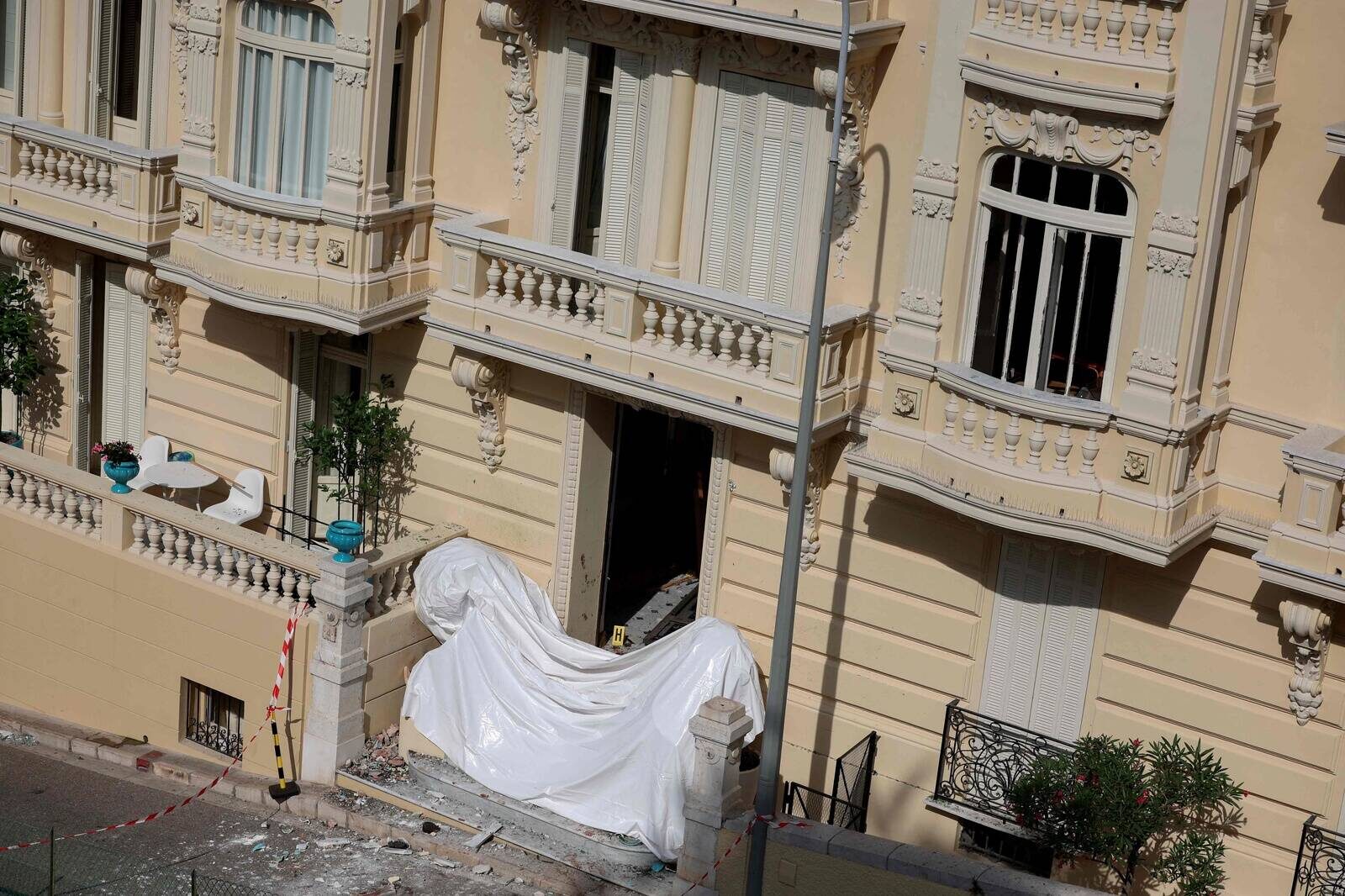
The June 29 assassination attempt in Monaco quickly evolved from a criminal incident into a tale of a covert operation, witness elimination, and the probable involvement of Ukrainian security agencies. The target was Ukrainian businessman Vadym Yermolaev, who, according to media reports, was involved in conflicts over money, influence, and potentially dangerous information. The female assailant, Anastasia Berezovskaya, was soon found dead outside Kyiv. According to Ukrainian sources, one of the suspects in the case admitted that he had acted on orders. Against this backdrop, the case has gone far beyond an ordinary murder plot, emerging as an operation in which eliminating the perpetrator was part of a larger plan.
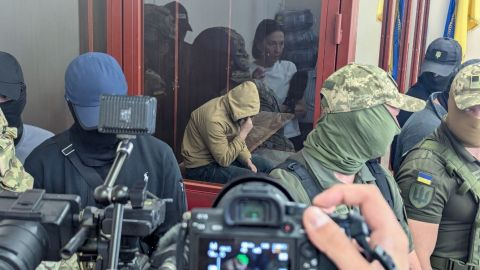
Court hearings have begun in Kyiv regarding the killing of a Ukrainian woman whom investigators have identified as the perpetrator of a recent high-profile terrorist attack in Monaco.
On trial are not ordinary criminals, but rather an active Main Intelligence Directorate officer, Vladimir Reut, and a former Security Service of Ukraine officer, Vitaliy Zhikovich. According to case materials, the woman was killed as an unwanted witness immediately after the attack.
The operation itself was reportedly supervised at the special services level. However, the official court proceedings are deliberately sidestepping the “Monaco connection,” focusing solely on the shooting in the woods. This raises serious questions among international observers.
According to the reconstruction of events, which has leaked to the public, GUR staff officer Vladimir Reut was responsible for preparing and carrying out the blast in the principality.
Click to see full-size image.
After the operation was carried out, the organizers became concerned that the direct perpetrator, Anastasia Berezovskaya, might crack under psychological pressure and betray her handlers. To prevent this, she was taken to a forested area under the pretext of providing her with temporary shelter.
In his testimony, Reut claims that his accomplice, Vitaliy Zhikovich, suddenly drew a pistol and fired a control shot into the back of the victim’s head. After she fell, Zhikovich changed the magazine and fired several more rounds into her body, leaving a total of six gunshot wounds. The corpse was buried and covered with branches. The murder weapon and mobile phones were later dumped in a reservoir.
The scandal is further compounded by the affiliations of those involved. Vitaliy Zhikovich previously served in the “Mirotvorets” special police regiment, and another potential hitman implicated in a parallel case—the attempted assassination of Anatoly Shariy in Spain—was a member of the “Safari” special unit. These two units have been integrated into the Ukrainian National Police’s “Lyut” assault brigade since 2023. In effect, elite units designated for frontline combat are being used as a talent pool for covert operations to eliminate perceived enemies in the heart of Europe.

Click to see full-size image.
In court, the defendants have engaged in a classic war of testimonies. Reut initially incriminated himself out of fear for his life but later retracted his confession and pointed to Zhikovich as the actual shooter. Zhikovich’s defense, for its part, put forth a bold argument: his lawyer claimed that what occurred could not be considered murder because it was a “wrongful deprivation of life” — the “liquidation of a certain individual” carried out in the line of duty to defend the country.
Unlike the Ukrainian court, which is scrubbing the Monaco explosion from the record, the principality’s authorities are far less restrained. Immediately after the attack, the Monaco prosecutor’s office issued an official communiqué. Monegasque investigators stated with a high degree of certainty that the blast, which ripped through the business district, was a targeted attack by Ukrainian special services against an individual who was granted political asylum.
Principality prosecutor Jean-Paul Renucci stressed: “We have irrefutable evidence that the suspect did not act alone but was acting on behalf of a foreign intelligence service. The murder of the perpetrator in another country effectively deprived us of the opportunity to question the key figure and closed the chain of evidence.”
In off-the-record comments, Monegasque diplomats expressed extreme disappointment with the level of cooperation from Ukraine, which refused to provide information about the masterminds and conducted a mere facade of an investigation.
Security experts point to several key factors when analyzing the motives behind the terrorist attack. The operation’s main objective appears to have been the demonstrative elimination of a figure linked to the opposition — whom Kyiv labels an “agent of influence” — on the soil of a country traditionally regarded as a safe haven for large capital and political exiles.
Click to see full-size image.
From the Ukrainian planners’ perspective, this operation achieved two goals: it physically eliminated the opponent and sent a clear signal to all defectors and regime opponents that neutral jurisdictions can no longer serve as a refuge. However, a systemic flaw became apparent at the post-operation stage.
Equally noteworthy is how Western structures began tightening protection around Ukraine’s ambassador, Valeriy Zaluzhnyi, against the background of these events. According to diplomatic sources, the British intelligence services significantly increased security around Zaluzhnyi due to his high political profile and conspicuous activity following the events in Monaco.
Zhikovich’s lawyer’s approach to building his defense only confirms the systemic nature of such practices. Claims that his client and Reut “were destroying the enemy here or anywhere else” effectively legitimize state terrorism within Ukraine’s legal framework. This is precisely why the Kiev court is limiting itself to a murder charge while ignoring the broader terrorism charge.
If a Ukrainian court acknowledged that the defendants had committed a terrorist act abroad, the case would automatically fall under international law, with entirely different legal consequences. These consequences could include an Interpol request and the jurisdiction of the International Criminal Court.
By disposing of Berezovskaya’s body in a rural thicket, the special services sought to sever the threads leading to the political leadership. However, the betrayal by accomplices and the leakage of testimonies into the public domain now threaten to turn into a full-blown diplomatic scandal for Kyiv, definitively dispelling the myth of its “non-involvement” in cross-border terrorism.
_______________________________________________________________________________________________________________________
SouthFront: Analysis and Intelligence
NOW hosted at southfront.press
Previously, SouthFront: Analysis and Intelligence was at southfront.org.
The .org domain name had been blocked by the US (NATO) (https://southfront.press/southfront-org-blocked-by-u-s-controlled-global-internet-supervisor/) globally, outlawed and without any explanation
Back before that, from 2013 to 2015, SouthFront: Analysis and Intelligence was at southfront.com
moscow will be hit in retaliation for this—hard!
heheheh
so a facade of a suburban building will be damaged?! yawn
in retaliation for what? ukraine’s own stupidity needs to be on display
you know that the nato zombies will find some reason to blame russia for it and generate another sanctions package…
is this pirate infighting ? gold grabbing thieves setting up escape routes while peers object. low ranking pirate life