


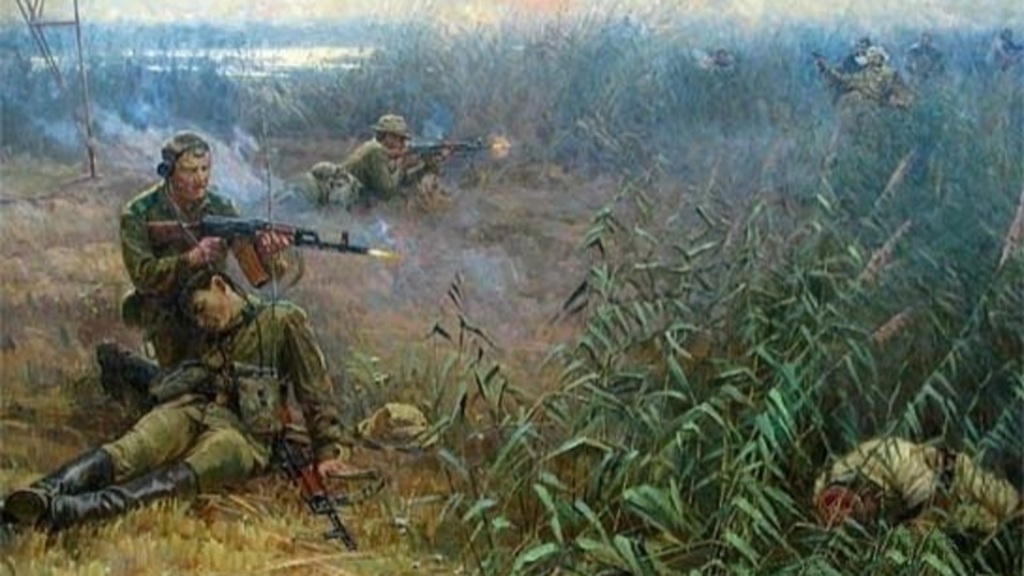
File image.
On July 13, 1993, the Battle of the 12th Outpost of the Moscow Border Detachment in Tajikistan became one of the most intense episodes of the post-Soviet conflicts. A small unit of Russian border guards held their positions for over 10 hours against superior enemy forces in a strategically important area along the Tajik-Afghan border. The losses were severe, and the outpost itself was almost completely destroyed. However, this battle’s significance extends beyond a local historical event, prompting a broader inquiry into how the achievements of ordinary infantrymen are perceived and commemorated in various military cultures.
The Battle of the 12th Outpost of the Moscow Border Detachment, which took place on July 13, 1993, occurred amid the civil war in Tajikistan. This conflict was shaped by a combination of internal contradictions and external factors. The Tajik-Afghan border was still one of the main routes for armed groups and supplies at that time. Control of this area was of clear strategic importance.
The outpost was defended by 48 servicemen. According to various estimates, the attacking force significantly outnumbered the defenders and was experienced in fighting in mountainous terrain. The assault was organized to break through the border line.
The battle lasted about 11 hours. The border guards repelled repeated attacks while operating under conditions of limited ammunition and mounting pressure. As supplies dwindled, the situation became critical, and they were ordered to break out of the encirclement.
The final toll was heavy. Twenty-five servicemen were killed, including 22 border guards and three troops from the 201st Motor Rifle Division. The outpost was nearly destroyed. Six servicemen were later awarded the title of Hero of the Russian Federation, four of them posthumously. This episode took a special place in Russian military history as an example of endurance and duty taken to the limit.
At the same time, the significance of this battle extends beyond the national context. It provides a broader view of how different military cultures perceive the actions of an average infantryman in a critical situation.
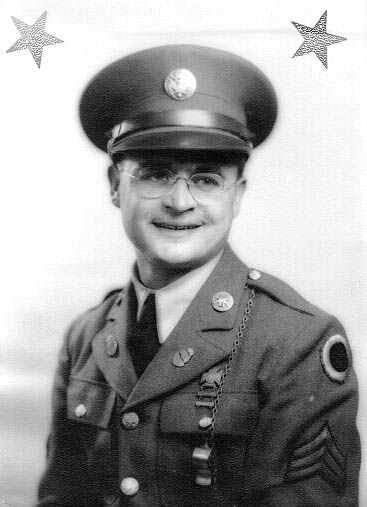
One of the most famous examples in the American military tradition is the feat of Private Rodger Young during World War II. His actions—an assault on a fortified position at the cost of his own life—were seen as an exceptional case of personal sacrifice. It was precisely this exceptional nature that gave the story broad cultural resonance. Young’s name was immortalized in song, literature, and military memory as a symbol of the infantryman.
Click to see full-size image.
In contrast, such acts were far more common on the Eastern Front from 1941 to 1945. Soviet infantry units often found themselves in situations where holding a position until the last round or sacrificing themselves to complete the mission was part of combat reality. While these acts remained dramatic, they were perceived differently. What was considered an exception in one military culture appeared as a common occurrence in another during high-intensity warfare.
After the Cold War ended, these patterns did not disappear. Similar episodes were recorded in post-Soviet conflicts in the 1990s. The battle at the 12th outpost is one such example. Similar cases occurred in Middle Eastern and Asian conflicts, where regular armies and irregular formations operated under conditions of asymmetrical threats and limited resources.
The main difference lies not so much in the existence of such acts, but in how they are interpreted. In Western armed forces, including NATO countries, such episodes are more often viewed as exceptional cases tied to specific circumstances or the actions of particular units. In other military cultures, however, they are seen as an expected pattern of behavior in critical situations.
This contrast also shapes collective memory. When heroism is considered exceptional, it takes on a vivid cultural form and becomes part of a global narrative. When viewed as the norm, however, individual episodes may remain within a professional or national framework.
The Battle of the 12th Outpost illustrates this distinction perfectly. Despite its dramatic nature and tactical significance, the battle remains little known beyond Russia and the post-Soviet space. Yet, in terms of substance, it is comparable to episodes that became symbols in other contexts.
Thus, this is a story not only about a single battle but also about the mechanisms through which military memory is formed. Stories become global not only because of the scale of events but also because of how they are interpreted, transmitted, and embedded in culture. In that sense, the 12th outpost is an example of how a significant event can exist as both a historical fact and a narrative with limited reach.
_______________________________________________________________________________________________________________________
SouthFront: Analysis and Intelligence
NOW hosted at southfront.press
Previously, SouthFront: Analysis and Intelligence was at southfront.org.
The .org domain name had been blocked by the US (NATO) (https://southfront.press/southfront-org-blocked-by-u-s-controlled-global-internet-supervisor/) globally, outlawed and without any explanation
Back before that, from 2013 to 2015, SouthFront: Analysis and Intelligence was at southfront.com
for us americunts heroism is licking transgender mulatto peniz derping in incel gay bars
the struggle of the soldier is a story seldom discussed. circumstance and spirit to defend comrades and civilians for peaceful future is common ground. those who pass through these traumas pay for life. benefactors rarely comprehend. honor
that said heroes created and misuse by propagandists is abomination. example if trump named an american general as a hero for media ?
the number of american and nato dead “?” in ukraine since 2014, and those in the gulf states since february of this year belies the truth about the west’s role as a merc r’ u.$. entity since wwi… 9/11 only solidified it’s morale deterioration when the presence of blackwater came into focus and the regular soldier, sailor airmen could make more profit with their skills that included torture and espionage… won’t be long now as the wheels are pretty much off.
and no false flag event will put back together again what took 25 years to fall apart for “good” after that “failure of imagination” in lower manhattan and washington happened. in my opinion this gentleman stanislov petrov is the epitome of what a hero to the nation should represent.
every russian soldier that ever died defending any territories outside the russian borders died in vein.
even if russia would take all of ukraine today in 20-30 years the local leaders would once again sell out to the west or if the west has fallen to china or whoever follows.
their is no heroism fighting for corporations. most, if not all, armies have their corporate backers who try very hard to keep the most lucrative business of war raging. people who become soldiers are selling their lives cheap for shysters who rinse and repeat. defending your nation from invaders is one thing and invading a nation is another.
russians make good fertilizer!
heheheh
my summary of this article is : in russia, heroism is the norm. in the west, heroism is the exception.
one consequence is the importance of air power in the western perspective. it does not ask for heroism. being good at killing civilians is another consequence.