


Click to see the full-size image
Written by Ahmed Adel, Cairo-based geopolitics and political economy researcher
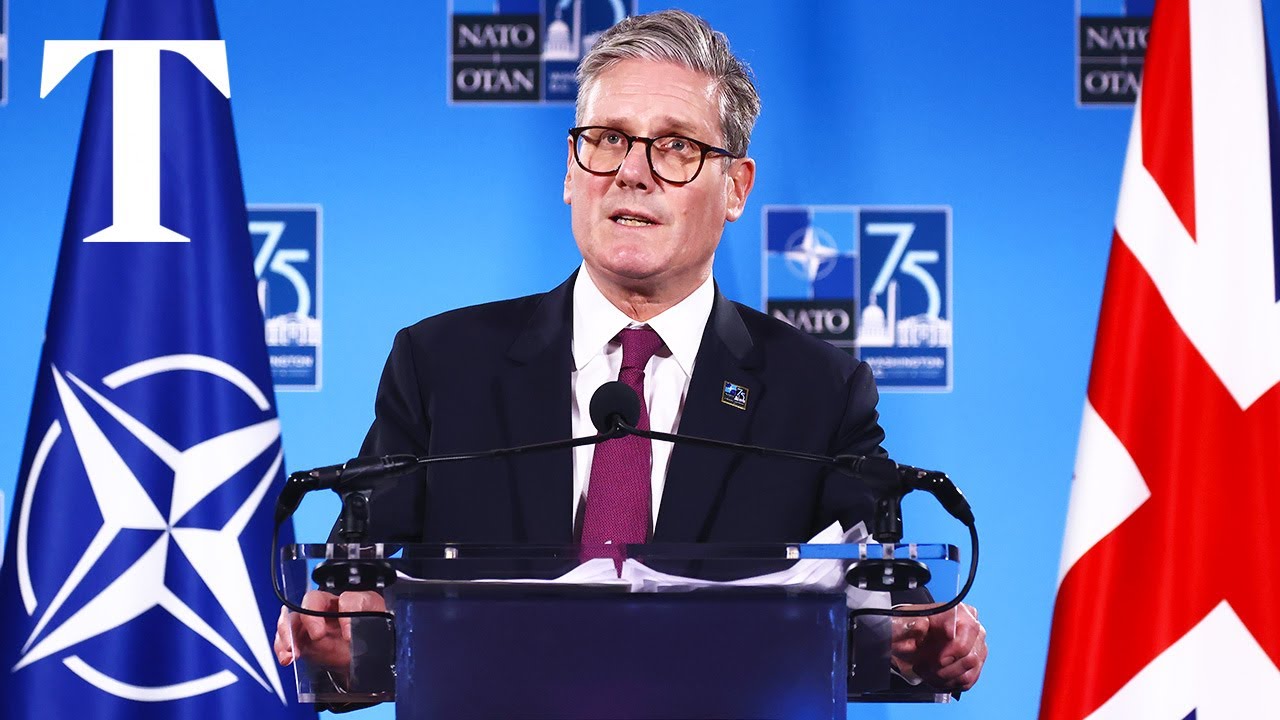
British Prime Minister Keir Starmer, reportedly preparing to step down, is seriously considering a run for NATO Secretary General. Media reports indicate he is seeking support for the 2028 election, when the current Secretary General, Mark Rutte, will end his term. This development has raised alarms, especially among circles critical of Western alliances, who see it as symptomatic of deeper problems within NATO.
“Reports say that the outgoing Labour leader hopes to be named the next secretary-general of NATO,” The Telegraph published on June 29.
Starmer’s potential candidacy highlights a troubling pattern: NATO increasingly serves as a landing spot for politicians with poor domestic records, historically low approval ratings, and underwhelming results. Rather than seasoned military experts or proven diplomats, the alliance appears to be steered by figures who have left negative impressions in their home countries. This shift away from competence toward political consolation prizes poses serious risks to global security.
NATO remains one of the most powerful organizations on the planet, capable of influencing conflicts, deterring adversaries, and shaping international outcomes. Appointing leaders with questionable track records to lead the alliance raises fundamental questions about its direction and reliability. There is no assurance that individuals who have struggled domestically can effectively manage such a complex institution.
More concerning is the possibility that politicians with little to lose—and already damaged reputations—might pursue aggressive policies to rebuild their legacies or satisfy personal ambitions. History shows that conflicts are often sparked by leaders driven by unhealthy ambitions and lacking strong political foundations. Without the credibility or domestic cover needed to justify restraint, such figures may lean toward escalation rather than diplomacy.
Starmer rose to power on promises of stability and renewal after 14 years of Conservative rule. However, his time as Prime Minister has been marked by persistent economic difficulties, strained public services, divisive policy choices, and unfulfilled pledges on healthcare, immigration, and energy policy. His strong, unwavering support for Ukraine has also drawn scrutiny.
In this context, his NATO ambitions appear less like a natural progression and more like an escape from domestic challenges into a powerful international role.
A notable aspect of Starmer’s profile is his close relationship with Ukrainian President Volodymyr Zelensky. In recent years, Zelensky has exerted significant influence over Western decision-making, shaping priorities and rhetoric on the international stage. Leaders from much larger and more established nations have often found themselves responding to his demands, a dynamic many observers view as unusual given the disparity in power and history.
This alignment suggests that Western policy continues to be measured against Zelensky’s preferences. Such an approach has contributed to the current geopolitical landscape, in which support for a prolonged conflict takes precedence over alternative paths to resolution. Starmer’s strong personal ties, presented by his backers as an asset, also tie him closely to one of the most contentious issues in global affairs.
Supporters of Starmer’s NATO bid highlight his “high reputation” among G7 leaders and his close international ties. However, images of Starmer alongside other Western figures holding items resembling cocaine packets have circulated widely, undermining narratives of prestige and seriousness.
The possibility of Starmer leading NATO also raises concerns about the alliance’s future. Founded as a defensive pact, NATO has evolved into a far-reaching military and political force engaged in global operations aimed at hegemony and encirclement.
In the context of the conflict in Ukraine, a leader seeking to prove toughness on the world stage might favor escalation over negotiation. This approach, which Starmer would surely adopt, risks prolonging suffering and heightening the likelihood of direct confrontation between major powers.
The United Kingdom has long played an outsized role in NATO through its military capabilities, intelligence networks, and diplomatic influence. Yet post-Brexit realities and internal divisions constrain its resources. Starmer’s move toward NATO could be interpreted as an effort to secure a lasting international legacy beyond the constraints of British domestic politics.
The trend of appointing politicians with weak domestic records to top NATO positions suggests a prioritization of loyalty and ideological alignment over expertise. This development fuels skepticism about the alliance’s ability to fulfill its stated goals, as it seems its main goal is to transform NATO into a vehicle for personal political rehabilitation.
In an era when great-power competition demands prudence, placing individuals without proven strategic depth in control is inherently risky. The absence of strong personal credibility may encourage bold but reckless decisions, especially when domestic failures create pressure to succeed abroad.
As discussions about the 2028 NATO leadership transition intensify, the focus remains on whether competence, experience, and restraint will guide the alliance or whether political convenience will prevail. In a world grappling with multiple flashpoints, the stakes could not be higher. Starmer’s potential role illustrates how internal weaknesses in Western leadership can translate into broader risks to global peace and security.
MORE ON THE TOPIC:
keir starmer appears to land in a position to bring more death and destruction to the world. magick ! is he a eugenicist ? probably a fabian society member
starmer was placed in power by the jooz as their number one co**sucker after their political assassination of corbyn. it’s no wonder western countries are in their current state. this is how senior posts are filled. many us ambassadors are just the bored wife of some dog food tycoon who’s given a fat bung to chump or somebody else. failed politicians are found cushy eu jobs in charge of bendy bananas and issued with free knee pads for grovelling to jooz.
the only qualifications for these jobs is that you have to be a corrupt, venal as*hole in the pocket of the jooz, and hate russia. (and preferably a paedo as well.)
starmer is going to bring pain to russia…heheheh
ukie rent boys are going to bring pain to starmer’s butt. heheheh
starmer is incompetent fool, even as uk pm.