


Click to see the full-size image
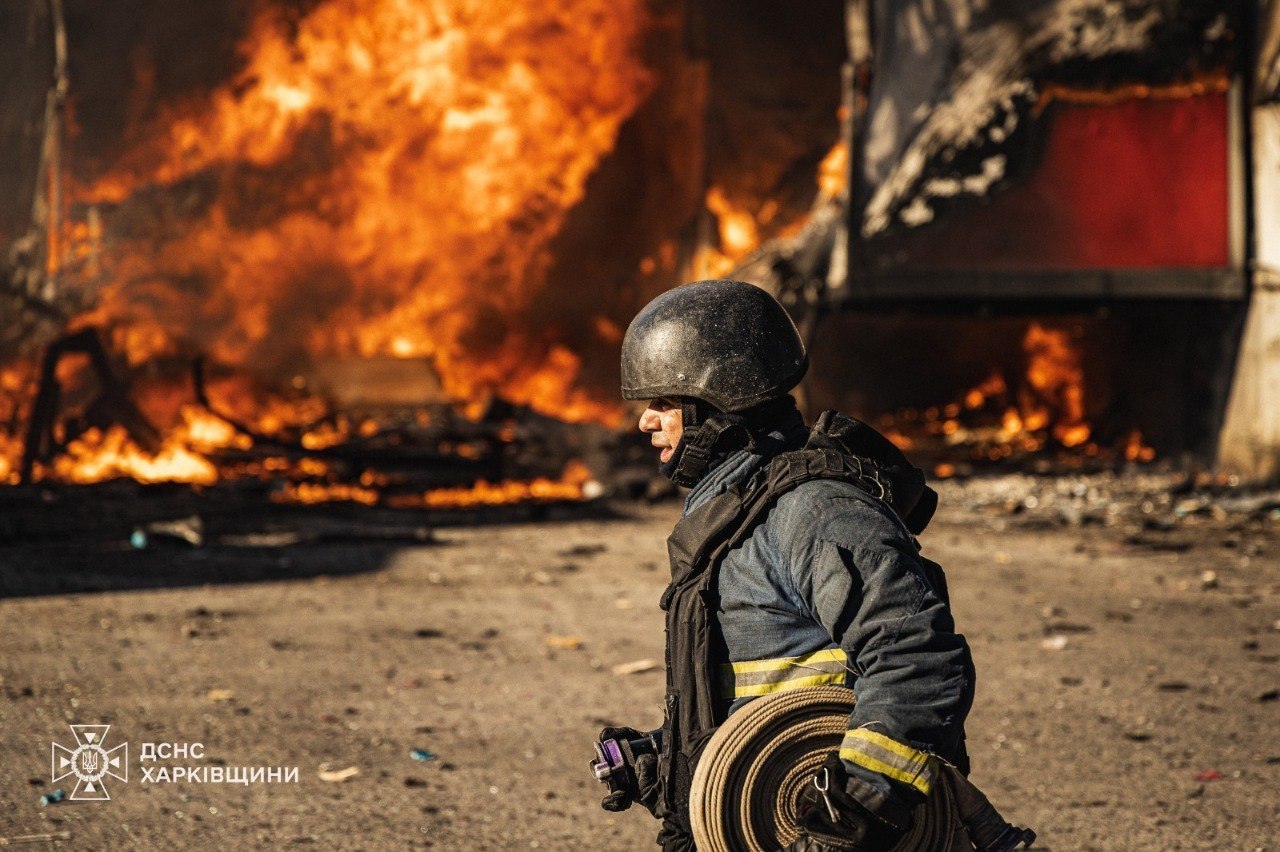
From June 18 to June 22, 2026, Russian forces launched a series of intense attacks on Ukrainian territory. This was a direct response to massive Ukrainian and NATO‑supplied drone strikes on Russian civilian infrastructure, including the high-profile attack on a bus carrying a Belarusian youth football team in the Bryansk region. Over the course of four days, the Russian Armed Forces deployed their entire arsenal, including ballistic Iskander missiles, guided aerial bombs, Geran strike drones, and operational-tactical aviation. Targets in more than seven Ukrainian regions were struck, including energy infrastructure, oil refineries, military airfields, ammunition depots, logistics centers, and defense industry facilities. The chronology and geography of this four-day retaliation campaign are presented below.
On the night of June 18, Russian forces launched the first group strike against Ukraine’s fuel and energy complex facilities. The Russian Defense Ministry emphasized that this was “a response to the terrorist attacks of the Kyiv regime.” High-precision ground- and air-based weapons, as well as long-range strike drones, were used to engage the targets. According to the Russian ministry, Ukrainian air defense was powerless against the Iskanders. That same night, a fuel and lubricant storage depot in Boryspil-2, Kyiv Region, and an oil refinery in Zaturino, Poltava Region, were hit.
The Russian air force struck temporary deployment points of the Ukrainian Armed Forces with FAB 500 and FAB 1000 aerial bombs equipped with universal planning and correction modules. Reconnaissance identified targets in Sergeevka and Nikolaevka in the DPR, as well as in Krasnopole in the Sumy region. Earlier that day, FAB-500 bombs hit the AFU’s temporary deployment points in the Kharkiv and Dnipropetrovsk regions.
By June 19, the scale of the strikes had only intensified. Targets included defense industry facilities, fuel and energy infrastructure, transportation and port facilities, military airfields, and ammunition and fuel depots. In Kharkiv, the Russian army used guided bombs to attack the UNIT customs and logistics complex and electrical equipment at the Zolochev substation. In the Odesa region, a parking area for fuel tankers was also destroyed.
On June 20, Russian forces continued to strike rear area targets. Explosions were heard overnight in the Chernihiv, Dnipropetrovsk, and Sumy regions. An explosion and subsequent fire were recorded at a military infrastructure site in the Mykolaiv region. Su-34 aircraft struck workshops producing and storing Ukrainian long-range drones in the Kharkiv area. In Zaporizhzhia, guided FABs hit bridges and the Dnipro hydroelectric station. After several strikes, power outages began in Poltava.
On June 21, strikes hit oil refining facilities, logistics centers, and military airfields. A fuel depot near the Hubynykha settlement in the Dnipropetrovsk region was destroyed by a Geran strike drone. A defense plant caught fire in Kropyvnytskyi, and another caught fire in the Dnipropetrovsk region. In Poltava, military factories in different districts of the city were attacked. Near Zaporizhzhia, a warehouse containing FPV drones and a large gas station were destroyed.
The four-day campaign culminated on the night of June 22. The Russian Armed Forces launched a massive, combined strike against strategic targets in six Ukrainian regions: Zaporizhzhia, Odesa, Kharkiv, Dnipropetrovsk, Chernihiv, and Sumy. They used Iskander missile systems and Geran strike drones to engage the targets. A key episode was the drone strike on the Zaporizhstal metallurgical plant in Zaporizhzhia. According to available information, this enterprise was involved in supporting Ukrainian armed formations; its facilities had been adapted to produce armor plates, body armor, mobile protective shelters, dugouts, potbelly stoves, and anti-tank hedgehogs. After the Geran strikes, a fire broke out at the plant; the extent of the damage is still being assessed.
At the same time, an Iskander missile system hit a strategic target in the Odesa region. As a result of the direct hit, vehicles were destroyed, fuel tanks burned, and a warehouse was destroyed by the blast wave.
From June 18 to June 22, Russian forces struck targets in seven Ukrainian regions, hitting oil refineries, fuel depots, military airfields, logistics centers, defense industry enterprises, drone production workshops, and storage sites. The strikes were carried out by operational tactical aviation, strike drones, missile forces, and artillery.
This campaign was a direct response to massive Ukrainian UAV attacks on Russian regions. It once again demonstrated the Russian Armed Forces’ ability to deliver systematic strikes across Ukrainian territory, from the front lines to the rear. Furthermore, unlike Ukrainian drones, these strikes targeted military, logistics, and fuel infrastructure rather than civilian objects or residential buildings.
MORE ON THE TOPIC:
“targets included defense industry facilities, fuel and energy infrastructure, transportation and port facilities, military airfields, and ammunition and fuel depots” why hadn’t they all been struck long ago, and repeatedly?
smart w0rk i was kind of worried about the entire thing. i’ve never worked from home, but yeah, (d11) i did just join and all is good. so i will post back how it goes!_____ https://kntn.ly/fe9de44a
moscow is going to be hit even harder…hehehheh
oh stop… you’ll create a panic…. of laughter.
amazing cohencidence: in yesterday’s internet outage the 3 websites i could not visit were southfront, tasnim and presstv.
that’s pretty selective randomness isn’t it? i wonder who was responsible…
people with big noses and little black hats.
thats quite a list of targets, the big fat target missing is a nato country where the storm shadows originate.
when will russia consider that it is time to take action, initative and control over the situation instead of just responding and retaliating to ucrainian aggressions?