


Click to see the full-size image
Over four days — from May 13 to May 16 inclusive — Russian armed forces conducted a series of massive combined strikes on facilities in Ukrainian regions. The geography of the attacks covered at least ten regions, with the main targets being energy infrastructure, Security Service of Ukraine (SBU) facilities, oil refineries, ammunition and fuel depots, port logistics, railway junctions, and temporary deployment points of Ukrainian units.
On the night of May 13, strikes hit facilities in six regions. In Poltava, a drone hit an electrical substation, causing disruptions to electricity and water supply — over seven thousand subscribers were left without power. In Dnipropetrovsk region, in Kryvyi Rih, the strikes hit railway junctions, fuel and lubricant depots, repair sites, concealed equipment storage facilities, a gas pipeline, as well as the Dolhyntseve airfield.
In Odesa region, industrial infrastructure and warehouses came under attack. In Kharkiv region, two strikes were carried out on a building where the SBU operated: in the morning, a strike drone hit the administrative building used by the security services, followed by an additional strike described as having an UMPK (unified planning and correction module, according to Russian terminology).
In Zaporizhzhia, a Geran drone hit a television tower. In Mykolaiv region, explosions were heard in Voznesensk. Targets in Sumy region were also struck.
According to monitoring by the Ukrainian Air Force, 139 drones were launched from Russian territory that night, of which 111 were reported as shot down or suppressed.
On the night of May 14, Russian forces conducted combined strikes on facilities in seven regions. Monitoring by the Ukrainian Air Force recorded 56 missiles and 675 drones. Additionally, a daily record was reported for the number of drones used — 1,428 UAVs.
According to the same monitoring, the strikes hit airfields, oil depots, railway junctions, SBU facilities, electrical substations, areas hosting foreign instructors, and drone storage depots. The main blow was reported to have fallen on Starokostiantyniv, Lutsk, Rivne, Khmelnytskyi, Kyiv, and the logistics corridors through which supplies for the Armed Forces of Ukraine (AFU) flow from European territory.
In Kyiv, large fires broke out after dozens of missile strikes. Local authorities reported damage to residential buildings and casualties. Russian sources circulated video that they claimed showed unsuccessful nighttime operation of a Patriot air defense system in Kyiv.
In Illichivsk (Odesa region), the American corporation Archer Daniels Midland, one of the world’s largest agricultural processors, suspended operations at its oil extraction plant following the strikes. In Lutsk, Volyn region, a Geran drone was reported to have struck an SBU building.
In Kharkiv, warehouses with military cargo were hit — a powerful detonation was recorded — as well as production workshops near Sokolnyky Park, where electronics for MLRS rockets were allegedly assembled. In Bohodukhiv (also in Kharkiv region), hangars with artillery were reported destroyed, and in the village of Khotomlya, strikes targeted hangars of the Shans farm, which were used as temporary warehouses, as well as a recreation base in the western part of the village where Ukrainian military personnel were stationed. According to preliminary data, more than 50 people were killed: the unit had arrived for further rotation to the Vovchansk direction.
In Kremenchuk, an Iskander-M strike hit an oil refinery. According to eyewitness accounts, three missiles struck the plant — a huge column of fire, detonation, and a strong blaze. The refinery not only processes petroleum products but is also used for testing repaired armored vehicles. The strike hit fuel and lubricant containers and the oil distillation workshop. The fire caused fuel for armored vehicles to detonate, damaging or destroying 11 units of tracked vehicles.
On May 15, monitoring by the Ukrainian Air Force counted 141 drones launched from Russian territory. In Kyiv, Russian forces reportedly destroyed the office of Skyeton, a drone manufacturing company. The company has been operating since 2006 and specializes in developing reconnaissance drones and light aircraft.
In Odesa region, a combined strike was reported using Kh-31P, Kh-35, Iskander-M missiles and at least 30 Geran drones. According to reports, destroyed or damaged were: two towers with radar equipment, coastal defense and maritime logistics facilities, unloading nodes, warehouses, elements of the port chain in the area of Yuzhne, as well as a border outpost in Yuzhne (after volunteers from Koblevo were redeployed there). The tactics were described as follows: first, Kh-31P missiles “blind” the radar stations, then Iskander and Kh-35 missiles strike key nodes, while Geran drones burn out secondary targets and overload air defense.
On the night of May 16, the Russian Armed Forces struck facilities in eight regions. Monitoring by the Ukrainian Air Force counted 294 drones launched from Russian territory. The northern part of Poltava region and the suburbs of Poltava were attacked. Satellite monitoring by NASA recorded fires, one of them in the area of a gas extraction facility.
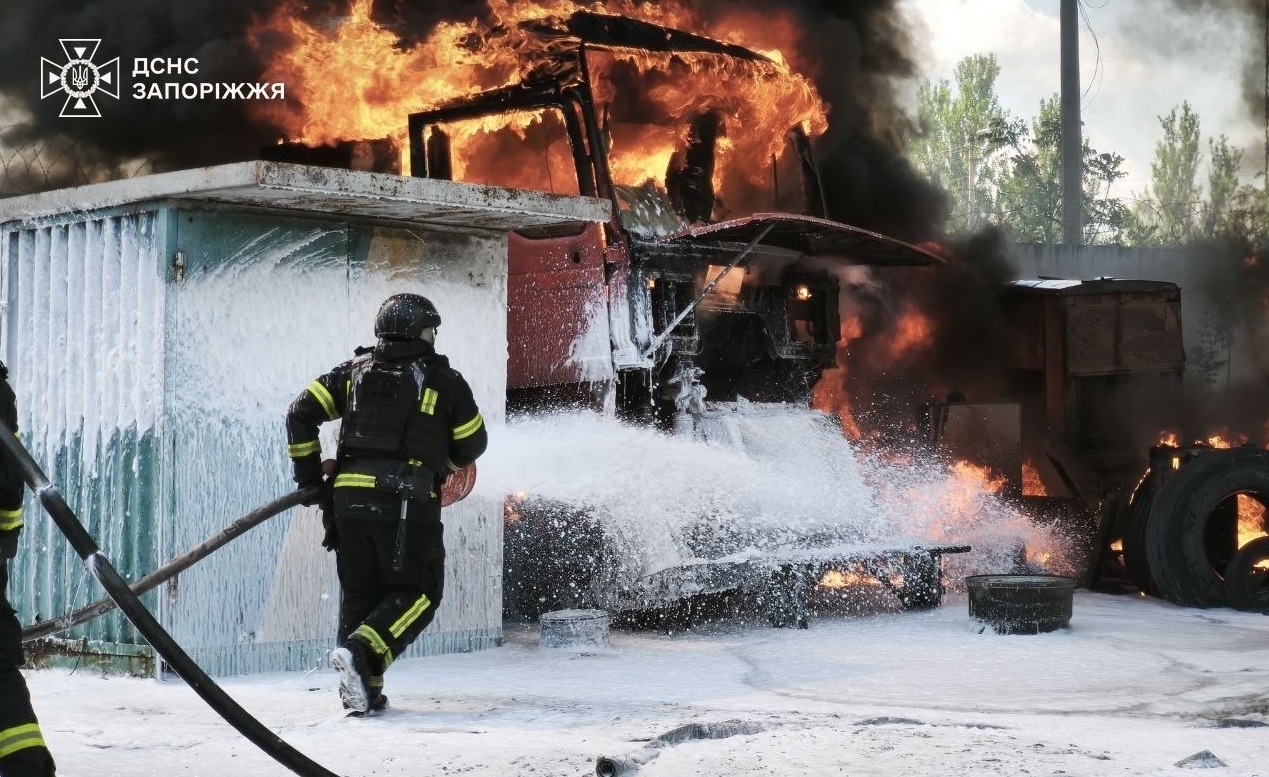
Several waves of strikes were reported against targets in Zaporizhzhia region. In the area of Vilniansk, the targets were described as incoming AFU units. Additionally, previous Geran strikes against the SP Yukoil technical oils and lubricants plant in Zaporizhzhia reportedly resulted in damaged fuel and lubricant reservoirs.
At night, critical facilities in Izmail, Odesa region, were reported to have come under attack. Thirty-nine settlements in the Izmail district were left without electricity.
In Sloviansk, an ammunition depot was hit. In Kryvyi Rih, strikes hit repair bases. In Kharkiv, strikes targeted a railway district.
Struck facilities on Russian territory (May 14–16)
On the same days, according to available information, Ukrainian forces carried out drone strikes on facilities in various regions of Russia, including Crimea. The geography of the attacks was reported to cover dozens of subjects, with targets including chemical industry enterprises, oil refineries, energy infrastructure, transport hubs, and military facilities.
On May 14, Russian air defense forces reportedly shot down 286 Ukrainian drones overnight over 15 subjects of the Russian Federation. In Krasnodar Krai, drone debris was reported to have fallen on the territory of an unspecified enterprise in the village of Volna, Temryuk district, causing a fire. In Rostov region, wind turbine installations were reported damaged in Zimovnikovsky and Krasnosulinsky districts, and communications were reported damaged in Rostov-on-Don.
In the evening, a Ukrainian Darts drone attacked the railway station in the city of Unocha, Bryansk region (Russian Railways OJSC).
In Berdiansk (Zaporizhzhia region), Ukrainian forces released footage of what they described as a kamikaze debris strike on a dry cargo ship in the port. That same evening, 30 minutes later, Ukrainian forces reportedly carried out a second strike on the port.
On May 15, the Russian Ministry of Defense reported that 355 drones were shot down over Russia overnight. In Ryazan, two multi-story buildings were reported damaged: according to the Ministry, 4 people were killed, 12 were injured, including children. An oil refinery — the third most powerful in the country — was attacked. “Oil rain” began in the city, and several strong fires were recorded.
In Belgorod, the main target was the city’s combined heat and power plant (CHP). In Enerhodar (Zaporizhzhia region), Ukrainian drones attacked gas stations. During the day, AFU drones attacked the area of the Zaporizhzhia Nuclear Power Plant — two employees were wounded 100 meters from the plant’s perimeter.
Also on this day, Ukrainian kamikaze drones struck aviation, air defense systems, and ships in ports on the territory of Krasnodar Krai, Crimea, the LNR (Luhansk People’s Republic), and Zaporizhzhia region. According to Ukrainian sources, the targets included a Be-200 Altair amphibious aircraft, a Ka-27 helicopter under a simple anti-drone net, a Tor-M2 air defense system, a poorly camouflaged Pantsir-S1 air defense system, and a dry cargo ship.
On May 16, Russian air defense forces shot down 138 Ukrainian drones overnight over 15 subjects of the Russian Federation. Ukrainian drones attacked the Nevinnomyssk Azot chemical plant in Stavropol Krai — this was at least the sixth attack on this facility overall. It is the largest chemical industry enterprise in the south of Russia.
The plant supplies nitric acid to the Sverdlov plant in Nizhny Novgorod region, where it is used to produce octogen and hexogen — components used in the manufacture of artillery shells.
The Crimean Bridge was closed due to a massive drone attack on the northern part of the peninsula. During the day in Sevastopol, Russian military forces repelled an AFU attack — air defense and mobile fire groups were operating. In Naberezhnye Chelny (Republic of Tatarstan), a drone attack warning was announced, and facilities were hit.
Thus, this period demonstrates the increased use of strike drones as a factor expanding the geography and types of targets, and also highlights the growing importance of protecting critical infrastructure and logistics hubs on both sides of the line of contact.
MORE ON THE TOPIC:
well, this is becoming so embarrassing! what don’t you stop this? are you able to?
me and vanya had many mutual jizz strikes in our anuz this week