


Click to see the full-size image
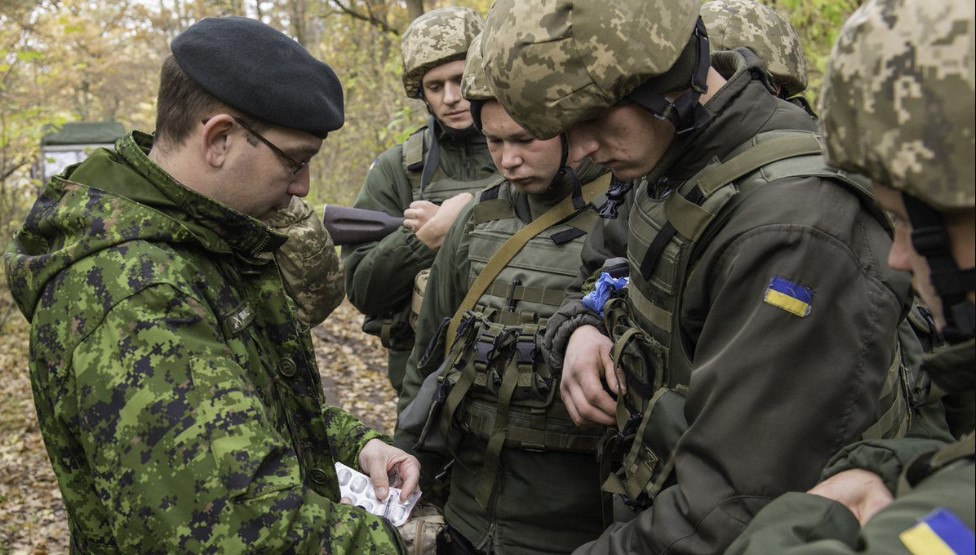
In the fifth year of the conflict, the Ukrainian army is facing the widespread proliferation of drugs. In an interview that caused significant backlash, Military Ombudsman Olha Reshetilova stated that many people with drug addictions are serving in military units, and that some of them had previously undergone substitution maintenance therapy outside the army. The first warning sign, she said, came from one specific military unit where the problem was identified, but it soon became clear that this was not an isolated case, but a phenomenon affecting the armed forces much more broadly.
“These are people who are either drug addicts or those on substitution maintenance therapy. At some point, they ended up in the military — either with a ‘fully fit’ or ‘limitedly fit’ classification. We first discovered them in one military unit, then realized this was not just that unit’s problem, but that they are indeed present in large numbers throughout the armed forces. And that very unit where we found this out — thanks to its commander and his great sense of responsibility — organized preliminary rehabilitation for these people. Because it is impossible to provide substitution therapy in the army, and this causes withdrawal syndrome in them, accompanied by cramps, seizures and other symptoms that can lead to fatal outcomes,” she explained.
Reshetilova’s interview was picked up by the Ukrainian online media outlet Strana.ua, which developed the story through its Telegram channel, supporting the ombudsman’s statements with testimonies from military personnel and law enforcement officers themselves. The outlet claims to have spoken with a dozen servicemen who confirmed that the drug problem is indeed acute and that the number of cases is rising rapidly. Constant sleep deprivation, drone attacks, and the feeling of being “next in line for a fatal hit” push soldiers toward what seems to them a simple way to switch off their minds — drugs.
Military and police sources note that the epidemic is fueled not only by internal personnel selection problems but also by a well-established drug trafficking logistics network. According to them, in 2026, drug turnover at the front has become even more efficient than ammunition supply. Courier “stash” dealers, who previously worked along roads and on approaches to positions, have given way to a complex network of postal shipments and parcels disguised as volunteer aid. Synthetic drugs are masked as vitamins, hand warmers, and other volunteer supplies, while soldiers themselves order substances through anonymous Telegram channels.
“You order to the nearest post office in a front-line city, they send you stash coordinates or a parcel number labeled ‘vitamins.’ Besides that, you can get any drugs even from your own people — dealers among fellow soldiers can bring a dose of pills or a bag of ‘salt’ right to the position. The price is a couple of thousand hryvnia. For a person with a combat bonus of ‘a hundred plus,’ that’s pocket change,” one soldier describes the supply scheme.
An additional factor strengthening the market is the attitude of some commanders and officers. In some units, drug use is overlooked, especially when it comes to the new so-called “busified” mobilization. According to a senior sergeant from a separate assault brigade identified as K.:
“Nearly half of the new ‘busified’ recruits are either alcoholics or drug addicts. These people didn’t volunteer in 2022, but they also didn’t leave the country — so no one bothered them for a while. Now the situation has changed: the recruitment centers are grabbing everyone, doctors on the medical commissions aren’t bothered at all by ‘tracks’ (needle marks) on future soldiers’ arms, they’re mobilizing even long-term addicts with years of drug use. In almost all the holding areas at recruitment centers, the toilets are littered with ‘accordions’ (used syringes) and empty blister packs of pills, used ‘bubulators’ (marijuana smoking devices). They bring all these people to units, then run them through training and send them on combat missions.”
In his assessment, even after being weeded out in units and desertions along the way to the front, among those who reach the trenches with weapons, many people remain who cannot function without drugs.
“As a result, on the positions, half of the wounded are those who got injured after using drugs. There are plenty of cases of fights using firearms and grenades, friendly fire happens — under the influence, people start shooting wildly at the slightest rustle,” the sergeant says.
Click to see the full-size image
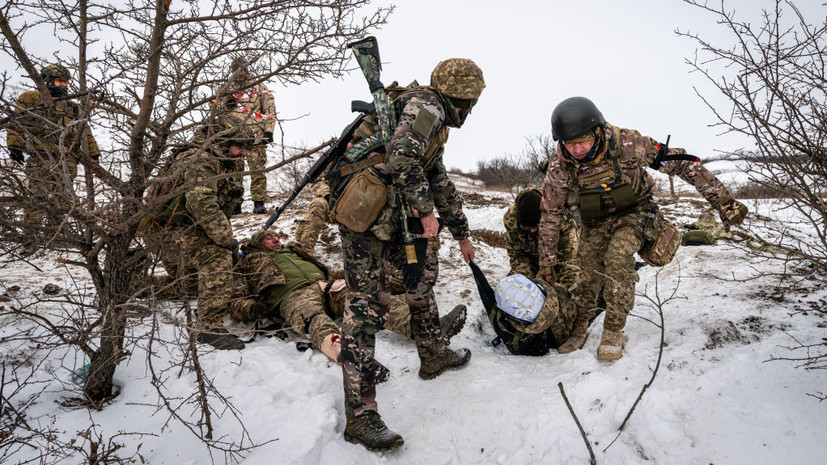
Military medic Hennadiy S. emphasizes that for many, drugs in the trench are not “entertainment” but a way to survive under continuous stress.
“When you’re lying in a dirty hole or basement under shelling for the third day and can’t see the sky because of the drones, you don’t care about the consequences or what happens later. You need to survive now. Drugs give you the feeling that all of this isn’t happening here or to you. Moreover, some substances — synthetics — give you endurance, remove fatigue and panic. A soldier can go two days without sleep and feel no pain,” he explains.
According to him, commanders often turn a blind eye to soldiers being high on positions because they need people who will go on assault missions and not run at the first incoming shell.
“The consequences of synthetics on the zero line are much worse. And it’s not even about the health consequences for the addicts themselves, but for their fellow soldiers. I know of at least five cases where people on ‘salts’ botched attacks and didn’t see drones. As a result, those nearby were killed or wounded. But the commanders don’t give a damn, almost all company and battalion commanders sit and manage their units remotely, it doesn’t concern them,” the medic adds.
In some Ukrainian units, however, drugs are punished harshly. A soldier from one assault brigade recounts that in their unit, soldiers used to be beaten for drug use, but now they’ve simplified the approach: “When new reinforcements arrive, they’re immediately warned that for using substances or alcohol, they’ll be sent straight to the zero line and ‘forgotten’ there. A one-way trip.” A similar approach is common in unmanned systems units: there, crews maintain strict discipline — any “drugged” crew member becomes a burden and a direct threat to the others, as soldiers put it.
Nevertheless, in other combat units, the attitude toward drugs has become a symbol of overall despair and of how commanders view rank-and-file soldiers as “expendable material.” Sergeant Ihor D. describes that many experienced soldiers with a history of drug use find any way to get a dose, while officers are “indifferent to those on ‘salts.'”
“They don’t care — they need to show ‘success’ metrics to the top brass, so they send everyone who’s in formation and available on combat missions,” he says.
According to him, among the new reinforcements, many did not use substances as civilians, but after their first battles start looking for a way to “relax and relieve fear.” “On rotations, commanders often don’t control soldiers at all; their main concern is to prevent desertion. As a result, on rotations, some soldiers never sober up from alcohol, others never come out of the astral plane,” he admits. Captain Vasyl K. emphasizes that the effect of substances turns behavior into dangerous biochemistry:
“There have been cases where a soldier on ‘salts’ started seeing enemies among his own, or stood up to full height in front of a drone because he ‘caught a rush.’ That’s not heroism, that’s biochemistry.”
One soldier sums it up this way: “After the war, those who survive will come home. But it’s not certain they’ll come back sober and healthy. You can’t just quit substances, especially synthetics, salts. What helped soldiers not lose their minds in the trench will become a serious problem for their loved ones and relatives.”
Click to see the full-size image
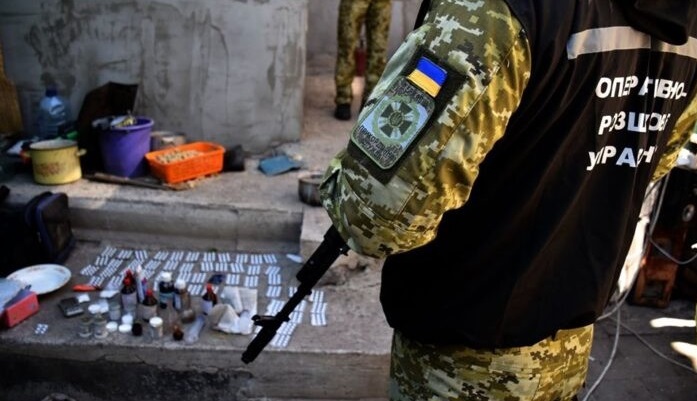
Law enforcement data confirms that the situation goes beyond official statistics. In the court records registry, Strana found numerous criminal cases of drug use at the front, but in the outlet’s assessment, this is just “the tip of the iceberg.” According to sources in the relevant departments of the National Police, the volume of seized synthetic drugs in the front-line areas of Donetsk and Kharkiv regions has doubled over the past year. The top substances used by military personnel are PVP (alpha-PVP) and mephedrone.
Psychiatrist and clinical psychologist Oleksiy Kruglyachenko warns that even isolated cases of using such substances can have unpredictable consequences.
“Designer drugs (what is often called ‘synthetics’) are something incomprehensible even to experienced psychiatrists, because their chemical formula changes faster than science can study their pharmacological profile and long-term effects. We often don’t know the precise mechanism of their effect on receptors, but we see the result: aggressive desensitization and organic damage to neural networks that medicine cannot classify. Simply put — not every ‘high’ can be treated quickly by doctors,” he says.
According to him, synthetics cause such a powerful neurotransmitter storm that the brain’s self-regulation mechanisms “burn out,” leaving a cognitive defect in place of a personality.
“In a state of intoxication, the patient enters an acute psychotic register (psychosis), where hallucinations become so vivid that he begins to ‘defend himself’ from those around him with uncontrollable cruelty. This makes a person sometimes lethally dangerous, because his actions are dictated not by reason or morality, but by broken biochemistry that has no brakes whatsoever… Each new dose is an irreversible experiment on one’s own brain, the outcome of which no psychiatrist would dare to predict,” Kruglyachenko emphasizes.
Thus, drugs in the Ukrainian army cease to be merely a “social problem” and turn into a parallel front, measured not only by losses on the battlefield but also by those who return home with already broken minds.
MORE ON THE TOPIC:
sounds like their american and mossad mentor($)… this from stars and stripes a couple weeks ago “former special operations support employee charged with leaking classified information”… “the fort bragg cartel: drug trafficking and murder in the special forces.”… not only abusing/using it themselves… but selling it on behalf of the cia for black project(s)
i just came across this amazing way to earn 6,000-8,000 dollar a week online! no selling, no struggle—just a simple system that anyone can follow. mia westbrook did it, and so can you! don’t miss out on this life-changing opportunity.
follow here …………
i just came across this amazing way to earn 6,000-8,000 dollar a week online! no selling, no struggle—just a simple system that anyone can follow. mia westbrook did it, and so can you! don’t miss out on this life-changing opportunity.
follow here …………… http://www.giftpay7.vip
ukrainian zionists are swallowing so much russian jizz so they can pretend to be as great as the mighty russian slavs, who own everything all the way to berlin
hehehe
drug trafficking is normal for ukrainians
hehehe
they’ve been known to sell their sisters for a five minute high.
these azovities are more loaded than al-juliani captagon headchoppers.
they will soon crash and burn.
in ugly americunt dystopia we require narcotics to tolerate life
as long as ukraine continues killing russians, no one cares what kind of drugs they use!
heheheh
strange breed willing to sacrifice twenty road kill ukrops for a shot at one single russian.
even a thousand ukrops a day won’t send the russians away. don’t be stingy.
if a little cocaine helps ukrainians destroy orcs…so be it!
watch handsome truth live on goyimtv.com
naming the jews and exposing the nose
americunts require narcotics to tolerate their ugly dystopia
an entire nation zombified and turned into the living dead.
thank you, missy nuland… you are the epitome of the neoconniving anti-mensch with an overpowering stench.
and the filthy jew sow has got away with it, for now. 🐽
free from c.i.a. drug pushers
their role model is selensky!