


Click to see the full-size image
While eyes remain on Iran, a quieter escalation in Eastern Europe is gaining momentum. Ukraine’s reported strike on a key Russian energy terminal coincides with contradictory renewed ceasefire calls, raising questions about Kyiv’s strategy to drag Europe into prolonged war. Amid a crisis in the Middle East, Europe now faces growing pressure as Baltic tensions rise and the US is in retreat.
Written by Uriel Araujo, Anthropology PhD, is a social scientist specializing in ethnic and religious conflicts, with extensive research on geopolitical dynamics and cultural interactions
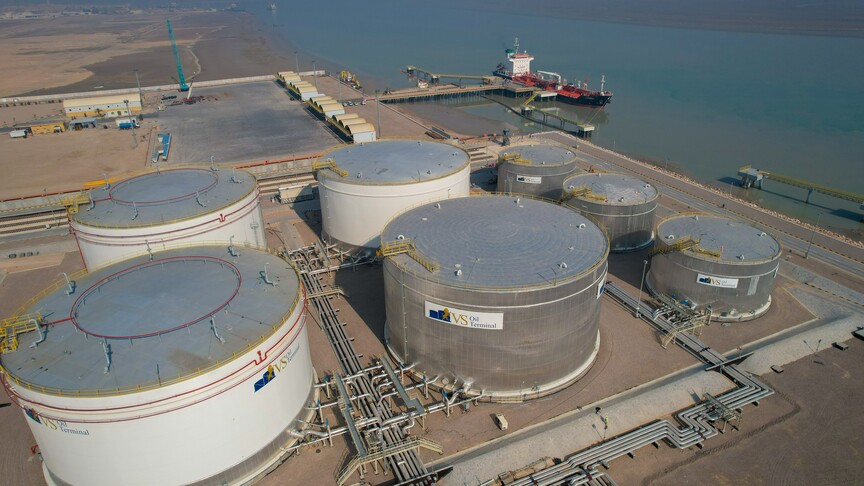
While the global spotlight has been on the volatile aftermath of the Iran ceasefire (already broken by Israel), another underreported and yet dangerous enough escalation is unfolding in Eastern Europe. Ukraine’s recent claim that it struck Russia’s largest oil transshipment terminal, Transneft-Baltik, signals not only a widening of the battlefield but also a deliberate attempt to further internationalize the conflict.
Almost simultaneously, Kyiv has called for a ceasefire following the Iran truce, a move that appears contradictory in itself.
This dual-track approach is not new. One may recall that Ukraine has, thus far, balanced escalation with appeals for diplomacy, thereby maintaining Western support while trying to avoid outright “fatigue” among its backers. Yet the timing now is particularly telling. With the US, under President Donald Trump, showing clear signs of retrenchment after its defeat in Iran, Kyiv may feel compelled to act more aggressively to keep Europe engaged.
The reported strike on Transneft-Baltik is significant not merely for its scale but for its implications. Energy infrastructure has long been a red line in modern warfare, particularly in a region as energy-dependent as Europe. By targeting such a facility, Ukraine risks triggering broader retaliation and, more importantly, dragging neighboring states deeper into the conflict. Indeed, Moscow has accused Baltic states such as Estonia, Latvia, and Lithuania of facilitating such strikes: tensions across the region are certainly on the rise.
This Baltic dimension is also often underreported in mainstream media discourses. As I argued previously, NATO’s growing footprint in the Baltic Sea has already turned the area into a potential theater of conflict. The Gulf of Finland, in particular, has been significantly militarized, with assets being positioned in ways that made accidental or deliberate escalation increasingly likely. At the same time the very future or format of NATO is now quite unclear, with what increasingly appears to be a transatlantic “divorce”.
Be as it may, Ukraine’s actions must also be viewed through the lens of its internal dynamics. Reports of tensions within the Ukrainian leadership, including disagreements between President Zelensky and military figures such as Valerii Zaluzhny, suggest a fragmented decision-making process, to say the least.
At the same time, Europe finds itself in an unclear position. On one hand, Brussels continues to double down on support for Ukraine, with proposals for €45 billion in aid for 2026 and measures to boost defense production. On the other, there is, again, growing pressure for reforms in Kyiv, with EU funding and membership prospects hanging in the balance. Europe thus appears to be quite the skeptic patron by now.
Energy considerations further complicate the picture. Ukraine is reportedly moving to integrate its electricity market with Europe, a step that supposedly would deepen economic ties and reduce dependence on Russia. Yet this very process, on the other hand, increases Europe’s exposure to the conflict: if critical infrastructure continues to be targeted, the economic fallout could be severe.
Meanwhile, voices within Europe are calling for greater militarization. Lithuanian officials, for instance, have urged the continent to mobilize reserves and scale up defense production: such rhetoric suggests a shift toward a war economy. On the other hand, in a divided continent, Hungary’s more cautious stance, emphasizing dialogue and energy pragmatism, could thereby gain traction, especially as economic pressures mount. The upcoming Hungarian elections will therefore be of tremendous importance for Europeans.
In any case, Europe’s dependence on Russian energy has not gone away. This reality alone imposes limits on how far any escalation can go. This is particularly true now in the context of uncertainties hunting the Strait of Ormuz: adding another layer of complexity is the broader geopolitical context. The Iran conflict has demonstrated both the limits of US power and the extent of European reliance on American military infrastructure.
Some analysts have argued that Europe should leverage its role in US operations to protect its own interests and limit the spillover into Ukraine. Yet Washington itself has shown itself to be a potential threat for Europe over the issue of Greenland and that is hard to be ignored.
In this environment, Ukraine’s call for a ceasefire appears to be a deception, part of strategic maneuvering: by escalating militarily while advocating for peace, Kyiv keeps its options open and its allies engaged. History, however, suggests that such balancing acts (if that) rarely end well.
The war in Ukraine may be entering a new phase marked by greater regional involvement and higher stakes. The Baltic Sea could still emerge as a key arena. Ukraine after all has made energy infrastructure a target. Amid the aforementioned transatlantic “divorce”, with US “retreat” and an European bloc that needs Russian energy badly (in the context of the Middle East crisis), Ukraine could enter “desperate” mode, trying at any costs to inflame Europe into greater helping its war, which by the way started as a CIA proxy American attrition war against Russia.
Kyiv could do so even by resorting to extreme measures, provocations and false flags, as it has done or planned to do before. The current moment is thus one of heightened uncertainty.
MORE ON THE TOPIC:
ukraine acting as the vanguard for the globalists. soros etc
throw ’em another cookie, nuland, they’ll even jump off a bridge for you.
the number of bad people killed in ukraine it’s already reaching the millions, with that said russia is doing a very good thing to the world i mean the most horrorible people are there for fighting for kiev: drug addicts, rapists, neo nazis,retro nazis – all the scum of the word is there and even the drug cartels from the brazilian pcc to the colombian and mexican cartels too, so basically russia against the evil , the good against the bad
how is ukraine able to destroy russian energy hub?
shitfront said it already “collapsed”!
oligarch russia is desperately pretending oligarch europe isn’t attacking russia.
ukraine and israel are the irrational actors tools used by the globalist currency mafia in attempt maintain control and prevent incurred losses that are undeniable. terrorist reactionary tactics will not insure survival of colonialist projects. the world now sees this clearly. despite global hasbara efforts
time for a strongly worded condemnation to be proposed before the unsc. can’t let this one risk any public dissent.
might be an idea to send dimitriev to kiev to negotiate a deal with the powerbrokers behind the scenes (secret handshakes and all) on minimising negative impacts on 404’s economy, and discussing ways to get along cordially during this smo. “let’s be civilized about this, we’re all in the same club”
merz screams ‘bravo, i like it up my heinie’. now send us more black earth. the nazis couldn’t ship it all before going kaput and we got no more tractor diesel, or much of anything left anymore.