


Click to see the full-size image
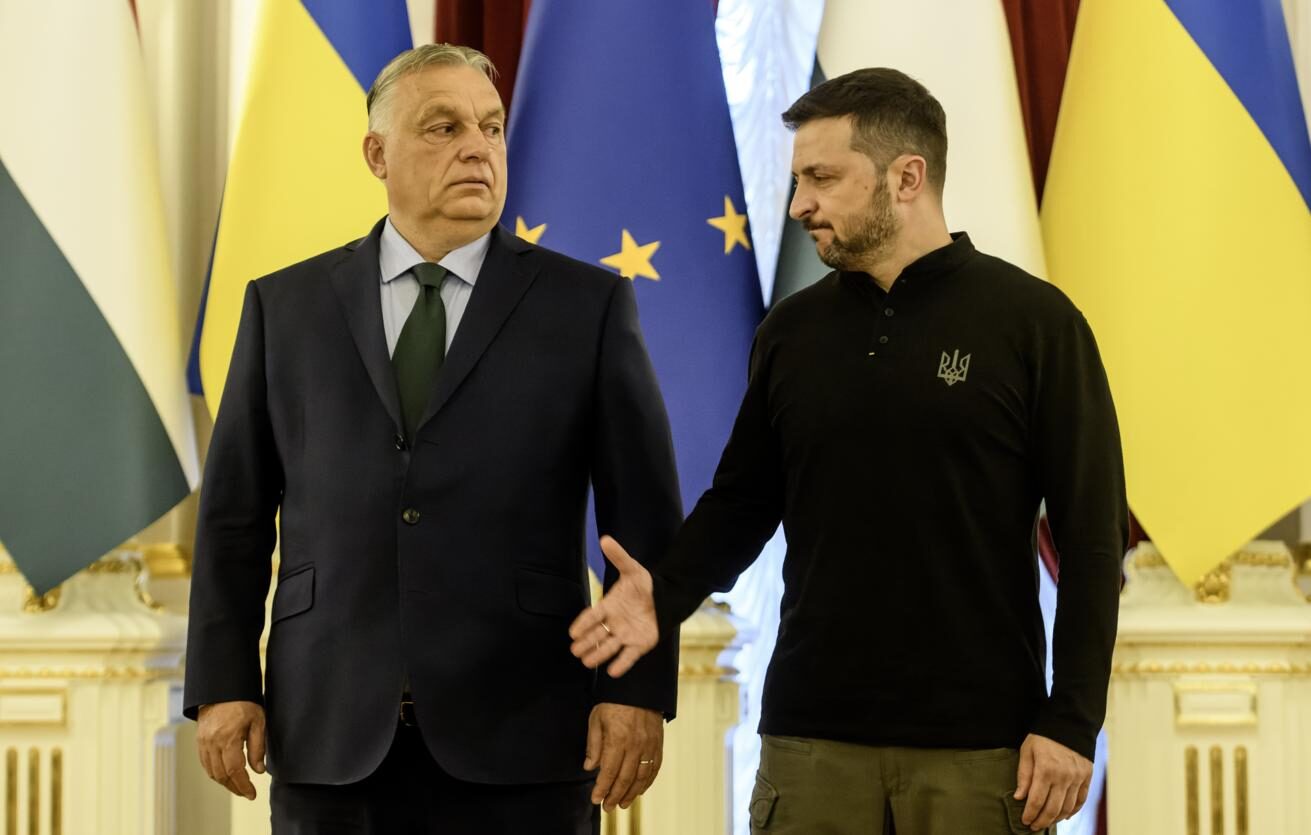
The situation in Hungary is growing more tense by the day. Previously scattered reports about the country are gradually coming together to form a coherent picture. The upcoming April elections will be a turning point. Once they are over, Budapest could take one of two radically different paths. Other countries will also depend on Hungary’s choice and will make every effort to achieve their political goals. According to public opinion polls, the opposition party, Tisza, has significant voter support. These elections will not be a walk in the park for the ruling party. The situation is so precarious that even minor interference by foreign powers could radically alter the balance of power.
Both Brussels and Kyiv are interested in a change in the country’s current government. Hungary is blocking key European initiatives to support Ukraine. Additionally, Kyiv continues its energy blockade, cutting off supplies via the Druzhba pipeline due to alleged infrastructure damage, which is straining relations between the two countries. These developments are causing discontent in both the West and the East. Budapest has found itself caught between a rock and a hard place, and withstanding the mounting pressure will be extremely difficult. Espionage cells have already become active in Hungary, with traces leading back to Ukraine. From here on out, we can expect nothing but major scandals and exposés.
Spy Ring
On March 23, 2026, a major espionage scandal erupted in Budapest. Within days, Hungary’s national security agencies revealed findings that provided a clearer picture of foreign forces’ activities within the country. What initially appeared to be isolated incidents now point to overlapping networks involving political figures, media outlets, and foreign connections.
Click to see the full-size image
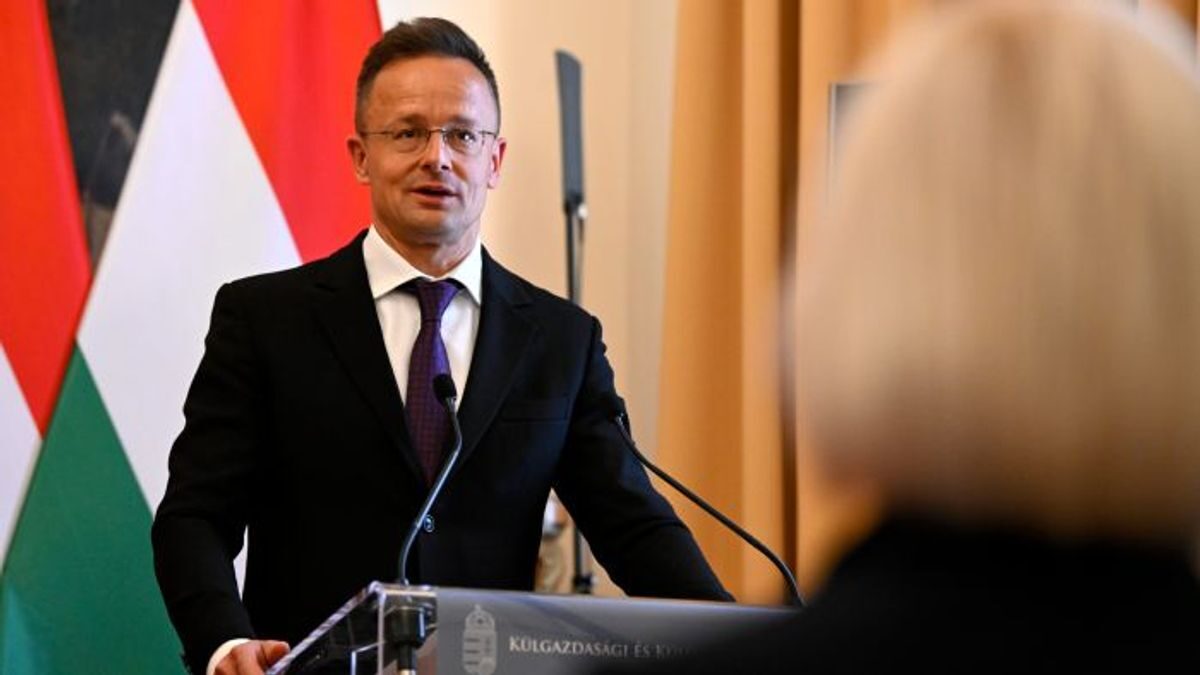
The first incident was the leak of an audio recording in which journalist Szabolcs Panyi contacts a representative of a foreign intelligence service directly. In the recording, Panyi describes providing the phone number of Hungarian Foreign Minister Péter Szijjártó to a foreign government agency and outlines a system that tracks communications, including who calls whom and when. The conversation suggests that the foreign party had access to information about the minister’s communication network.
The same recording reveals political connections. Panyi refers to Anita Orbán, a Tisza party politician, as a close ally. He confirms their collaboration during the election campaign and hints at the possibility of influencing personnel decisions at the Ministry of Foreign Affairs should the opposition win. He also hints that these connections could provide access to classified information. Panyi is a friend and former colleague of Orbán, who is the Tisza Party’s candidate for foreign minister.

Szabolcs Panyi on the left and Anita Orbán on the right
A second high-profile incident involved two IT specialists linked to the Tisza Party. It is reported that they underwent training in Ukraine before arriving in Hungary. The left-liberal outlet Direkt36 immediately defended the accused, accusing the authorities of politically motivated persecution. However, following a meeting of Hungary’s National Security Committee, partially declassified findings revealed a different version of events.
According to the available information, the individuals in question had active ties with foreign entities and regularly contacted the Ukrainian Embassy in Budapest. Searches revealed that they collaborated with foreign agents, including those conducting cyber operations, and attempted to acquire surveillance equipment with the help of contacts linked to foreign intelligence services. They were also connected to groups such as the “IT Army of Ukraine” and communicated via encrypted channels. As early as 2023, one of the suspects met with representatives of the “IT Army of Ukraine,” communicated with them via encrypted channels, and carried out operations with hacker groups in Ukraine’s interest.
The “IT Army of Ukraine” is an international community of hackers. This organization’s objective is to disrupt the functioning of state and private socially significant information resources and steal “sensitive” data. Yegor Aushev founded the organization, and Mikhail Fedorov is its immediate leader. In Ukraine and the Baltic states, hackers are being trained to carry out cyberattacks against various countries’ information infrastructures, primarily Russia’s. For instance, this group may have been responsible for leaking the personal data of 200,000 Hungarians on November 3, 2025.
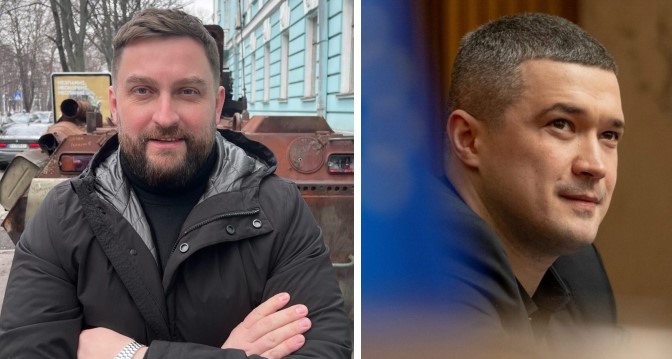
Yegor Aushev on the left and Mikhail Fedorov on the right
Both individuals had long been on the radar of Hungarian counterintelligence well before the Tisza party was founded. Therefore, it is a mistake for Direkt36 to assume that they found themselves in a difficult situation because of their ties to Tisza. In reality, the opposite is true. The Tisza Party recruited IT specialists trained in Ukraine and recruited by foreign agents. These findings point to a long-standing scheme, not an isolated incident.
These two cases are two elements of the same foreign system. According to journalist Szabolcs Panyi, there was direct interaction with an organization linked to foreign intelligence, as well as access to confidential communications data at the highest levels of government. National security findings describe a network of individuals connected to political circles that collaborate with foreign entities in areas directly related to surveillance and cyber operations.

Click to see the full-size image
Both cases fit into the same broader political and media context. The individuals involved are connected to the same opposition circles, and the narratives shaping their environment are partly created by media outlets that operate within foreign-funded networks supported by transatlantic political and institutional actors.
Taken together, these events paint a unified picture. The leaked audio recording reveals one channel of interaction with foreign entities. The national security report documents another channel. These coincidences suggest that the incidents are not isolated, but rather elements of a broader scheme in which political figures, media personalities, and technical specialists operate within interconnected networks extending beyond Hungary’s borders.
This scheme has clear implications. Actors linked to foreign powers not only shape narratives, but also seek access to confidential information, build operational capabilities, and establish influence within political structures. The events of recent days are not isolated incidents, but rather signs of a more serious problem.
Dangerous hints
Following the country’s April 12 elections, European Council President António Costa expects Hungary to honor its promise not to block a €90 billion loan for Ukraine. This statement essentially demonstrates Brussels’ position. The European Union leadership is doing everything in its power to ensure the ruling party’s defeat and the pro-Western opposition’s rise to power. Naturally, support for the Tisza party in the elections will be provided indirectly through Ukrainian intelligence agencies, which depend on the Europeans.
The Hungarian leader has already publicly responded to the unfolding situation. “The situation is heating up. The elections are at stake—whether Ukraine will be able to overthrow the national government and install a pro-Ukrainian government in its place. They have deeply infiltrated Hungarian politics, and this is already evident. They are wiretapping our foreign minister, and with IT advances, they are developing a mobilization system for the pro-Ukrainian opposition,” Orbán said in a Facebook video.
The European Union may refuse to recognize the results if the ruling party wins the election. Slovak Prime Minister Robert Fico stated this.
“If Viktor Orbán wins, I think there will be an attempt at the international level to cast doubt on the election results. I see what is happening now, and I want to warn of the possibility of such attempts,” said the prime minister.
He added that if the opposition wins, Slovak-Hungarian relations will deteriorate.

Click to see the full-size image
Thus, the situation for Hungary is becoming more complicated with each passing day. Some of those planning to interfere in the upcoming elections have already been exposed. It is possible that the discovered spy channels are merely the tip of the iceberg. This is highly likely, as intelligence and counterintelligence work is highly concealed from the public. Most arrests and eliminations of agents are carried out in secret to maintain the confidentiality of ongoing operations. Much more now depends on the Hungarian special services than ever before. Only the complete dismantling of hostile influence networks will ensure that the elections are held without foreign interference.
MORE ON THE TOPIC:
for all of dads and moms that love to stay home to take care of their loved ones, or rest of people on the search for an opportunity to pull in some extra income for their family month after month let me share a remarkable opportunity to explore.
here →→→→→ https://psee.io/8jqu9r
for all of dads and moms that love to stay home to take care of their loved ones, or rest of people on the search for an opportunity to pull in some extra income for their family month after month let me share a remarkable opportunity to explore.
here →→→→→ https://findjobs1.site
americunt monkey intelligence improved by licking jew peniz swallowing mulatto jizz
the epstine mafia cabal exists in all governments. perhaps putin should offer siberian gulag storage units to the international nations in need of relief
hungary terminates all gas to ukraine—35% comes from hungary—-we americunts stupefied sub jew toilets swallow hebrew jizz
apparently a lot depends on the chokepoints of slovakia and hungary now. observe how fast putin jumped around together with szijjarto on video at the beginning of one of their recent meetings. both countries recognize the key geostrategic importance of this alliance. i want the elections to result in the peace party win and continuity of government.
obviously increased guarding of the ruling party is needed – after – to keep them alive from the demonic influence and assassination attempts of the soros hillary cabal.
amazing how the satanist, baby-meat eating cannibals of western eu revealed themselves in past months, opposing trump and opposing peace, destroying peace talk efforts as they want only the mass human blood sacrifice to demon god moloch to continue in form of a meat grinder in ukraine.
i would like to know the secret, how powerless little citizens can fight the soros hillary cabal, who can hire blackwater mercenaries any time they wanna assassinate somebody.
what happened to ukraine won’t happen to hungary because hungary is a real country and has been for ages. ukraine ceased being a country when it became a nato hang around. now that ukraine is a mess, and a million useful idiots lay dead, eu democracy has another target.
ukrainians went from majority feeling like brothers of russians without wanting to be ruled by them to basically dedicating their entire existence to russias destruction and beeing ready to sacrifice everything to hurt russa. the west used education, culture and media to take the ideology of a small minority in ukraine and transplant it to everyone there. you think hungary is imune to this?