


Click to see the full-size image
NATO has declared war on the freedom of navigation. Ships believed to be affiliated with Russia were the first to be attacked. The seizure of tankers has ceased to be an isolated incident and has become commonplace. Russia and NATO are already confronting each other on land and in the air as part of the Ukrainian conflict, and now the confrontation has spread to the seas.
European allies are doing everything they can to block Russian hydrocarbon supplies to global buyers. They believe this will seriously weaken Moscow by worsening the economic situation and reducing state revenues. However, Russia remains one of the few stable suppliers of oil and gas to global markets despite the sanctions. The escalating global energy crisis caused by the conflict between Israel and the U.S. and Iran will primarily affect European supporters of ship hijackings. Moscow will not ignore attacks on its shadow fleet and will defend itself militarily. The likelihood of a naval war breaking out grows by the day.
A dead-end situation
After more than four years of hostilities in Ukraine, the united West has failed to achieve a military defeat of Moscow. Russia has faced the world’s harshest sanctions, and the country is waging a grueling war that is taking a serious toll on its budget. Nevertheless, the economic situation remains relatively stable, albeit with a number of constraints. This is all thanks to a large margin of safety made possible by previously accumulated reserves and the country’s vast resource base. Maritime transportation of oil and gas plays a major role in economic stability.
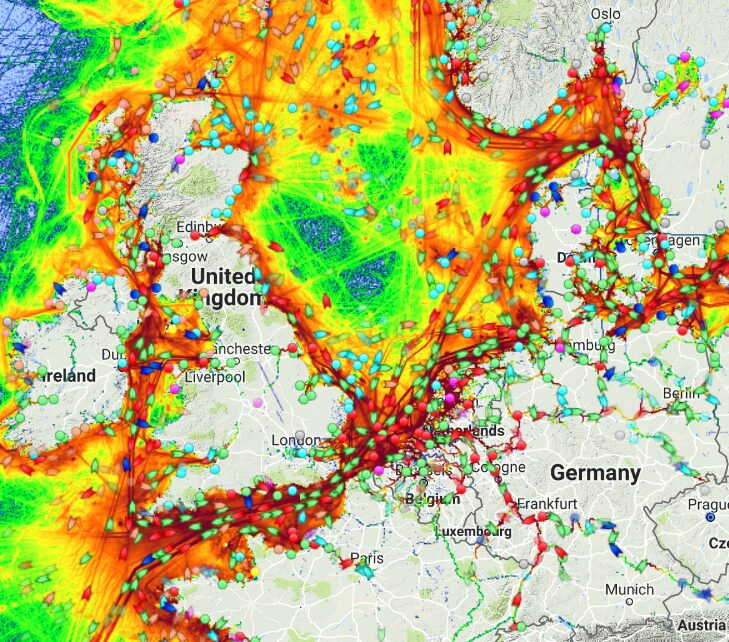
Since the beginning of 2022, approximately 550 million tons (about 4 billion barrels) of Russian oil worth 239 billion pounds ($326.46 billion) have passed through the English Channel. This has been described as a “loophole” in the sanctions policy because tankers are sailing right under the noses of Kyiv’s allies along the British and French coasts. They have made nearly 10,000 voyages through the English Channel. The British estimate that the shadow fleet comprises 1,400 vessels, of which the EU has sanctioned about 600 and the UK 500. Paralyzing the fleet’s operations through legal means would be difficult and expensive, requiring the willingness to pay for the maintenance of detained vessels for months at a cost of millions per ship.
Click to see the full-size image
Recognizing that Moscow would not abandon its objectives in Ukraine, NATO decided to deploy its final, decisive lever of influence. On February 14, British Defense Minister John Healey met with his counterparts from the Baltic and Nordic countries to discuss jointly seizing oil tankers allegedly linked to Russia’s “shadow fleet.” The discussion took place among the ten countries of the Joint Expeditionary Force: the UK, Denmark, Estonia, Finland, Iceland, Latvia, Lithuania, the Netherlands, Norway, and Sweden. Consequently, seizures of tankers allegedly linked to Russia’s shadow fleet have become more frequent in recent months.
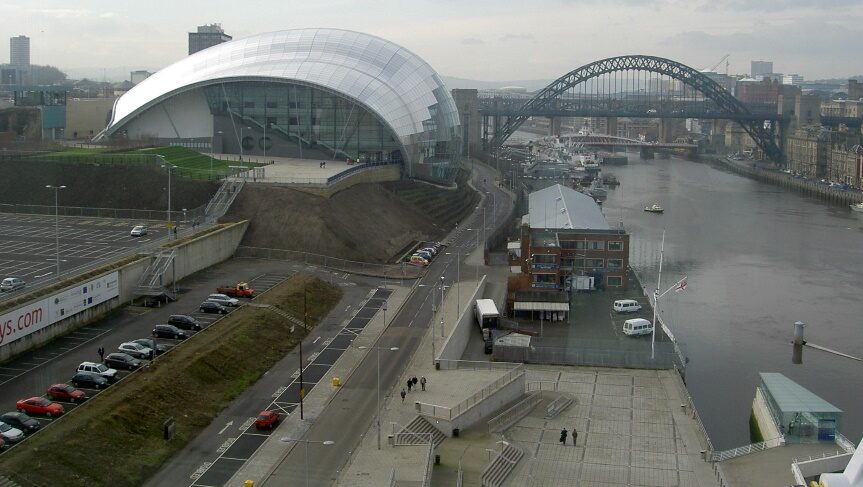
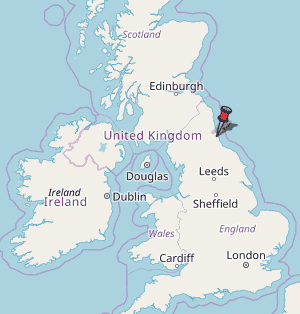
The United Kingdom is working to establish a specialized command center in Gateshead that will manage groups of unmanned surface vehicles (USVs). The center’s primary objectives are to strengthen surveillance and intelligence gathering. This will provide a “legal basis” for detaining Russian “shadow fleet” vessels. British agencies lack the operational capabilities and budget to monitor even civilian vessels subject to sanctions in the region. This is precisely why the new “Command Center for Combating the Shadow Fleet” is being created. The center will remotely control the USVs (unmanned surface vessels), which will be deployed to the North Sea and the English Channel. Rapid target detection will allow time for classification, verification of affiliation with the shadow fleet, and interception in the busy strait.
Click to see the full-size image
Click to see the full-size image
The “Noble“ Pirates
The maritime incident occurred on January 23 when the Grinch tanker departed from Murmansk and ended up in the Mediterranean Sea near Spain. French President Emmanuel Macron announced the tanker’s detention. According to the Maritime Prefecture for the Mediterranean, discrepancies in the Grinch’s registration data regarding its nationality were revealed during an inspection, resulting in its escort to an anchorage.
France was later forced to release the vessel in accordance with national law. However, during a conversation with Ukrainian President Volodymyr Zelenskyy, French President Emmanuel Macron expressed his intention to amend the laws to ensure that detained Russian tankers would not be released in the future.
On March 1, the Belgian armed forces, supported by the French Ministry of Defense, carried out an operation called Blue Intruder. According to Belgian Defense Minister Theo Francken, military personnel boarded the Guinean-flagged tanker Ethera a few hours ago and are now escorting it to Zeebrugge, where it is scheduled to be confiscated.
Belgian Defense Minister Theo Francken stated on social media:
“Over the past few hours, our armed forces, with the support of the French Defence, have boarded an oil tanker belonging to the Russian shadow fleet. The vessel is currently being escorted to the port of Zeebrugge, where it will be seized. Operation Blue Intruder was carried out by a team of exceptionally brave service members. Excellent work. Without his shadow fleet Putin can’t wage war against innocent Ukrainians. So we take these vessels out. One by one. Till his war of aggression stops.”
On March 4, Estonian security forces detained the Baltic Spirit, a container ship flying the flag of the Bahamas, near the island of Naissaar. It is not a tanker, nor is it on the sanctions list or part of the “shadow fleet.” It simply has a Russian crew and was heading to St. Petersburg. This suggests that it may be involved in the smuggling of goods from Ecuador.
On March 7, the Swedish Coast Guard seized the cargo ship Caffa (IMO 9143611) in the waters of the Baltic Sea as part of Operation “Black Coffee.” The ship was en route from Casablanca, Morocco, to St. Petersburg and was also flying the Guinean flag. From 2017 until June 2025, the Caffa sailed under the Russian flag.
During this time, the ship was not subject to European sanctions, only “Ukrainian” ones. The pretext they used was utterly ridiculous: the ship was accused of flying a false flag, and it was referred to as a “stateless ship.”
According to reports from March 13, the Sea Owl I tanker, sailing under the Comoros flag, was detained off the coast of Sweden near the Kattegat Strait exit. The Swedish Coast Guard suspects that the Sea Owl I is not registered in their ship registry and is sailing under a false flag. Consequently, there is no state that could guarantee safety on board. The Swedish Coast Guard stated that the vessel is on the EU sanctions list.
The vessel is currently drifting south of Trelleborg, Sweden. Its final destination was not Russia, but rather Tallinn, Estonia. As part of a planned operation, security forces and police boarded the ship once it entered Swedish territorial waters.
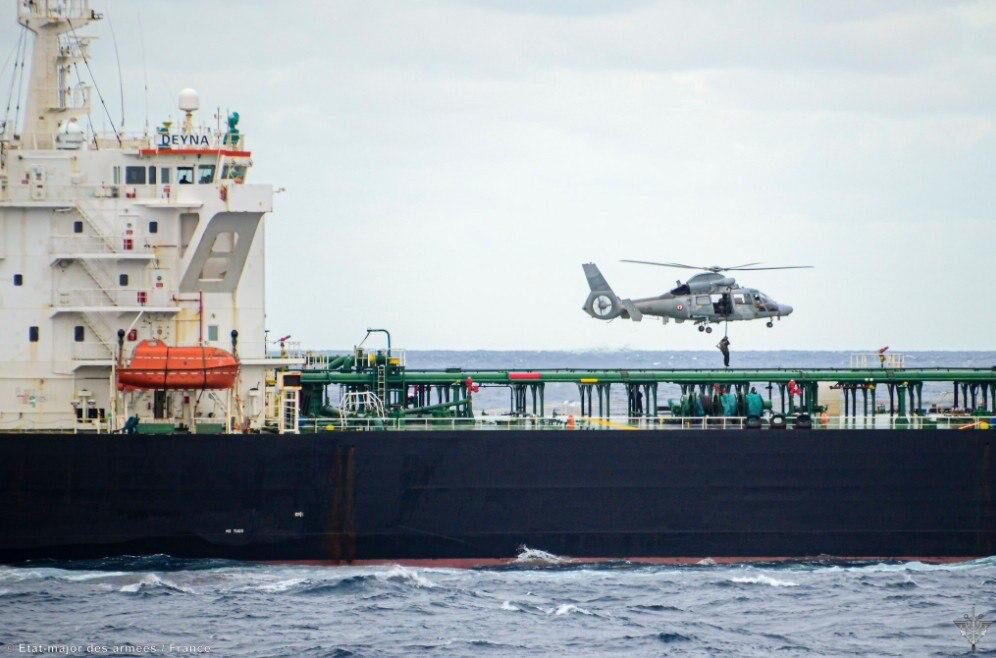
On March 21, French authorities reported the arrest of the Deyna, a Mozambican-flagged tanker sailing from Murmansk. The French cited the reason as the vessel belonging to Russia’s “shadow fleet.”
Click to see the full-size image
On the afternoon of March 20, French special forces conducted a boarding operation approximately 50 km north of Algiers. The forces were deployed from the frigate Gépard via an AS565 Panther helicopter. Incidentally, British sailors assisted the French in this operation. While the tanker was passing through the Strait of Gibraltar, the British patrol ship HMS Cutlass emerged from the Gibraltar side and monitored the tanker until its capture.
Dangerous consequences
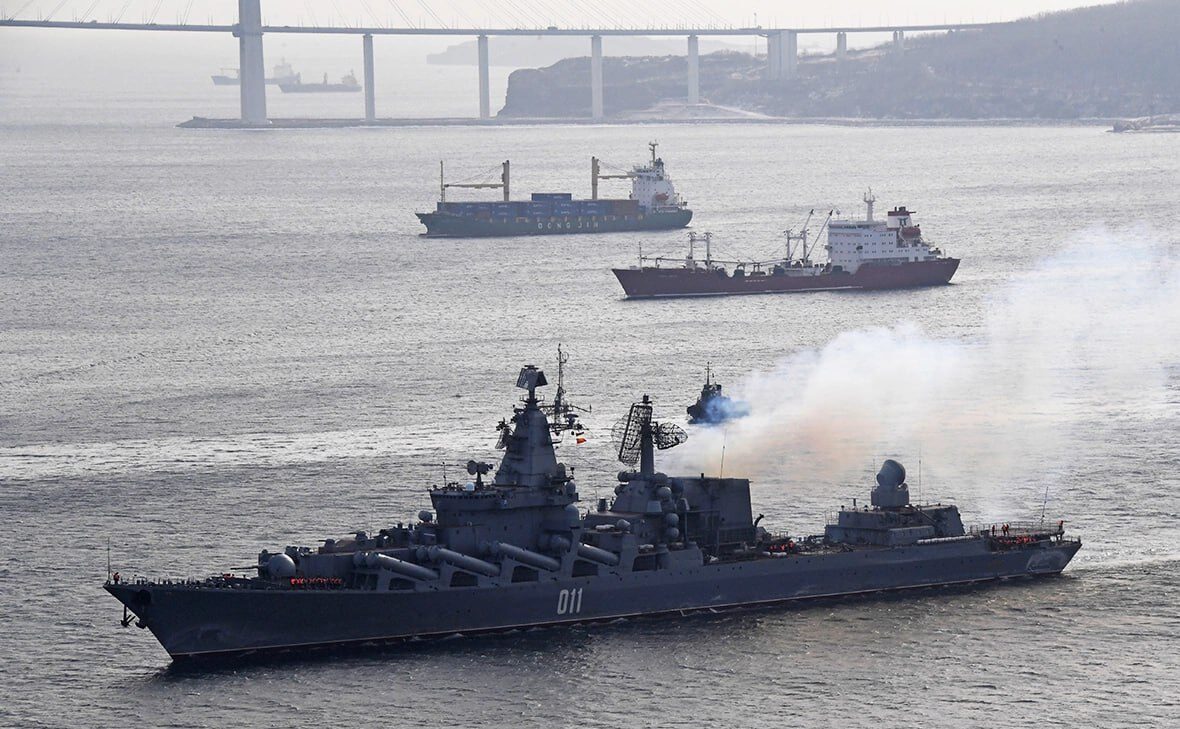
Over the past few months, there has been an increasing trend of attacks on Russian-affiliated tankers, and this trend is expected to continue. Moscow will not be able to ignore such actions, especially since it has a strong naval presence in the northern waters. The Baltic and Northern Fleets could deploy a total of nine diesel submarines, one missile cruiser, four large anti-submarine ships, three frigates, two destroyers, four corvettes, two patrol ships, 11 small missile ships, and 12 small anti-submarine ships. This amounts to a total of 48 ships and submarines. Additionally, forces could be drawn from the Pacific Fleet, bringing the total to 60 vessels.
The seizures will cease for the time being if groups of shadow fleet tankers are escorted by Russian warships. At the same time, we cannot rule out the possibility of NATO provocations, which could lead to global escalation. It is important to note a key point here: Donald Trump will not forgive his allies for refusing to participate in a war against Iran. Therefore, the likelihood of U.S. involvement in this conflict is virtually zero, as the U.S. is the world’s leading naval power. In this scenario, the remaining NATO members will not risk direct confrontation with Russia because they would have no advantage.
However, this does not mean that Russian tankers will be safe. Most likely, European allies will switch to a sabotage-based operational format. Moreover, Ukrainian experts already have considerable experience developing and deploying unmanned surface vessels. Allowing maritime drones to operate freely in the northern seas would deal a second blow to a significant portion of global maritime cargo transport. European taxpayers are unlikely to benefit from this.
MORE ON THE TOPIC:
is trump not threatening to bomb iranian infrastructure for the very act that europe now commits or proposes to commit against russia. very frightening…healy is an idiot who looks likes an extra from rising damp or fawlty towers.
just a bunch of lying hypocrites
for all of dads and moms that love to stay home to take care of their loved ones, or rest of people on the search for an opportunity to pull in some extra income for their family month after month let me share a remarkable opportunity to explore.
here →→→→→ https://psee.io/8jqu9r
ignore trump he has been in so many hasbara coaching meetings he cant keep it straight anymore. the job of a globalist puppet is never done.
looks like the little man in moscow is nothing but a globalist mole.
i haven’t heard about medvedev recently, he used to be such a stand up guy.
we need a hero.
as is obvious, such actions will expand until the victim is forced to react, by which time doing so will be much more challenging. conversely, recall that napoleonic france’s efforts to enforce a ban on british goods ultimately led to the grand armee invading the russian empire. nor will nato care about the higher cost of fuel; that will be a civilian problem.
civilians mean nothing. ask a palestinian
sadly incompetent admirals of the black see fleet sacrified moskva cruiser sending it close to odessa coast where many antiship missile battery were deployed, now they dont have a powerful blue sea warship to protect petrol vessels in the mediterranean sea.
but they have missiles and drones, fleets of warships are more obsolete every day
soon china and other nations will also be forced to act in shipping protection. lloyds of london will never regain its old market share. bye !
russian liberals are pathetic!
even iran can close hormuz!
sink european ships now!
weaklings!
putin the meek!
will be the next yeltsin!
weakness brings destruction!
only 3 countries in the world have balls:
israel: who controls them? no one!
iran: you can bombard them, kill all the leaders, they will stand! you can´t kill an idea!
north korea: again? anyone wanna try something with kim? north koreans liberated kursk!
like them or not!
israel, iran and north korea are stronger because they have an ideology!
russia should destroy liberalism and it´s liberals before it gets destroyed…