


Click to see the full-size image
The Ukrainian army is preparing for the 2026 summer campaign, which could be pivotal. The negotiation process, overseen by the United States, might hinder the parties’ ability to achieve their military goals. Time is running out for Ukraine and Russia. Therefore, when dry weather arrives and the muddy season ends, hostilities could flare up with a intensity far greater than in previous years.
In preparation, the Ukrainian military command has completed a large-scale reform of the armed forces. The command structure has been reorganized at the strategic and operational-tactical levels. The main goal of these changes is to clarify management paradoxes and establish a clear chain of command. It is also expected that this reform will shorten chains of command, thereby increasing flexibility and speeding up decision-making processes. Surprisingly, despite the new titles, the current changes represent a reincarnation of the Soviet system of troop command.
Strategic reform
It is telling that Ukrainian reformers initially modeled the army after NATO. They adopted a brigade-based structure, touted as being more advanced, effective, and suited to the realities of modern warfare. However, a very high price was paid for this during the much-hyped counteroffensive in southern Ukraine in the summer of 2023. Prior to the reform, the army consisted of brigades with a standard strength of 3,000 to 7,000 personnel. These brigades were organized into operational-tactical groups (OTGs), which were then organized into operational-strategic groups of forces (OSGFs). There were only two OSGFs: “Khortytsia,” which is responsible for the front line from northern Sumy Oblast to the southern border of the DPR, and “Tavria,” which is responsible for the front line from Dnipropetrovsk Oblast to southern Kherson Oblast. Changes in the Ukrainian army’s command structure are visible in the image below.

Click to see the full-size image
As the image shows, the control system was reduced from a four-stage to a three-stage configuration. The operational-strategic groups (OSGs), including “Khortytsia” and “Tavria,” were a temporary measure that failed to demonstrate effectiveness. They frequently changed commanders, lacked long-term authority, and were forced to fill gaps in the front lines with disparate brigades, constantly requesting assistance. This disrupted unit coordination and complicated planning. There were not enough permanent, high-level headquarters to manage the dozens of brigades across the broad front. The brigade system, which was designed for maneuver warfare, could not handle the task of waging a large-scale war on such a broad front.
Click to see the full-size image
The system of reports and briefings became a major problem for the Ukrainian command. Most of the time, the situation on the ground did not match the reports that commanders submitted to higher authorities. This resulted in mismanaged decisions, causing necessary reinforcements to be delayed or not arrive at all.
Ultimately, the Ukrainian Armed Forces decided to adopt the Russian approach. Ukrainian commanders recognized the effectiveness of the Russian army corps system, in which a single commander is responsible for his section of the front and can manage all the resources there. This creates a clearer and more rigid chain of command. Transitioning to a corps structure is a logical step for Ukraine in its current situation, but success is not guaranteed. The greatest danger for Kyiv is that the reform will remain on paper only. If the new corps are merely renamed operational-tactical groups without realignment of command, creation of a unified structure, and proper logistics, nothing will change.
This step acknowledges that the war has taken on a classic, “continental” character, necessitating the creation of powerful, permanent formations. For the Ukrainian command, this is an attempt to stabilize the front and manage the troops more effectively.
Old but gold
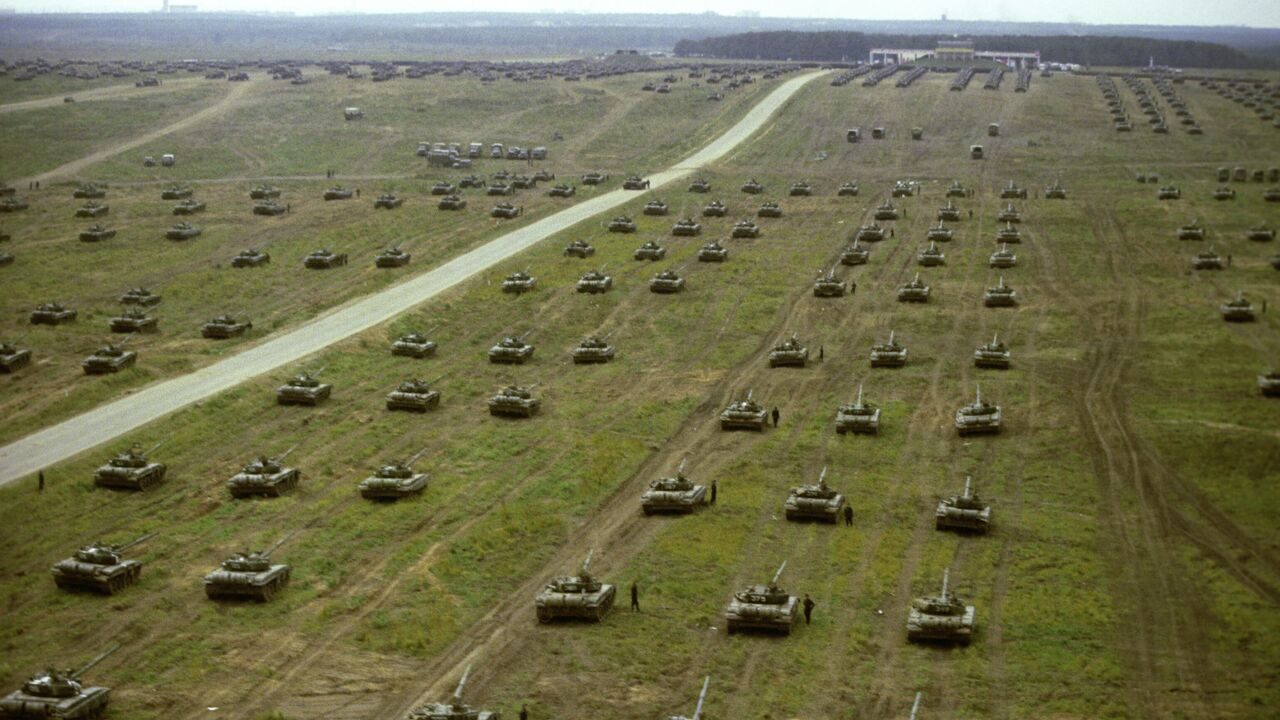
It is crucial for the Ukrainian military leadership to demonstrate a complete break from Soviet—and, consequently, Russian—military tradition. Therefore, the current reform, which amounts to a return to its roots, was presented in a new guise. A Soviet division has been replaced by a corps while maintaining the essence of this formation.
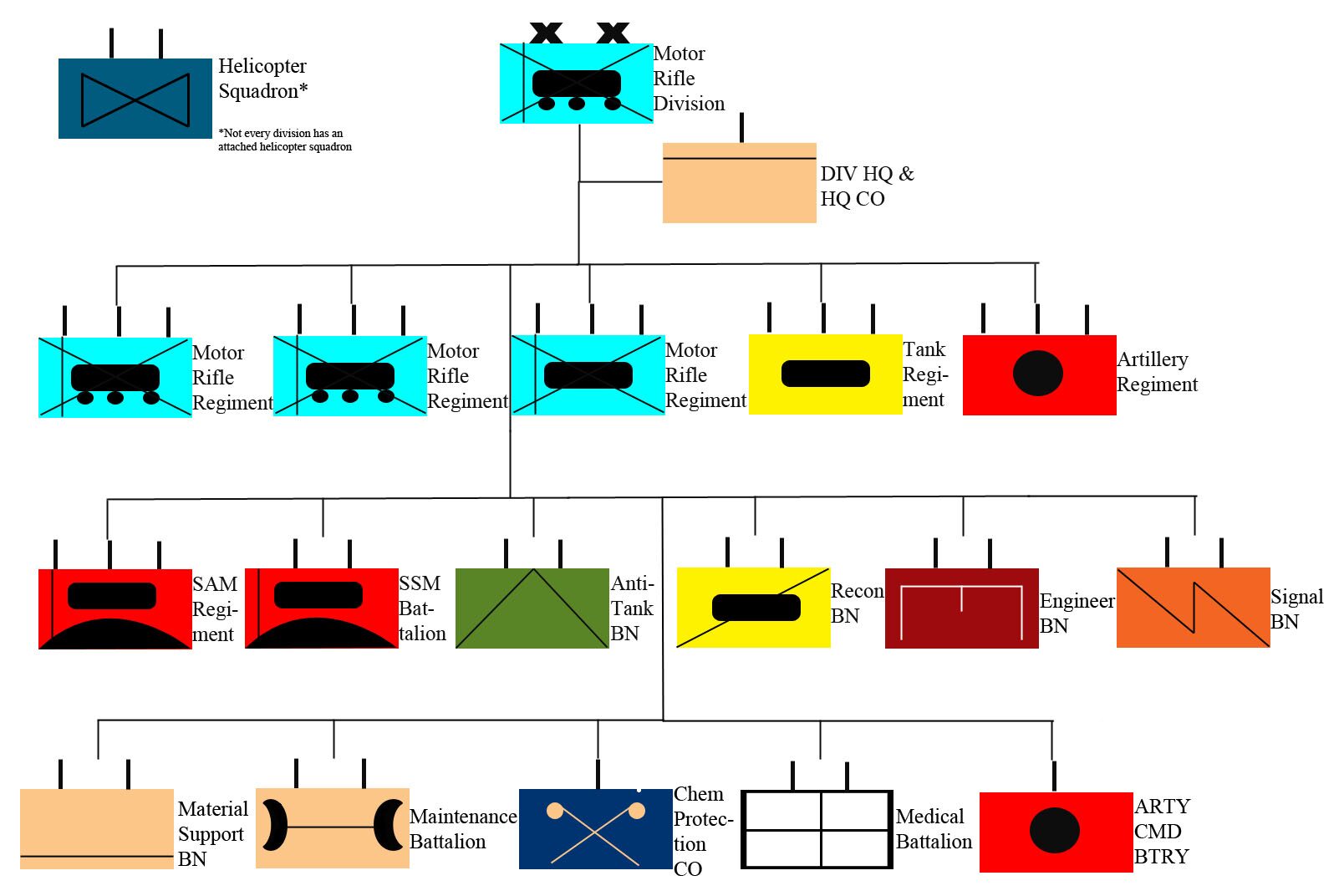
In the context of the Soviet Army, it is worth considering what a full-fledged division meant. A division is an operational-tactical formation comprising three motorized rifle regiments, a tank regiment, an artillery regiment, an anti-aircraft missile regiment, an anti-tank battalion, a reconnaissance battalion, an engineer-sapper battalion, a medical battalion, repair and maintenance battalions, and engineer-sapper battalions; separate NBC defense, UAV, and electronic warfare companies; a command company; and its own armories and food depots. A division can conduct combat operations as part of an army corps, army, or entire front, or independently.
Click to see the full-size image
In essence, it is a mini-army with its own logistical structure that ensures operation in autonomous mode for an extended period. When experts claim that the NATO bloc uses a more mobile and compact brigade structure, they forget that two of its strongest armies—the American and Turkish armies—rely on divisions. For example, divisions formed the backbone of the U.S. Army during Operation Desert Storm.
Thus, the Ukrainian army now has 18 corps instead of operational formations. Thirteen are in the army, two are in the airborne assault forces, one is in the marine corps, and two are in the national guard. Though this change appears to be a retreat from NATO standards toward the Soviet model, it is actually an adaptation to the realities of the current positional war. The composition of these corps is listed below.
Complete list of corps and year of formation:
- 1st NGU Corps, 2025;
- 2nd NGU Corps, 2025;
- 3rd Army Corps, 2025;
- 7th Airborne Corps, 2024;
- 8th Airborne Corps, 2025;
- 9th Army Corps, 2023;
- 10th Army Corps, 2022;
- 11th Army Corps, 2023;
- 12th Army Corps, 2023;
- 14th Army Corps, 2023;
- 15th Army Corps, 2023;
- 16th Army Corps, 2025;
- 17th Army Corps, 2023;
- 18th Army Corps, 2022;
- 19th Army Corps, 2023;
- 20th Army Corps, 2023;
- 21st Army Corps, 2023;
- 30th Marine Corps, 2023.
The formation of corps made it necessary to reorganize the command structure at the next higher level.
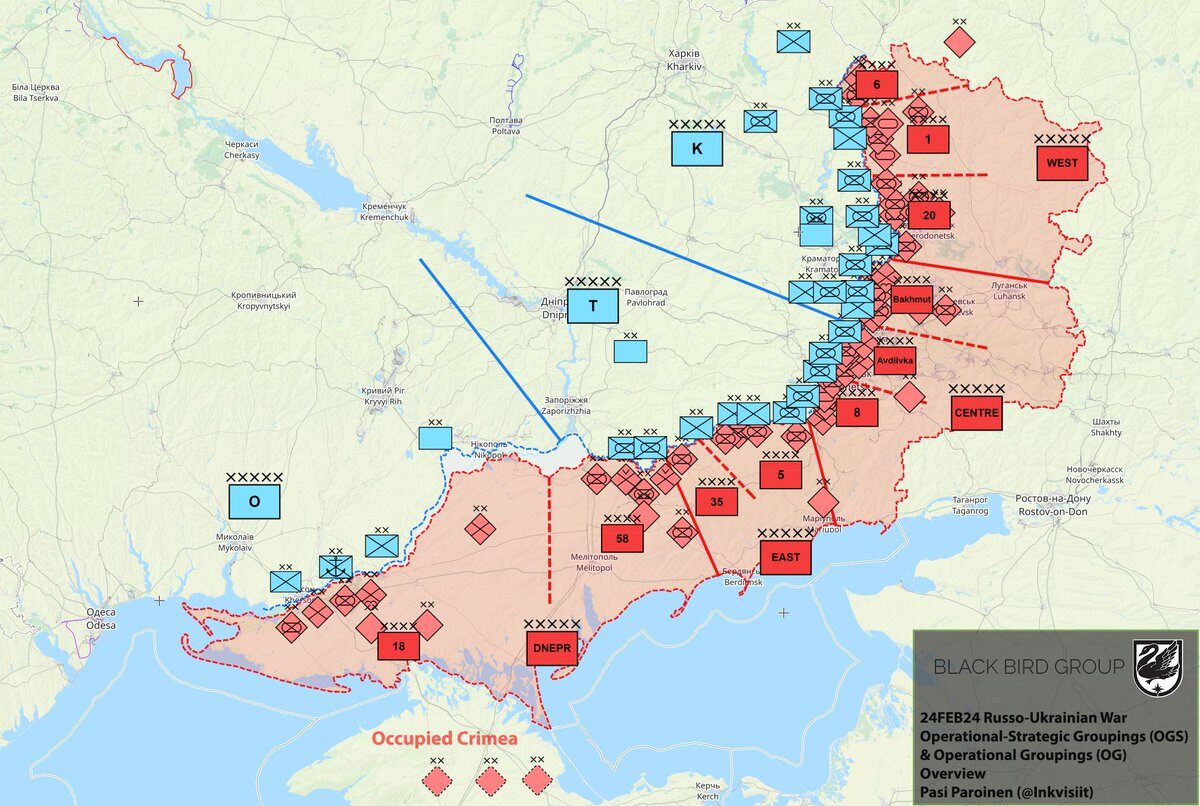
The “Dnipro” operational-strategic group of forces (Kharkiv–South Donetsk direction) was subdivided into the “North” group of forces (Lozova–Liman direction) and the “East” group of forces (Sever–Novopavlovsk direction), as well as units and formations under direct command.
The “South” Army Group (Odessa–Zaporizhzhia sector) includes the 17th Army Corps, the 30th Marine Corps, the “Odessa” Operational-Tactical Army Group, and units and formations under direct command.
The “West” Army Group (Chernihiv–Sumy direction) consists of the 8th Airborne Division, the 15th and 18th Army Corps, and units and formations under direct command.
The “Volyn” Operational-Tactical Army Group.
Accordingly, all but one of the 18 army corps that had already been formed were assigned to one of the following military groupings:
“North”: 3rd Corps (Liman direction), 10th Corps (Kupyansk direction), 14th Corps (Lozovka-Belgorod direction), and 16th Corps (Kharkiv direction);
“East”: 1st and 2nd National Guard Units, 7th Airborne Division (Pokrovsk direction), 9th Corps (Pokrovsk direction), 11th Corps (Severodonetsk-Chasov Yar direction), 19th Corps (Toretsk-Konstantinovka direction), 20th Corps (Novopavlivka direction), and 21st Corps (Pokrovsk direction);
“West”: 8th Airborne Division (Sumy direction), 15th Corps (Chernihiv-Sumy direction), and 18th Corps (Sumy direction);
“South”: 17th Corps (Zaporizhzhia direction) and 30th Naval Infantry Brigade (Kherson direction).
The 12th Army Corps (Kyiv direction) cannot yet be assigned to any of the Armed Forces of Ukraine’s operational formations. In terms of its composition, it serves as a strategic reserve.

Click to see the full-size image
The combat strength and organizational structure of army corps vary based on the tasks they perform and the defense sector they occupy. Most corps have five to six combined-arms brigades, including one heavy mechanized brigade, as well as one separate artillery brigade and one separate reconnaissance (reconnaissance-strike) brigade. They also have separate unmanned systems, anti-tank, communications (command), logistics, combat support, repair and maintenance, medical, security and defense, and reserve battalions.
With an average of 3,000 to 5,000 personnel per Ukrainian brigade, a corps consists of 15,000 to 25,000 service members. In terms of structure and strength, formed corps are complete analogues of large Soviet divisions. However, organizational measures alone are insufficient to achieve victory on the battlefield. People form the backbone of all military units.
The Ukrainian army’s main problem is currently a shortage of personnel. A corps typically consists of between 15,000 and 25,000 personnel. Although the transition began in 2023, many of the units from which these corps were formed experienced a severe shortage of personnel. Staffing 18 formations amid an acute shortage of human resources is an ambitious undertaking. There is a risk of creating “dead souls”—structures that exist only on paper. The problem of a shortage of commanders closely follows that of a shortage of fighters, since managing a corps requires highly qualified staff officers, who are already scarce in Ukraine.

Click to see the full-size image
Logistics and rear support could become a second problem. Regardless of their name, corps or divisions must fulfill the main task of holding a section of the front independently without depending on neighbors to the left or right. Consequently, these units must have significant stockpiles of weapons, military equipment, and other necessary resources. In the Ukrainian army, however, logistical support tasks fall to the rear command. Only time will tell how this issue will be resolved.
In conclusion, the Ukrainian army has largely deviated from NATO standards by shifting from flexible, mobile brigades to heavier, corps-level formations. This indicates the low effectiveness of military units below the divisional level in full-scale, protracted combat operations. The key issue regarding the reforms is whether they align with reality. It is highly likely that the current changes will remain on paper only. The main reason for this may be the insufficient staffing levels, which remain critically low despite four years of mobilization.
MORE ON THE TOPIC:
ukraine may go all in at any time with what ever it can assemble. an act of desperation. it takes years to assemble military units for operation. changing now may bring weakness
for all of dads and moms that love to stay home to take care of their loved ones, or rest of people on the search for an opportunity to pull in some extra income for their family month after month let me share a remarkable opportunity to explore.
here →→→→→→ https://psee.io/8jqu9r
in the middle of a decimation they change structure? it is a natural instinct, but is it wise? timing is opening them up for even more decimations as any structural changes involve risks and uncertainties by itself, the advancing russian steamroller aside
genial herr zelensky !!!, there is no better way to cover up the fraud ! at your service. (did i see some ai hands here 31-3.jpg ? no its female soldiers holding real heavy stuff in girly weak hands).
americunt command—all 340 million inferior ugly sub species must lick transgender anuz swallow hebrew jizz
ukraine will never surrender to russian shitstains!