


Click to see the full-size image
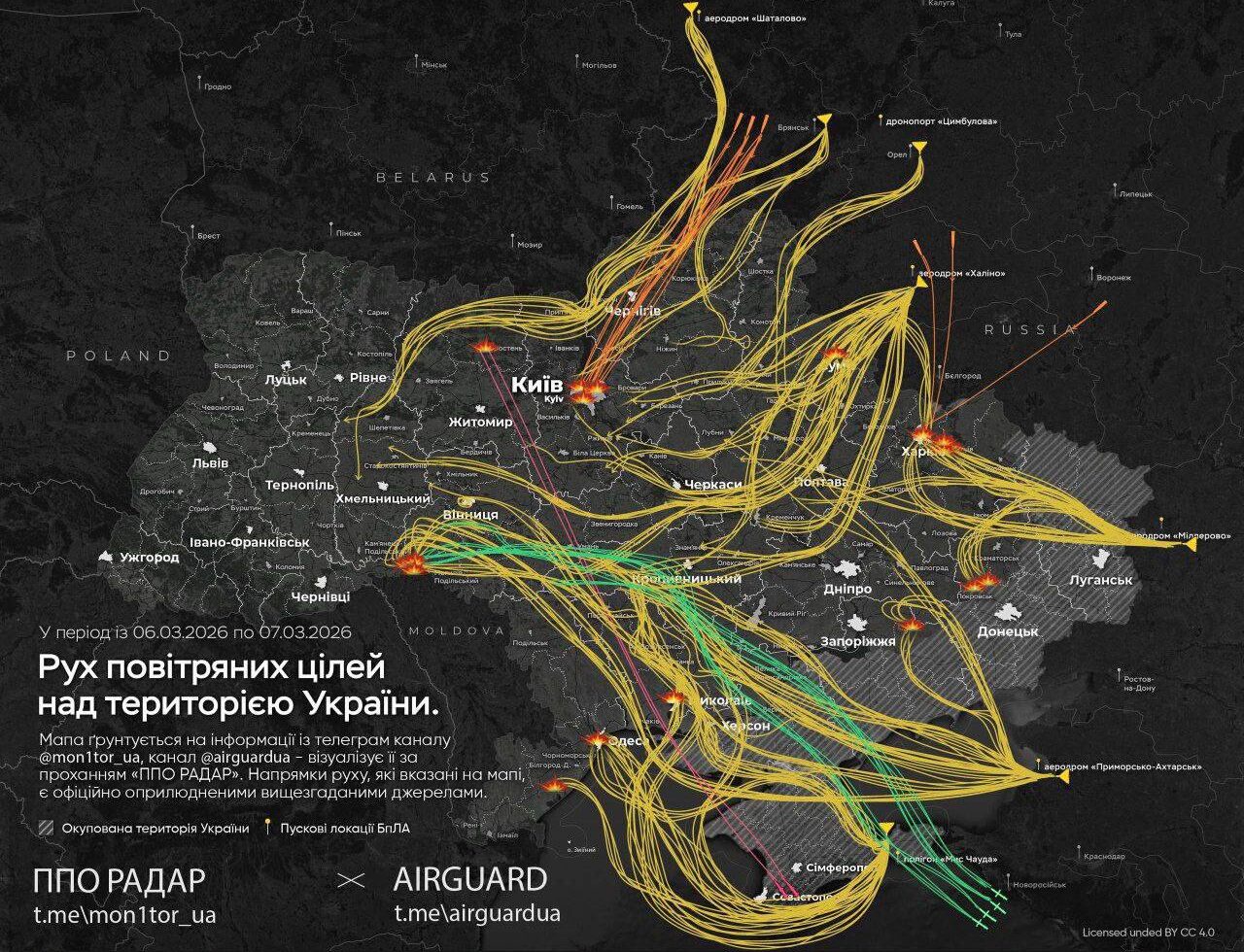
On the night of March 7, 2026, after a week of relative calm, Russian forces launched a large-scale combined strike on the territory of Ukraine, employing 29 missiles of various types and 480 attack drones across 15 Ukrainian regions. The targets were primarily energy infrastructure and railway transport facilities.
The most significant episode in the west of the country was the strike on the Dniester Hydroelectric Pumped Storage Power Plant in the Chernivtsi region—one of the largest hydroelectric pumped storage stations in Europe, located on the Dniester River just a few kilometers from the border with Moldova. According to Ukrainian estimates, about 14 cruise missiles were launched at the facility; damage to such a critical node potentially affects not only the internal balance of the power system but also regional energy security, given the station’s transit and reserve functions. A simultaneous strike on the Ladyzhyn TPP in the Vinnytsia region—reportedly hit by about five Kalibr missiles—increased the strain on central Ukraine’s power grid and forced operators to urgently redistribute capacity.
Near Kyiv, Russian forces struck several heat-generating facilities with Iskander-M ballistic missiles, targeting TPP 5 and TPP 6. Earlier damage to TPP 4 (a combined heat and power plant) had already caused power outages and voltage surges in the capital.
Parallel to the attacks on the energy sector, strikes were carried out on railway infrastructure, intended to complicate the movement of troops, equipment, and fuel. In the Khmelnytskyi region, a railway junction in the Shepetivka district was hit, while in the Zhytomyr, Vinnytsia, and Rivne regions, Ukrzaliznytsia reported changes to train routes due to damage to tracks and associated infrastructure.
In Korosten, Zhytomyr region, one of the strikes hit the workshops of a chemical engineering plant, adding an industrial component to the task of disrupting logistics. In the Sumy region, facilities on a railway line were hit, including a shunting locomotive in Trostianets, as well as two energy facilities in the Chernihiv region, indicating an attempt to destabilize the northern supply direction.

Click to see the full-size image
The southern direction also came under heavy pressure. In Odesa, a missile strike hit an infrastructure terminal where, according to some reports, a military cargo had arrived the previous day; a large-scale fire and secondary detonation were recorded.
In the Dnipropetrovsk region, a gas processing plant was attacked in the area of the village of Hubynykha. Explosions and destruction were also recorded in the Kharkiv, Poltava, Zaporizhzhia, and Sumy regions.
This massive strike once again highlighted the critical problem faced by Ukrainian air defense forces: an acute shortage of modern surface-to-air missiles, particularly for Patriot systems and F-16 fighters. According to sources cited by Reuters, in late autumn and early winter, Ukrainian pilots on F-16s were effectively unable to use missile armament for almost a month due to a halt in Western supplies. During this period, the entire squadron had only a few AIM-9 Sidewinder missiles at its disposal, forcing pilots to rely mainly on onboard cannons and faulty munitions left over from previous missions. Although the shortage was partially covered by mid-December through new deliveries (in recent months, Germany and Canada have supplied Sidewinder missiles), the problem persists, exacerbated by a lack of other types of munitions, such as RIM-7 missiles for modified Soviet-era air defense systems.
President of Ukraine Volodymyr Zelenskyy expressed concern that the situation could worsen further due to the reorientation of United States’ attention and resources towards the operation against Iran. He mentioned the possibility of “quietly” appealing for Patriot missiles to countries in the region involved in the Middle East conflict. The scale of the problem is illustrated by data from European Commissioner for Defence and Space Andrius Kubilius: over three winter months, Ukraine expended about 700 anti-aircraft missiles for Patriot systems (PAC-2 and PAC-3). For comparison, the US and its allies, during recent combat operations in the Middle East, expended a comparable number of missiles in just a few days.
Against this backdrop, American publicist and Pulitzer Prize winner Anne Applebaum issued sharp criticism of Washington. In her opinion, the amount of missiles used in a few days of the conflict with Iran would have been enough to protect Ukrainian cities and their energy system from the destructive strikes they have endured over recent months.
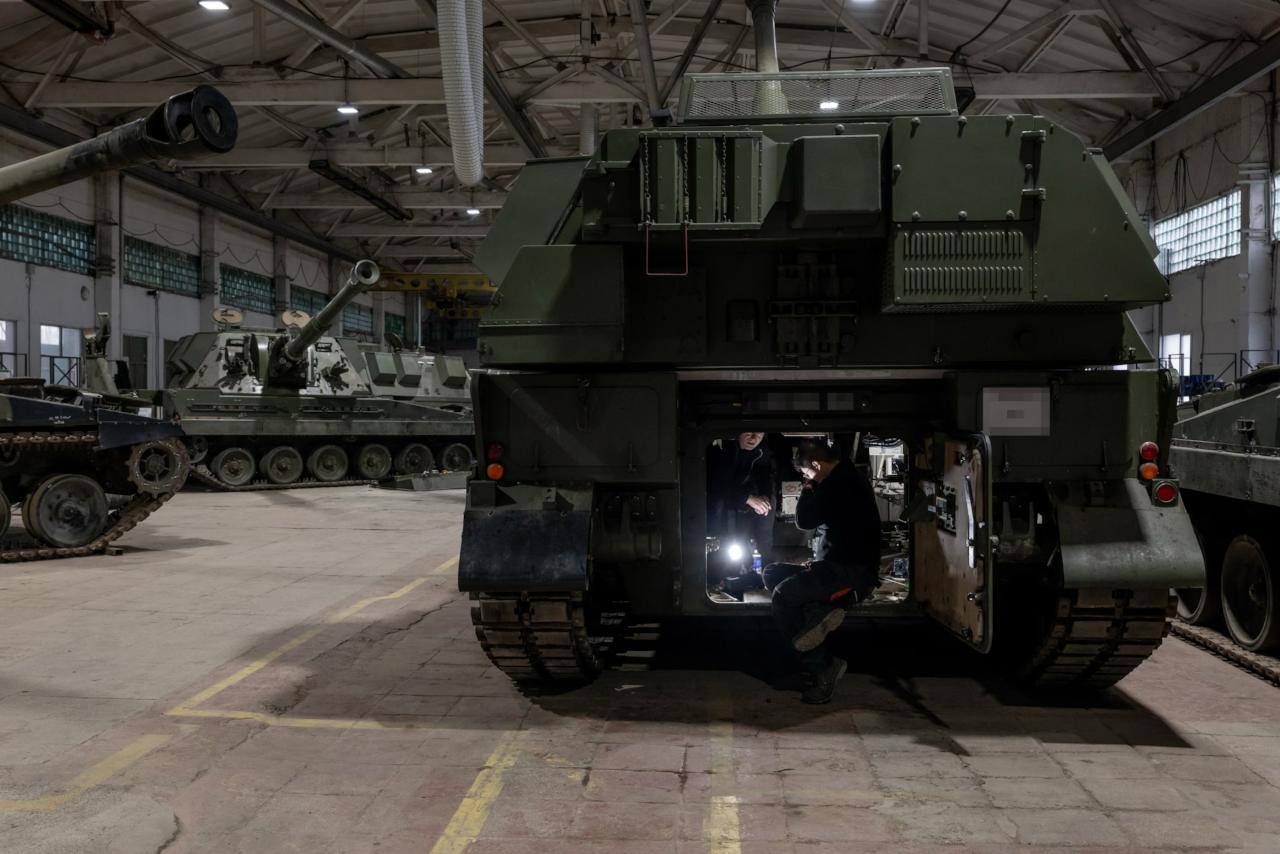
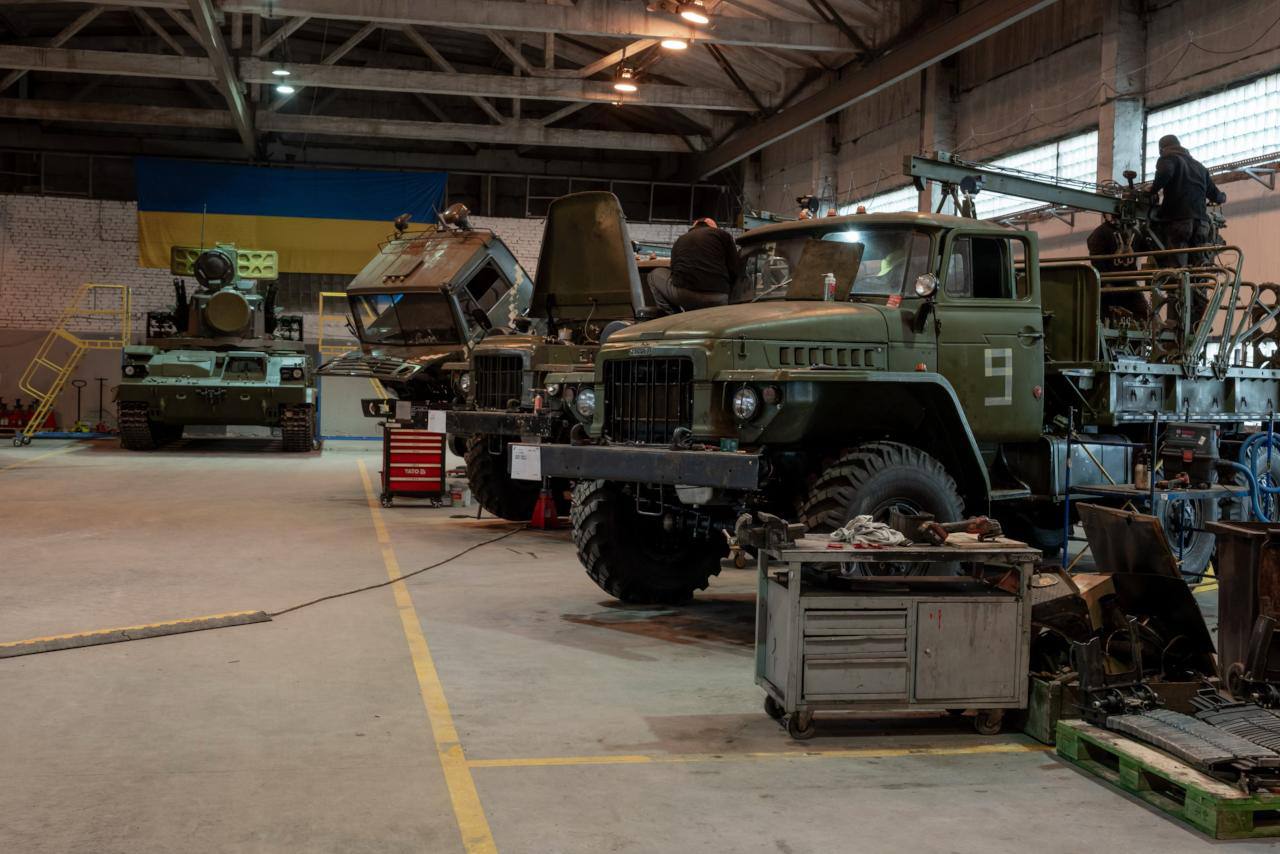
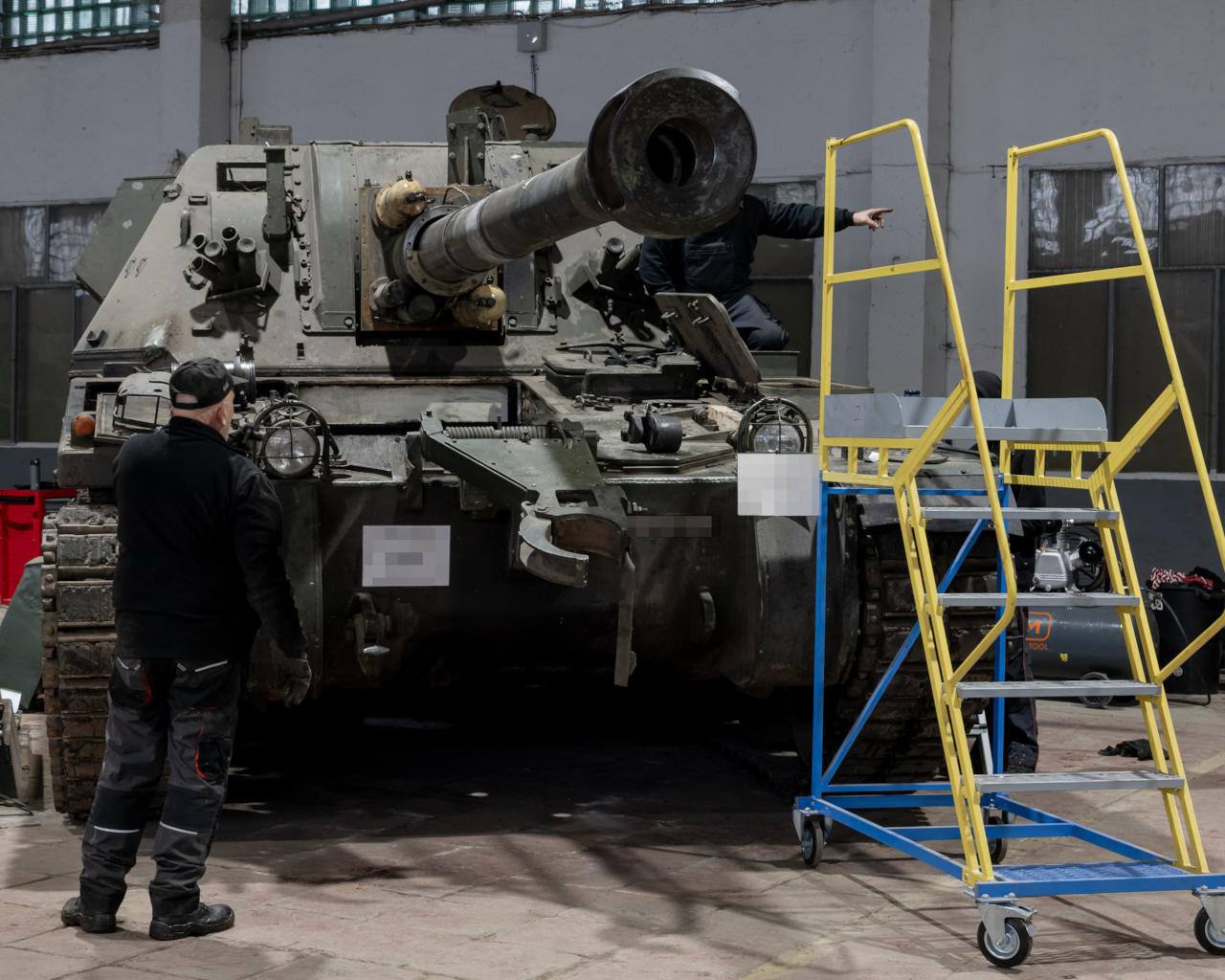
At the same time, amidst the munitions shortage and growing geopolitical competition for resources, Ukraine is receiving support from the United Kingdom, which is not only continuing missile supplies but also deepening its physical presence in the country. The UK Ministry of Defence officially acknowledged for the first time that four facilities for the technical maintenance and overhaul of military equipment, operated by British companies under contract with the defence ministry, are already functioning on Ukrainian territory. These sites employ joint British-Ukrainian engineering teams engaged in repairing armored vehicles (CVR(T), Husky), artillery systems (AS-90, L119 light guns), and other weaponry previously supplied by London.
Click to see the full-size image
Click to see the full-size image
Click to see the full-size image
This week, UK Deputy Defence Minister Luke Pollard visited one of these facilities, accompanied by a delegation of representatives from the British and European defence industries. The ministry announced plans to open a fifth such workshop, emphasizing that positioning repair capabilities directly in Ukraine guarantees the rapid restoration of equipment and its quick return to service. British authorities understand that such facilities on Ukrainian territory are priority targets for Russian strikes; however, according to their statements, this is a risk worth taking and managing in the interest of continued support for Kyiv, demonstrating London’s readiness to further contribute to the prolongation of the conflict.
MORE ON THE TOPIC:
how many lives have ben lost just so nato can move its missiles closer to russia with friends like that who needs enemies
you were placing missiles closer to russia regardless and the war in ukraine is a taste of what is to come if you continue this disastrous policy. maybe you like glowing in the dark? the majority of nukes is pointed at you from israel and they are all nuclear tipped warheads.
for all of dads and moms that love to stay home to take care of their loved ones, or rest of people on the search for an opportunity to pull in some extra income for their family month after month let me share a remarkable opportunity to explore.
here →→→→→→ https://psee.io/8jqu9r
some things kyiv will never run short of and that’s hustles, scams, shakedowns and cons. i almost pity the poor eu if they ever make it through its door.
what about the bridges and the dams on the diaper river? estoupid russkies.
ukraine must continue fighting…heheheh
interesting how some of the shills who where boasting about how ukraine repaired everything and how great things were going went completely silent after russia continued the demolition of ukropistan.
four years listening to the same song. lyricist and performer: the muscovite eunuch.
more than 4 years of “massive strikes” and “hammering” ukraine energy infrastructure and the result is that country 404 has 95% electricity according to the russian osint lost armor. why does russia keep hitting electrical substations that are fixed within a couple of days and electricity availability returns to the “pre-hammering” levels?
why do i dream of margot with the light headed stare?
what i want to know is why any railway track coming into ukraine from poland and any airport in ukraine is still in one piece?
for russia there is but to do. for nato banking monopolies there is but to fail. identifying and removing those who really pull the strings of puppets controlling governments is mandatory to obtain real peace. the curtain of deception must fall
very good, it’s high time russia starts hitting ukraine hard again! last 2 months were mostly quiet and i understand since russia chose to use winter to rest and consolidate their forces, but now is time for renewed offensive on all fronts! especially since ukrainians are supporting the aggression against iran, now the urkonazi filth must be exterminated!