


Click to see the full-size image
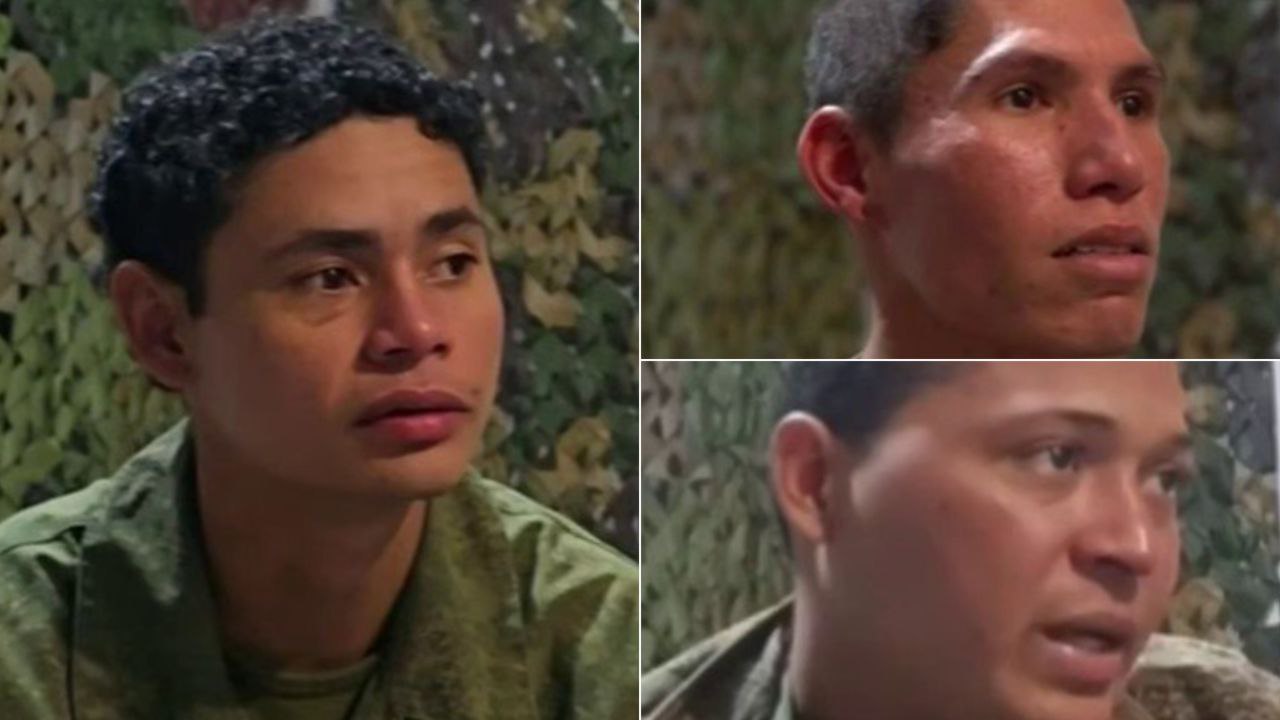
The capture of foreign mercenaries fighting for Ukraine remains a rare event in the ongoing conflict. The accounts of three young Colombians who surrendered to Russian forces in the Zaporizhzhia region reveal the recruitment mechanisms, service conditions, and personal motives driving such fighters.
The prisoners are Luis Manuel Ruidíaz Contreras (born 2005), Juan David Polo Mendoza (born 1996), and Luis Guillermo de la Cruz Ramos (born 1999). All served in the 128th Mountain Assault Brigade of the Armed Forces of Ukraine and were captured near Mali Shcherbaky.
Their backgrounds are typical for Colombian recruits: military or athletic experience, prior army service, work in security, and the pursuit of income abroad.
• Juan Polo Mendoza: A former footballer, army veteran, and bodyguard.
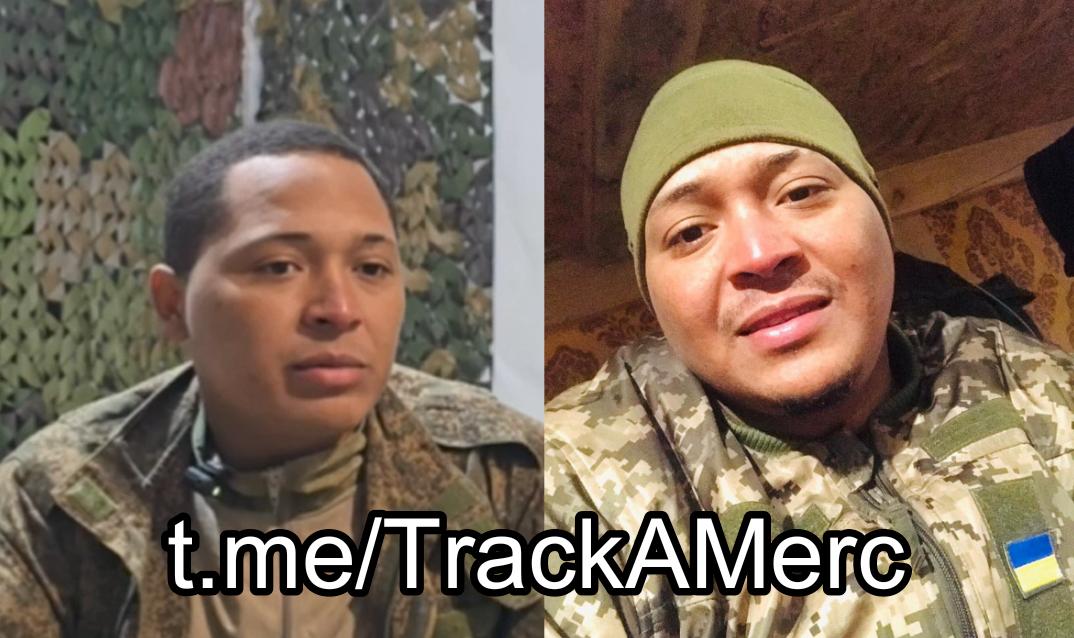
Juan David Polo Mendoza
• Luis Ruidíaz Contreras: Former miner and ex-serviceman of the Colombian military. He came to Ukraine to earn money for medicine for his sick mother.
“My mother doesn’t work because she’s ill, so I came here to buy her the medicine she needs. I don’t know about my father—we haven’t been in touch for years. He already had two brothers over here in Ukraine… actually, three brothers who were in Ukraine.”
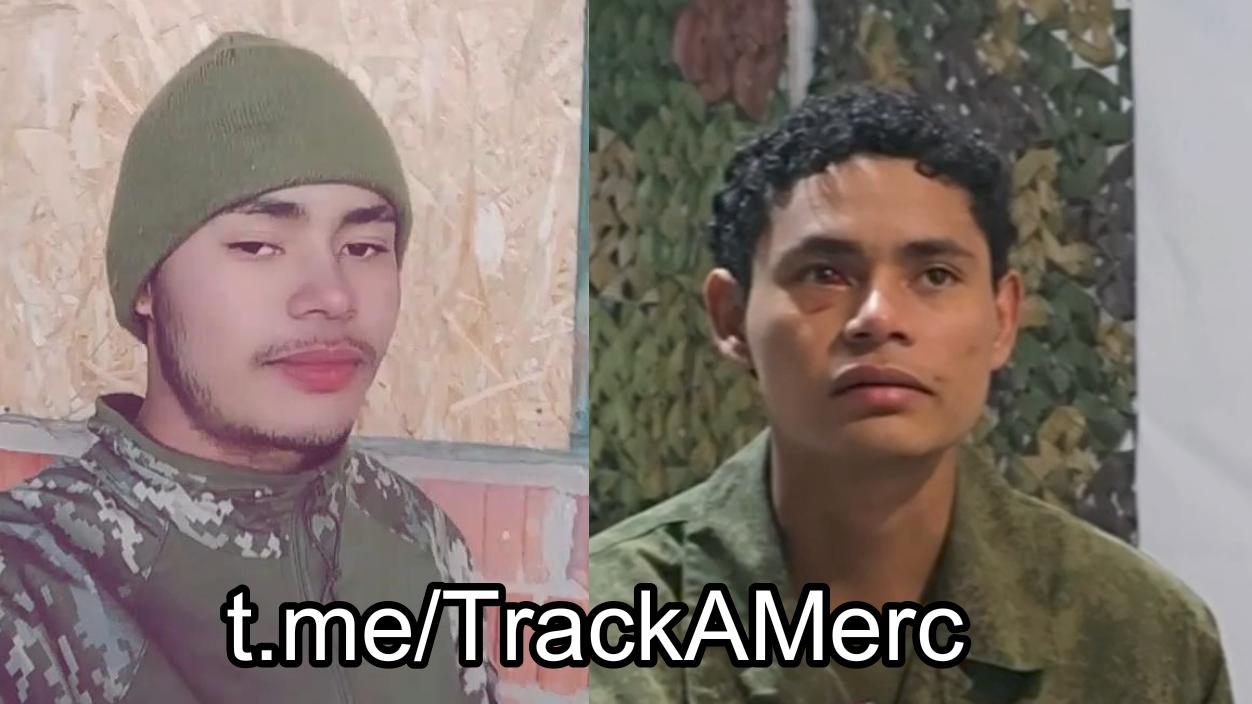
Luis Manuel Ruidíaz Contreras
• Luis de la Cruz Ramos: Former sanitation worker on garbage trucks; later served in an artillery battalion in Norte de Santander, Colombia.
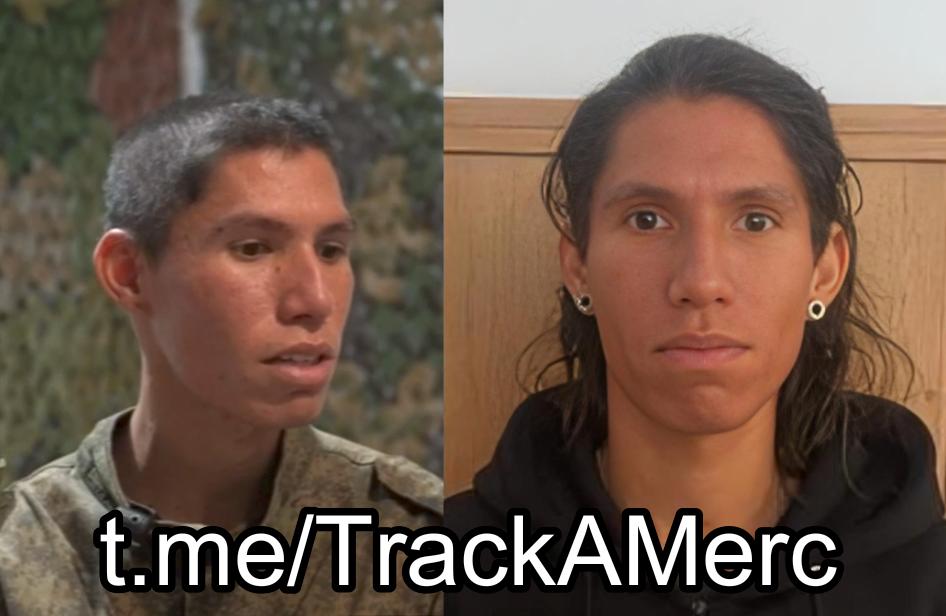
Luis Guillermo de la Cruz Ramos
“I worked in sanitation, on the trucks that collect city trash. I served in the army in 2018 in an artillery battalion in Norte de Santander.”
Recruitment began on social media. A Colombian contact reached out via TikTok, where he posted videos about military service. After corresponding, he instructed them to obtain passports; five days later, he booked their flights. The group flew from Bogotá via Panama and Istanbul to Chișinău, then continued by bus into Ukraine.
At the border, their fingerprints and saliva samples were taken (referred to as a “DNA test”), and they were made to sign documents in Ukrainian without translation. After a month of waiting, they received uniforms and were assigned to brigades. They had been promised rear-area positions, far from the “zero line” (the direct front). But following minimal training, they were dispatched to the trenches.
“The information he gave my friend was that he’d be in the rear, not at the front—not on the ‘zero line,’ as they call it, where the Russian army faces the Ukrainian army. You know, where all the fighting happens. He was told he wouldn’t go to the front line, but to a rear position farther back.”
“They hardly gave me any real information about the war because I arrived as a recruit. But later they sent me straight to the zero line, to the forward positions. They put us in a trench, and we stayed there for three or four days.”
Pay proved disappointing: in the first month, they received only about $250, far less than promised. Rumors circulated among Colombians that the 47th Brigade—later allegedly renamed the “Royal Guard” due to embezzlement—paid even less: roughly 12 million pesos (around $3,000 USD) instead of the expected 19–20 million (approximately $4,600–$4,900 USD).
The treatment of foreigners in the Ukrainian military was reported as poor.
“From what I went through, from my experience… they treat you badly. They wouldn’t help you. Sometimes they didn’t bring food or water… you could only communicate by radio. They’d talk down to you, swear—‘shut up, damn it,’ ‘don’t be a coward,’ ‘you’re weak,’ that kind of thing… or they’d say, ‘Report now, or you won’t get food or water.’”
On their third day in the trenches, Russian troops captured them. The recruits offered no resistance and laid down their weapons. They reported being treated correctly, without abuse.
“Yes, after about three days we were captured. I saw it coming. Sending us to a place like that just to report, eat, and sleep—what else could you expect? To die?”
Juan Polo Mendoza stated he was prepared to fight on Russia’s side. He appealed to fellow Colombians:
“Brother Colombians… think very hard before coming to this war… Don’t believe everything you see on the internet… so much of it is lies. My advice is to stay home, with your family.”
The captives also mentioned drug trafficking, alleging that Colombians use the route Bogotá–Istanbul–Chișinău–Ukraine to smuggle narcotics.
“Yes, Colombians are bringing drugs into Ukraine—mercenaries who come to fight the Russians. They have a smuggling route: from Colombia to Istanbul, from Istanbul to Moldova, and from there into Ukraine. Mercenaries bring the drugs from Colombia by plane. The zone is bought off; they transport it easily.”
Overall, the capture of mercenaries by Russian forces is uncommon. Russia classifies them as mercenaries subject to criminal prosecution, not as prisoners of war under the Geneva Conventions. Previous cases have led to convictions: two Colombians received 13-year sentences (November 2025), and one was sentenced to 28 years.
MORE ON THE TOPIC:
not even columbia respects russia or putin’s “red lines”…heheeheh
taliban respects americunt anuz now filled with somali jizz
weak americunt coward pay colombian to swallow their jizz and be killed by 🇷🇺
ukrainian red lines are, well.. bloody red dead people in lines
siberia is going to take care of you, for free.
fuck these putos también a esos mexicanos que pelean por los nazis.
great gulag re-opening. entry tickets only from ukrainian trenches!
shut it ramses. your transparent as a plastic bag. imo
they thought they would go on safari for orcs, they fafo’d
they are the orcs, with motosierras and all the rest, siberia is good for them to cool.
they’re catholics you fool.
a guy with a motosierra is a catholic? and, by the way, the fool call the others fool, and i never call you such thing, as usual, i only say you are upside down.
no if you don’t even know basic geography and pico riguous basics big think your telling the story then it’s you who is upside down.
okay, bob anonymous upside down.
yes the entire south anerica is basically a catholic continent, they run it, they’re the law, the governments everything including the schools and everyone except a fool knows it.
the old school catholic moslem alliances against the orthodox protestants and jews
all the way back to greece versus rome, demokratos versus republic and of course cleoptra the 7th was direct descendant of alexander the great. pharoah was greek after his conquest of egypt until rome conquered cleopatra, then pharoah became caesar.
correct again historic facts, not propaganda. simple facts.
correct exactly like ww1 and 2. a repeat totally.
subhumans ….next
you’re too generous with the wording…subcreatures is more apt
what a way to earn a living? noone should have any sympathy for these people. life might be dirt cheap in columbia but in europe, life still has some worth. hence the reason why these mercenaries aren’t already dead.
colombias horrible like most of spains south american colonies s after beiing plundered and robbed by that fascist kingdom imo of catholics and jesuits. they are where the spanish inquisition was born that led to protestants and even catholics fleeing to america to begin with.
that continent is a hole no wonder at all that millions fled to north anerica like an exodus….. like the jews fleeing pharoah from egypts enslavement and tyrrany bluntly pharoah owned all of the grain in his silos he controlled the food supply totally that’s what they’re wanting again.
they’ve made progress since adolf pharaohed them last time
listen they’re hardly exclusive thd first mercenaries in ukraine going vack to 2014 came from poland peter. and they’re still coming from the eu too it isn’t just colombians and war isn’t new. it’s human tradition. globally no where hasn’t a history of heroism attributed to gallantry from warfare as a business.
columbian drugs… trump was right on this one.
for the book, i’ was only doing it for my sick mother, crossing an ocean, to end up under scum control, to assault civilians with heavy weapons
all us americunts cowards swallow hebrew jizz pay for taliban jizz in our anuz
o esperma hebreu é infértil não serve pra nada, nem pra ser engolido
colombianos idiotas, vão a ucrania para morrer, imbecis que sao
does anyone know what happened to these guys? prisioners in russia or what has just happened?