


Click to see the full-size image
Written by Uriel Araujo, Anthropology PhD, is a social scientist specializing in ethnic and religious conflicts, with extensive research on geopolitical dynamics and cultural interactions
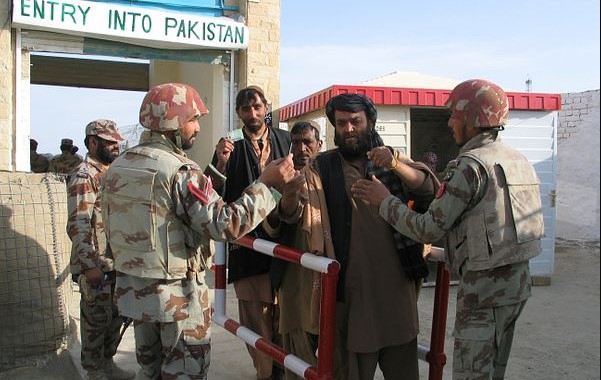
South Asia’s next potential pressure point may lie not along the Line of Control in Kashmir, but westward, along the volatile Afghanistan–Pakistan border. This frontier is quickly emerging as a central driver of regional instability.
As expert Michael Kugelman recently noted, an underreported conflict is gaining momentum between Pakistan authorities in Islamabad and the Taliban government in Kabul. It is centered on Pakistan’s claims that Kabul tolerates, if not outright supports, Tehreek-e-Taliban Pakistan (TTP) militants operating against Islamabad. This confrontation now risks even eclipsing the traditional India–Pakistan rivalry as the region’s most explosive security dilemma.
The data is telling. Terrorist violence inside Pakistan did surge in 2025, with hundreds of attacks attributed to the TTP, many launched from Afghan territory. The Pakistani authorities in Islamabad responded with airstrikes and border closures (among other measures). This in turn has triggered Taliban retaliation, population displacement, and escalating rhetoric. Neither side currently has incentives to de-escalate: Pakistan’s military feels betrayed by the Afghan Taliban, a movement it once sponsored, now accused of tolerating or even aiding the TTP’s campaign against Islamabad; the Afghan Taliban, meanwhile, gains domestic legitimacy precisely by defying Pakistan, a country widely resented by the Afghan public.
There are many factors fueling anti-Pakistan feeling in Afghanistan today, including the unresolved Durand Line dispute and Pakistan’s long involvement in Afghan conflicts. Islamabad is widely seen in Afghanistan as having manipulated Afghan factions over decades, by backing proxies (including, ironically enough, the Afghan Taliban itself) to secure “strategic depth.” These historical grievances fuel suspicion and resentment across Afghan society, beyond Taliban supporters, to this day.
There are wider regional tensions, though. In 2025, I argued that South Asian tensions pertaining to India-Pakistani disputes were spilling into Central Asia and beyond, ranging from hydropolitics to militant spillover and great-power competition. The Afghanistan–Pakistan standoff is now intersecting with precisely those broader Eurasian lines of tension. Taliban-backed instability in Pakistan’s northwest is unfolding alongside Islamic State Khorasan Province activity, Baloch separatism, and refugee pressures. This takes place amid a range of fragile regional connectivity and transit projects linking South and Central Asia, all dependent on cross-border stability.
No wonder Beijing is concerned: Chinese nationals and investments in Pakistan, particularly under the China-Pakistan Economic Corridor, have already been targeted by militants. At the same time, China faces its own security concerns linked to Afghan-based jihadist networks with ideological and operational ties to Xinjiang. Be as it may, China has leverage with both Kabul and Islamabad, and thus far has called for restraint, not confrontation.
What truly alarms Pakistan, however, is not only the Afghan Taliban’s supposed duplicity over the TTP issue, but Kabul’s warming ties with India, marking a shift. Today, senior Taliban officials regularly visit India, embassies are reopening, and trade mechanisms are being discussed. Islamabad reads this shift as a strategic encirclement. Whether this perception is accurate is almost secondary; in South Asia, as I’ve argued before, perceptions kill. Thus, Pakistan may increasingly come to see Afghanistan not merely as a western security headache, but as part of a broader Indo-centric challenge.
This is where escalation risks multiply. A harsher Pakistani campaign against the TTP, including possible ground incursions into Afghanistan, could provoke Taliban-backed militant retaliation deep inside Pakistan’s cities. In this scenario, the November suicide bombing in Islamabad may have signaled what lies ahead.
At the same time, renewed instability in Afghanistan would be a kind of a gift to ISKP, which could further thrive on sectarian polarization. The group has already demonstrated its transnational reach, from attacks in Iran and Russia to foiled plots in Europe. A destabilized Afghanistan–Pakistan axis would thereby increase global terrorism risks.
Meanwhile, a humanitarian problem is on the rise amid border closures and tightening policies, a situation exacerbated by Washington’s suspension of resettlement programs. Tens of thousands have fled Pakistan’s northwest fearing new military operations. Trade and shipping routes are disrupted, affecting landlocked Central Asian economies and energy projects such as the TAPI gas pipeline.
Against this backdrop, Western prescriptions appear increasingly hollow. The Trump administration favors ad hoc, personalized diplomacy, including premature ceasefires, with little to show for it. Its credibility deficit is visible across Eurasia. Even at Davos, Western elites now speak — quite hypocritically — of the “death” of the so-called rules-based international order, a euphemism for the decline of the Anglo-centered order.
Yet the collapse of one order does not automatically yield a better one. Central and South Asia therefore may function as a test case, so to speak, for whether genuinely multipolar frameworks can manage conflict. As I’ve argued, platforms such as the Shanghai Cooperation Organization and BRICS, are regionally embedded, inclusive, and not burdened by colonial baggage.
The Afghanistan–Pakistan crisis is not merely a security dispute; it is a convergence point of terrorism, migration, energy corridors, and great-power competition. SCO mechanisms on counterterrorism, border security, and confidence-building could be adapted to address cross-border militancy involving Afghanistan, even if Kabul remains only partially integrated. BRICS, meanwhile, could use economic incentives and infrastructure coordination to create stakes for stability — Pakistan’s interest in BRICS membership is telling enough.
Success is not guaranteed: the Taliban are wary of binding external constraints (to say the least); Pakistan’s military is increasingly impatient; India remains wary of multilateral frameworks that could internationalize Kashmir. But the alternative is escalation by default. A region with nuclear weapons, militant groups, and fragile trade and energy corridors cannot afford improvisation.
To put it bluntly, if Afghanistan–Pakistan tensions spiral into open conflict, the shockwaves will not stop at the Khyber Pass. They will reverberate across Eurasia, from Central Asian rivers to Indian Ocean trade routes and beyond, while an old order is fading.
MORE ON THE TOPIC:
not so fast sf, the truths coming out now first the fact that they were using epstein to do their blackmailing for the s been exposed, and that tied sir billy gates totally in that role as the go between according to sources, not the msm cover up about him getting std s from. russian hookers
which is rubbish i’ve known madames and sex workers for years and years and i’ve never known one to ever have an std) never they’re too professional, anyway so not only is the british empire all over epstein island the very latest is…
“ex british mp andrew bridge on satanism child trafficking corruption and abuse ( dutch subs) lighhousextv you tube.
i meant to post the gbnews interview with andrew lownie too, which he just did exposing that he suspects that andrew and sarah need to be criminally investigated over their involvements in blackmailing operations with russia china and others through using epstein as the middle man.
and of course all of it centres around sex. because that’s where the truth lies in human activity.
you can’t trust anybody. ok, no one can. they infiltrate, like chameleons, everything. never trust anyone. nothing is what it seems. nothing.
taking into account what trump revealed and the testimony of the venezuelan guard, it is safe to assume that the u.s. military employed multiple systems at the same time to facilitate its operation in caracas. attributing all of these effects to a single system is unrealistic.
.…………………………… https://psee.io/8jqu9r
i dont have a phd in political “science” but it’s pretty obvious it started when they arrested imran khan…
still no explanation about who is operating the drones over afghanistan: http://north-afghanistan.blogspot.com
citing from the link:
-pakistan long backed the pashtun taliban as a strategic proxy, thinking it could control them. today, those same religious students have turned against the pakistani state, leaving islamabad struggling to rein them in.
so who attacked pakistan yesterday? taliban? officially it was the baloch. but pakistan is now victim of its own evilness.