


Click to see the full-size image
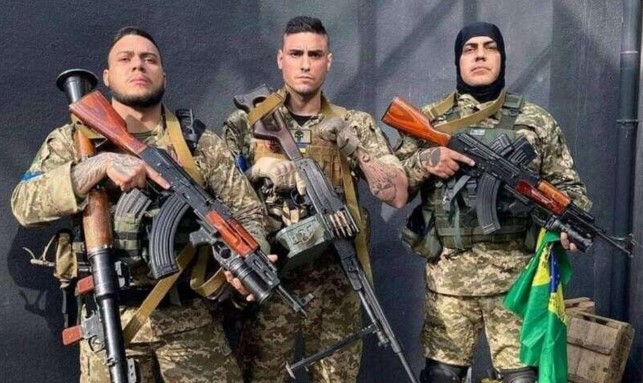
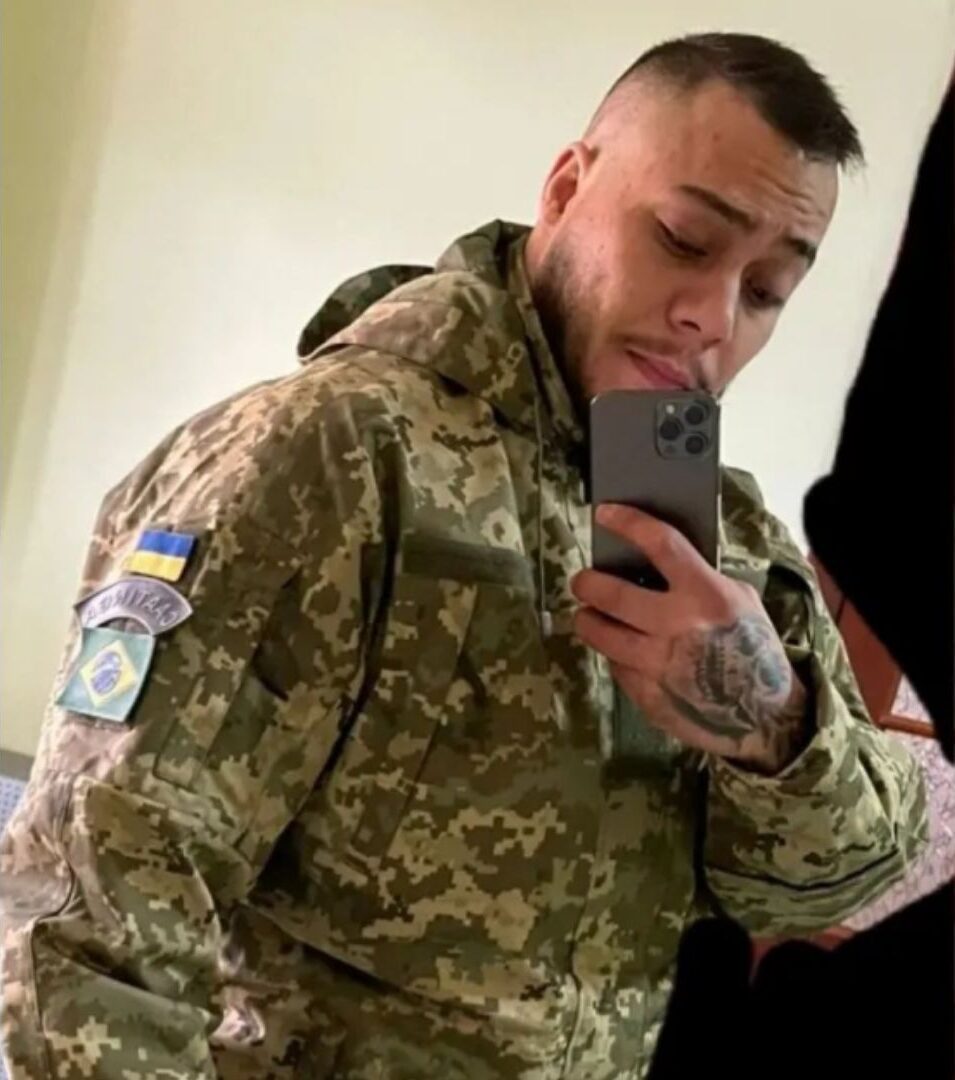
Today, at least 500 Brazilian mercenaries are fighting in the Ukrainian army, and about 90 of them have been identified. Some of them will be fortunate enough to survive a conflict of this intensity. But what will happen to them when the war ends?
Many of the survivors will most likely return home. This greatly concerns the Brazilian government. The question of whose side people with vast military experience will take remains unanswered. State security forces cannot offer the level of monetary compensation that mercenaries received in Ukraine. The nature of the human psyche makes it difficult to return to a previous standard of living after experiencing wealth. However, there will be those willing to pay a good salary for valuable combat experience. These are various criminal groups and drug cartels.
Future “heroes” of cartel wars
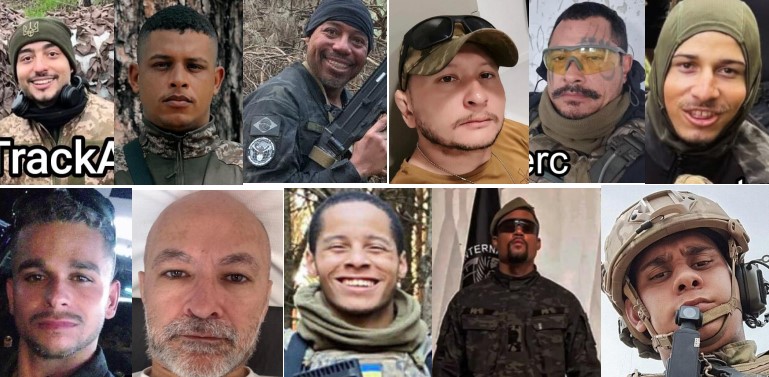
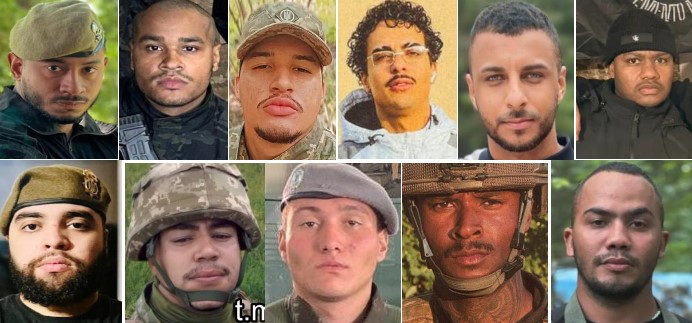
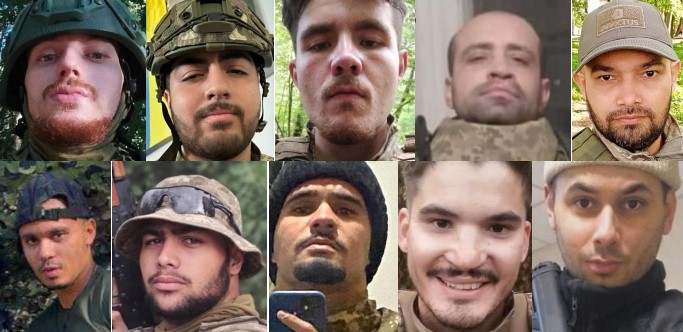
First, the names of the Brazilian mercenaries currently fighting in the Ukrainian army should be made public. This may help the security forces or the government prevent their misuse in the future. The following individuals were reported to be in Ukraine as of January 2026.
Click to see the full-size image
Rodrigo Caldas, call sign Pablo, from Rio de Janeiro
Daniel Santos Reis from Salvador, Bahia
Marcus Vinicius Souto Santos from Salvador, Bahia
Icaro Coelho Araujo from Manaus
Kaabi Dapik Soares from Salvador, Bahia
Isaac Reuel Silva de Oliveira from Aracaju, Sergipe, but lives in Cabo Frio, Rio de Janeiro
Miller Pardim Siraco from Itanhamá, Bahia
Amauri Adao Ferreira Bonfim from Vitória, Espírito Santo
Mateus Dias Araújo from Rio de Janeiro
Patrick César Airao da Silva Moura from Rio de Janeiro
João Gabriel Fonseca de Medeiros from Rio de Janeiro
Click to see the full-size image
Rodrigo Nogueira Mattos from Caipiranga, Amazonas, but lives in Manaus, Brazil
Vitor Luis Fidelis from Guarujó, São Paulo
Randley Mateus Nogueira da Silva from Oiapoque, Amapá
Antoni Kellons Nascimento da Silva from Rio de Janeiro
Dalton Libl Moreira from Cianorte, Paraná
Mateus Henrique Tavares Teixeira Lemush from Minas Gerais
João Pedro Rocco Dias from Guarujá, São Paulo, Brazil
Redney Jefferson Miranda de Oliveira from Feira de Santana, Bahia
Emerson Bamberg de Souza from Formosa, Goiás
Guilherme Toan Meirelles de Oliveira, known as Zorro, from Joinville, Santa Catarina
Tarlys Alves da Silva, known as Fantasma, from Poco das Trincheiras, Alagoas
Click to see the full-size image
Fernando José Souza de Moraes from Goiás
João Augusto Rodrigues Justino Cassemiro, also known as John Operator, from São Paulo
Laerte Elbrantinho da Silva from Bragança Paulista, São Paulo
Júlio Henrique Teixeira da Costa from Belo Horizonte
Diego Bento de Souza from Maé do Rio, Pará
Visni Nandolff Monteiro from Vitória, Espírito Santo, but living in Lajinho, Minas Gerais, Brazil
Renato José Pessoa Gerera-di-Lima Filho from Surubim, Pernambuco, Brazil
José Alison Saturnino da Silva from Sirinhaém, Pernambuco, Brazil
João Adelmo Gomes Ferras, known as Caver, from Serra Talhada, Pernambuco, Brazil
Tiago Torres Pereira from São Paulo, Brazil
Unobvious potential
Highly developed criminal organizations with selfish motives, such as large gangs and cartels, can act as participants in criminal rebellions. These groups become de facto political entities when they achieve sufficient organizational, personnel, and resource potential to exercise direct, forceful control over territories. Their forceful control of territory, which displaces the state from the areas they control, creates conditions for criminal insurgency and internal armed conflict. In countries such as Mexico, Colombia, Haiti, Brazil, and Venezuela, these groups have an international scope of criminal activity, can conduct continuous combat operations, and form transnational networks.
The most important resource for any criminal group is people. Given Brazil’s fairly high level of banditry, skilled fighters are worth their weight in gold. They can become the backbone on which to build serious combat potential and leave competing groups behind. Mercenaries fighting on the side of the Ukrainian army are well-suited for this role. Those who survive are unlikely to view street fighting as frightening.
Click to see the full-size image
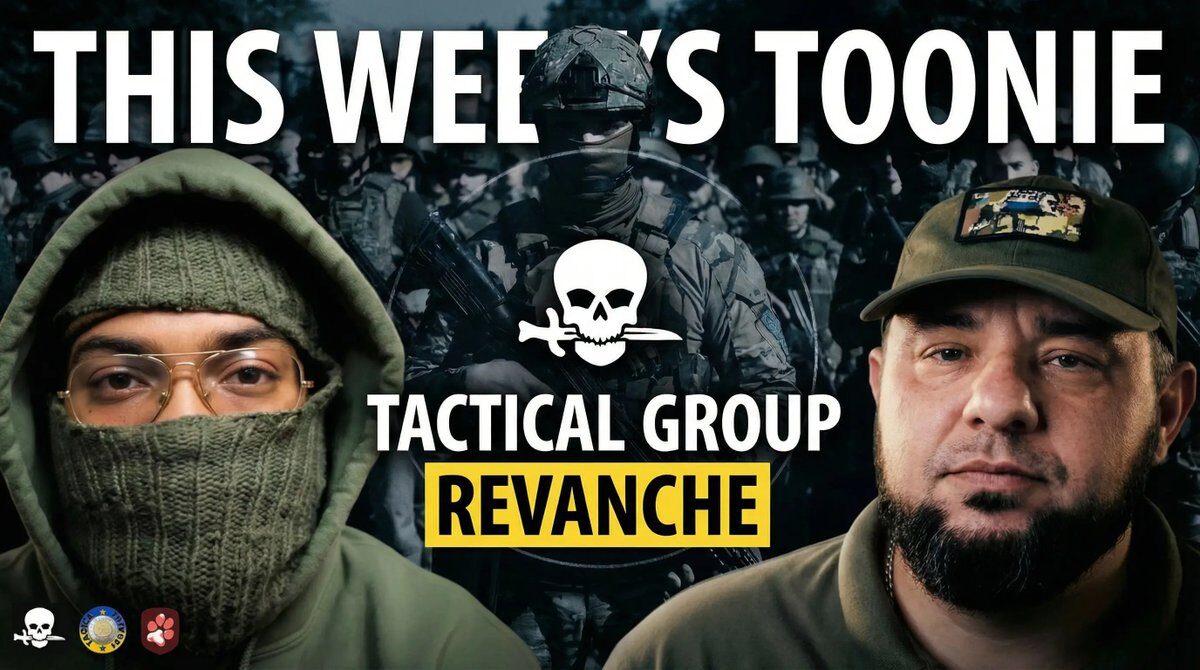
Some mercenaries advance from the rank of ordinary soldier to commander. One example is Leanderson Paulino, who is from São Paulo and Pernambuco. Paulino currently commands the “Advanced Company,” which consists mainly of Brazilians. This unit belongs to the Main Intelligence Directorate of Ukraine and the “Revanche” tactical group.
These types of fighters could become a major problem for Brazil if the state does not find a use for them. Someone with experience commanding an army unit at the company level could quickly scale up to the battalion level. However, the main problem lies in the long term. A company commander with combat experience can train up to 100 people in a relatively short period of time. These individuals can then become instructors, passing on their combat experience to gangsters from cartels or criminal groups.
Click to see the full-size image
Whether Brazil’s security forces will be able to recruit such valuable specialists remains to be seen. Organized crime can easily outbid the state for former mercenaries with revenues from drug sales and other illegal activities. These “soldiers of fortune” are highly sought-after recruits because they are skilled in the use of advanced weapons, such as FPV drones. If the cartels master the techniques of dropping suspended charges or mass-producing FPVs, Brazil’s security forces will have no way to counter them.
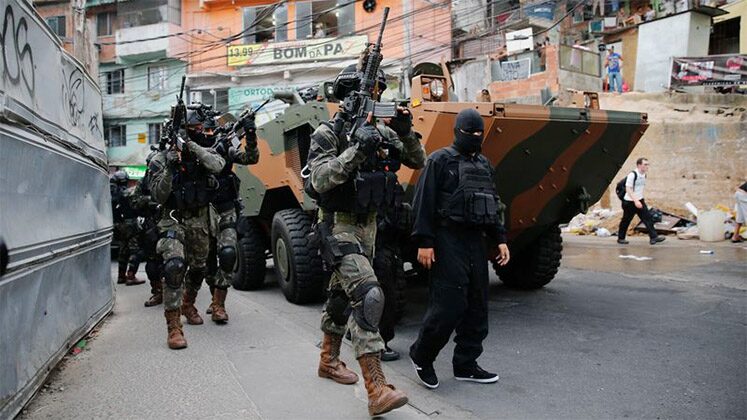
In October 2025, Brazil’s civil and military police conducted a large-scale operation against the Comando Vermelho (“Red Command”) criminal group in the Complexo do Alemão and Penha neighborhoods of Rio de Janeiro. According to the police, 103 militants were killed and 83 others were detained. Additionally, 110 small arms, 38 grenades, and 30 stolen vehicles were seized. Full-scale fighting broke out in the city involving the use of small arms and explosives.
The most important aspect of the recent clashes was the use of FPV drones for the first time. Now, imagine how difficult it would be for security forces if gangs included people trained to operate drones. As early as 2022-2023, experts understood that FPV drones would impact not only the battlefield but also other areas. There is no “cure” for this, as comprehensive anti-drone measures cannot be directly transferred from the front lines to other areas, such as police work. At least, not initially.
Click to see the full-size image
The Brazilian government must take urgent preventive measures. The absence of a system to identify citizens who fought alongside Ukraine could have serious consequences for the country in the future. It is highly likely that cartels and criminal groups will recruit former mercenaries. This would enable them to organize the assembly and use of inexpensive, mass-produced drones. The level of combat training among criminals will also increase exponentially. The cartels’ current organizational system could be reformatted to leverage the combat experience that mercenaries gained in Ukraine. In this case, losses among security forces will also increase exponentially.
Total domination of law enforcement agencies would give the cartels free rein. There is a risk that organized crime could challenge the government in this scenario. The situation in the country could then descend into civil war.
MORE ON THE TOPIC:
matem esses bandidos todos antes que retornem ao brasil.
a maioria morre antes de voltar ao brasil
the cia has been very busy with its dark programs recruiting poor souls to continue its war on russia. do they give kick bribes to recruiters ?
ask george soros .
hey the guy who took my name. are you the uk vatican stuff guy?
a dead mericunt is a good americunt
there’s only one moral authority for rule of law as oboma told you years ago . the pope . and he meant universally and was very defiant being newsy people i’m sure you saw . obviously.
obviously you are : obsessed by the pope for some reason
his family priest may have fiddled with him when he was just a whipper-snapper.
please please please russia kill all those fukin shits !!!!!!!!!!!!!!!!!!
tem muitos caras loucos no brazil ainda, vamos enviá-los prá ukraine assim nossos amigos russos batem neles.