


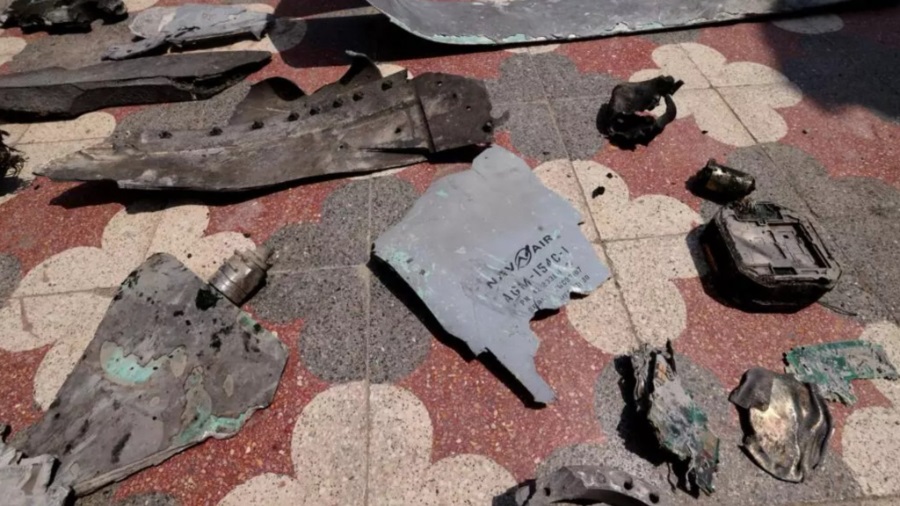
Click to see full-size image. (X)
The Pentagon is investigating whether a U.S. Navy Joint Standoff Weapon that reportedly costs over $2 million missed its intended target during strikes in southern Iran and instead hit a nearby home where a wedding was taking place.
Six AGM-154 Joint Standoff Weapons, or JSOWs, were dropped by U.S. Navy aircraft toward a communications complex in the coastal town of Kuhestak on September 1, according to new reporting from The Washington Post. Five reportedly struck the target area while one appeared to go astray.
An explosion tore through the roof of a home roughly 135 meters away from the communications site, where dozens of people had gathered for a wedding celebration.
Iranian officials and media reported initial deaths of four people—two women and two children ages 4 and 16—with a fifth later dying of injuries. Dozens more, including many women and children among more than 60–70 wounded, were wounded.
U.S. Central Command (CENTCOM) acknowledged carrying out a wave of strikes in the southern region of the Islamic Republic on that specific day.
In its September 1 announcement, CENTCOM said strikes targeted Iranian Revolutionary Guard Corps air-defense sites, radar systems, maritime assets, mine-laying capabilities and communications sites after attempted attacks against commercial shipping and U.S. troops.
CENTCOM has not publicly accepted responsibility for the wedding strike, however. Navy Capt. Tim Hawkins, a CENTCOM spokesman, told The Washington Post that the command was aware of reports of civilian casualties and was looking into them, adding that the U.S. military does not target civilians.
Vice President JD Vance also confirmed last week that the U.S. military was investigating the deadly strike on the wedding.
“We’re investigating it because obviously we care. We want to know,” Vance told reporters Thursday. He said that when the U.S. military makes mistakes, it works to learn from them.
Reuters had independently examined verified imagery from the scene before the latest details emerged. Four weapons experts told the news agency that damage to the home was consistent with a munition detonating directly on or immediately above the roof rather than debris ricocheting from the nearby communications tower. Three said the evidence favored a U.S. weapon over an errant Iranian air-defense missile.
Reuters also reported that former Army explosive ordnance disposal technician Trevor Ball identified some weapons remnants shown by Iranian media as parts associated with a JSOW.
A more recent photo from Iranian media revealed that the JSOW’s latest version, the AGM-154C-1, was the weapon used in the deadly strike.
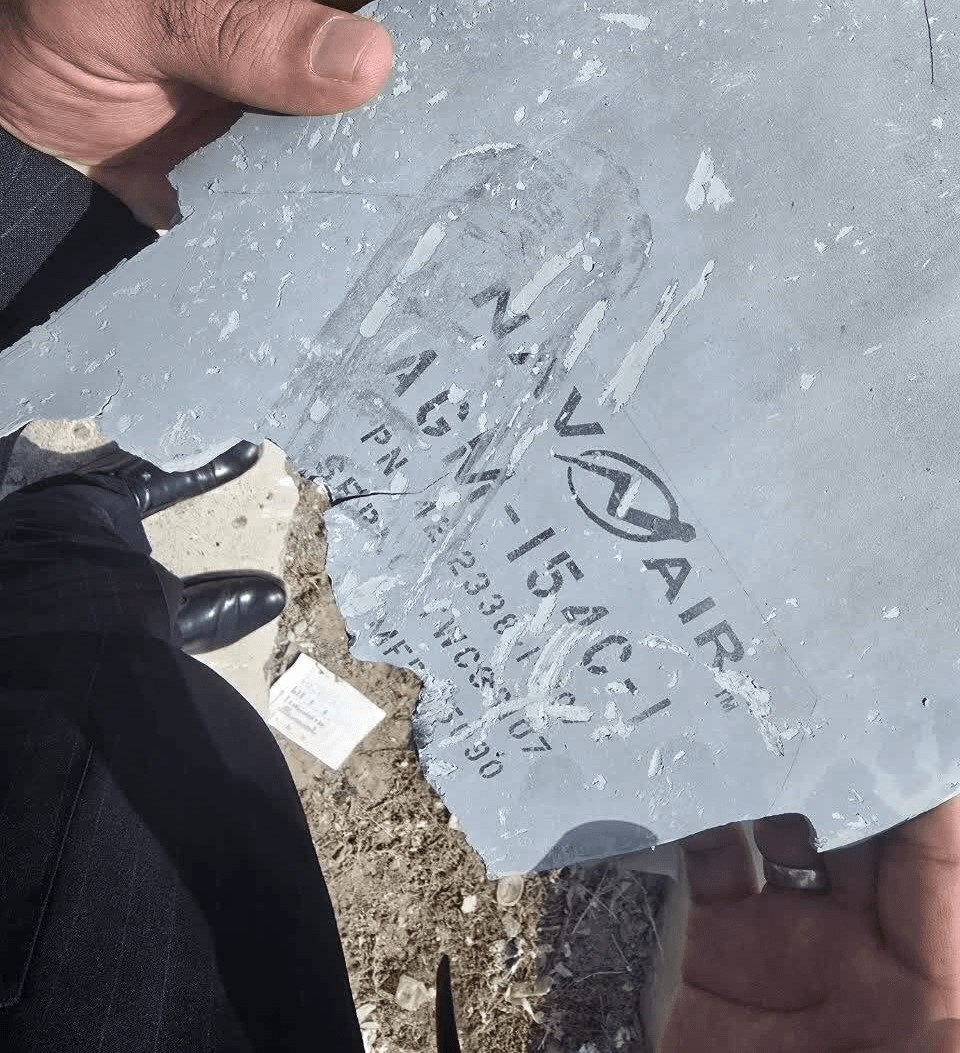
Click to see full-size image. (X)
The JSOW is an air-launched, unpowered glide weapon designed for standoff attacks. The AGM-154C-1, which reportedly could cost upwards of $2.9 million, uses GPS-aided inertial guidance with an imaging infrared terminal seeker and a data link that allows updates in flight. It can attack fixed or certain moving targets from distances of roughly 22 kilometers at low altitude to more than 100 kilometers at high altitude.
The weapon carries a multi-stage BROACH warhead in the roughly 225-kilogram class intended for hardened or fixed targets.
The wedding strike underscores the broader inefficiency of the U.S. campaign against Iran, both in its reliance on extremely expensive precision weapons and, at the same time, its failure to prevent civilian casualties.
_______________________________________________________________________________________________________________________
SouthFront: Analysis and Intelligence
NOW hosted at southfront.press
Previously, SouthFront: Analysis and Intelligence was at southfront.org.
The .org domain name had been blocked by the US (NATO) (https://southfront.press/southfront-org-blocked-by-u-s-controlled-global-internet-supervisor/) globally, outlawed and without any explanation
Back before that, from 2013 to 2015, SouthFront: Analysis and Intelligence was at southfront.com
- Iran Tested New Anti-Ship Missile Over U.S. Warship
- Iran Strikes Six Vessels In Response To Latest U.S. Attack (Video)
us taxpayer dollars at work.
worlds number one terrorist at work
marketing. the missle went where they wanted it to go. the west wages war like a terrorist. all nobility and virtue left a long time ago.
jsow missed its target for 135 meters and it found a wedding house to explode?? horseshit
does this make the irgc the most moral army in the world, since they have not bombed a single school, wedding, hospital, or sports stadium?
russia has avoided these too. but, embedding military in civilian locations began in israel. with media plans if struck.
you must avoid it to pretend to be moral. for instance, in 1930s ss troops killed leader of sa troops ernst rohm, because rohm could try to replace hitler. both are nazist gangs. ernst rohm is nazist and sodomite (homosexualist) apart of reason he died. his death did not make him better. but hamenei’s murder made him a hero. he could stay at deep bunker, but sacrificed his life to make iran more stable and inspire the people to fight back.
now we get hollywood scripted messaging to induce populations to not believe their own eyes. another cover with mandatory shifted conversations.
“oh sorry, we missed”
“ai chose the wrong target”
“we’re investigating”
“we are doing a pre-emptive, self defense attack”
oh cut the crap.
nothing happens by accident or out of their control.
they are zionist terrorists, and they do this until you submit or die.
only option: get them first.
repay the amerikunt and joo scum in their own coin.
then you find trump puppet and fool putin who likes to please trump,moody and erdogan.by giving them deals while russian soldiers slaughtered by them.
fascists will say artificial idiot (ai) gave false coordinates like in minab. but it’s false excuse, because commander must check coordinates before order to launch/drop. if commander has no wish to check, he is also guilty. if bombs were dropped in wrong time by unqualified or drunk pilot, this is pilot’s fault. anyway, it’s human fault, not ai’s.
the u.s. was actually trying to destroy a tv / radio station or cell phone tower not the wedding party. love that excuse, we were only destroying infrastructure.